

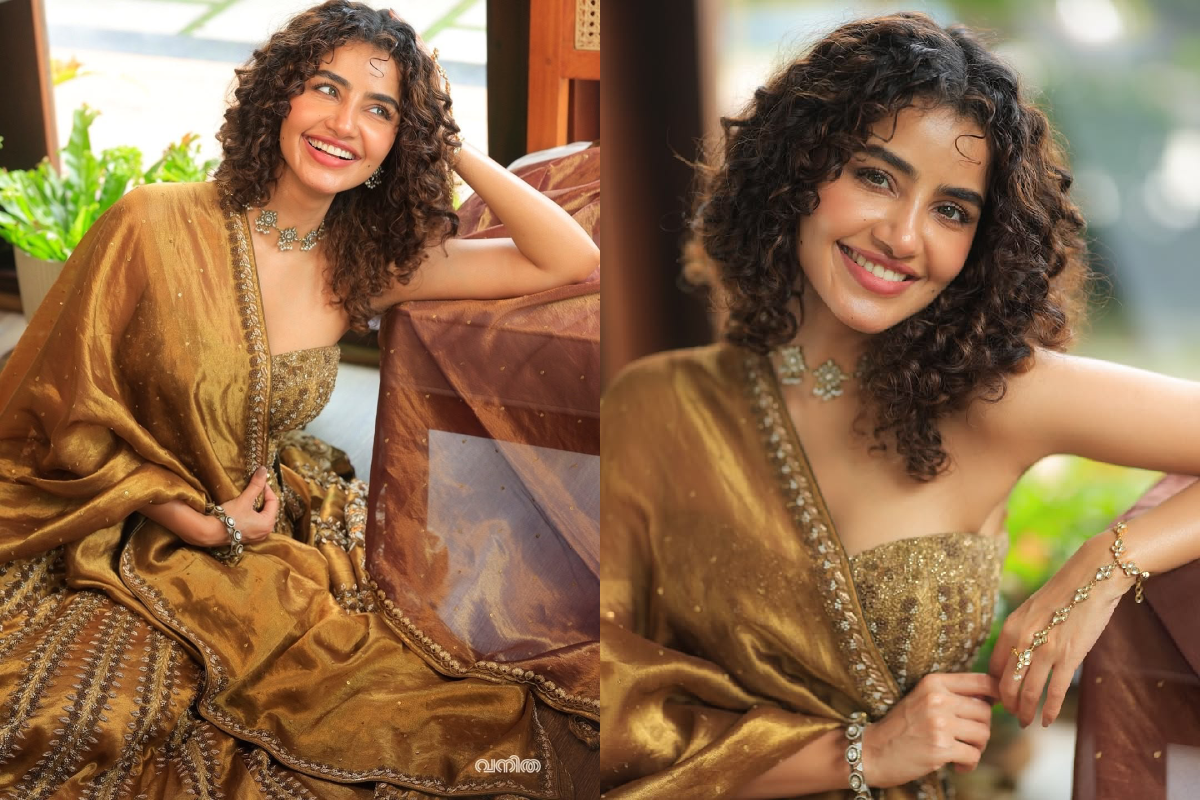
Indian fashion has always had a special relationship with colour, craftsmanship and celebration. From traditional sarees and embroidered lehengas to contemporary interpretations of ethnic wear, festive fashion continues to evolve while maintaining its cultural roots.
The latest look captures this evolution beautifully through a warm golden-brown ensemble that combines traditional Indian styling with a relaxed, contemporary aesthetic. The rich fabric, intricate embellishments, delicate jewellery and naturally styled curls create a look that feels glamorous without appearing overly formal.
It is a perfect example of how modern Indian fashion can celebrate tradition while embracing individuality.
The Beauty of Golden Tones
Golden and earthy tones have long been associated with Indian festive fashion.
Gold represents richness, celebration and craftsmanship, making it a natural choice for weddings, festivals and special occasions. However, the look featured here takes a slightly softer approach.
Instead of an intensely bright metallic gold, the outfit uses a warm antique-gold and brown palette.
This creates a more sophisticated and understated appearance.
The colour also works beautifully with the warm lighting and wooden surroundings, giving the entire visual a cohesive and luxurious feel.
Traditional Inspiration with a Contemporary Mood
The outfit combines several familiar elements of Indian fashion while presenting them in a modern way.
The draped fabric, embellished blouse and jewellery immediately establish an Indian festive aesthetic. At the same time, the relaxed styling and natural curly hair give the look a youthful character.
This combination is increasingly visible in contemporary Indian fashion.
Traditional clothing is no longer restricted to highly formal presentations. Designers and fashion enthusiasts are experimenting with softer styling, modern silhouettes and more natural beauty looks.
The result is clothing that feels festive but also personal.
The Statement Blouse
The embellished blouse is one of the strongest elements of the ensemble.
Its detailed surface adds texture and visual richness while providing contrast against the smoother golden fabric.
Statement blouses have become an important part of modern Indian styling because they can completely transform the appearance of a saree or draped ensemble.
A simple saree can look dramatically different when paired with a heavily embellished blouse.
Similarly, a richly detailed blouse can become the focal point when combined with a relatively simple drape.
Draping for Modern Fashion
Draping techniques have always played a central role in Indian fashion.
While traditional saree drapes remain popular, contemporary styling often experiments with how fabric is wrapped, layered and positioned.
The loose, flowing drape in this look creates a relaxed silhouette.
It allows the fabric to fall naturally around the body rather than appearing overly structured.
This approach works particularly well for fashion photography because movement and folds create additional depth within the image.
The Charm of Curly Hair
The naturally curly hairstyle adds a distinctive personality to the look.
Instead of choosing a traditional bun or sleek hairstyle, the styling embraces volume and texture.
This creates an interesting contrast with the traditional-inspired clothing.
Curly hair gives the ensemble a softer, more youthful appearance and prevents it from feeling overly formal.
It also demonstrates how modern beauty styling can completely change the character of traditional clothing.
Jewellery That Complements the Outfit
The jewellery is carefully coordinated with the warm colour palette.
A delicate statement necklace adds sparkle around the neckline without overpowering the outfit.
Bracelets and hand jewellery provide additional detail while maintaining the overall elegance.
The styling demonstrates an important principle of festive fashion: accessories should complement the clothing rather than compete with it.
When the fabric already contains embroidery or embellishment, carefully selected jewellery can create a much more polished appearance than excessive accessorising.
The Importance of Texture
Texture is one of the reasons the outfit looks visually rich.
The fabric has a subtle sheen that catches the light, while the blouse contains intricate detailing.
The jewellery introduces another reflective surface.
The result is a layered visual effect even though the overall colour palette remains relatively limited.
This is an excellent technique for anyone creating a monochromatic or neutral festive outfit.
Instead of adding multiple colours, different textures can provide the necessary contrast.
A Warm and Natural Beauty Aesthetic
The makeup complements the outfit rather than dominating it.
The focus is placed on softly defined eyes, glowing skin and a natural-looking lip.
This creates harmony with the warm golden tones of the clothing.
For traditional Indian fashion, makeup can range from bold and dramatic to extremely subtle.
The current trend increasingly embraces a balanced approach, where the skin looks luminous and the features remain clearly defined without appearing overly heavy.
The Power of a Smile
One of the most striking aspects of these photographs is the natural expression.
The subject’s smile gives the look an approachable and joyful quality.
This is particularly effective because festive fashion is ultimately connected with celebration.
A serious editorial expression can create drama, while a genuine smile can make the same outfit feel warm, inviting and youthful.
The expression therefore becomes an important part of the fashion story.
Fashion Photography Meets Festive Styling
The photography uses warm natural light and an intimate indoor setting.
The wooden furniture, soft background and greenery visible through the window create an atmosphere that complements the earthy tones of the outfit.
This demonstrates how location can influence fashion presentation.
A brightly lit studio might make the same outfit feel more contemporary and editorial.
A warm home-like environment makes it feel more personal and festive.
The Influence of Heritage Fashion
Indian fashion continues to draw inspiration from its vast textile heritage.
Traditional weaving techniques, embroidery, jewellery designs and draping styles are constantly being reinterpreted.
Modern designers frequently take these cultural elements and introduce new cuts, fabrics and styling techniques.
The result is a fashion language that doesn’t completely abandon tradition.
Instead, it gives traditional aesthetics new contexts.
Why Gold Remains a Festive Favourite
Gold has a particularly strong connection with Indian celebrations.
Gold jewellery has traditionally been an important part of weddings, festivals and family occasions.
The colour itself has also influenced textiles, embroidery and accessories.
But modern styling increasingly uses gold in more subtle ways.
Rather than covering an outfit in heavy metallic embellishment, designers may use antique-gold borders, subtle shimmer or delicate embroidery.
This allows gold to remain luxurious while appearing more contemporary.
Building a Modern Festive Wardrobe
A versatile festive wardrobe doesn’t necessarily need dozens of heavily decorated outfits.
A few carefully selected pieces can create multiple looks.
A neutral or golden drape can be paired with different blouses.
A statement blouse can be styled with a contrasting saree.
Traditional jewellery can be combined with contemporary clothing.
Simple accessories can create a daytime appearance, while heavier jewellery can transform the same outfit for an evening celebration.
This approach makes festive fashion more flexible and practical.
Styling for Weddings
For weddings, this aesthetic can easily be elevated.
Heavier earrings, layered necklaces, bangles and embellished footwear can add additional glamour.
The hairstyle can also be changed to a traditional bun decorated with flowers.
A richer saree border or additional embroidery can create a more ceremonial appearance.
The basic combination of warm colours and gold detailing remains versatile enough to adapt to different wedding functions.
Styling for Festive Gatherings
For smaller celebrations, the same aesthetic can be kept relatively simple.
Choose lightweight fabrics.
Reduce the number of accessories.
Keep the makeup soft.
Allow the hair to remain natural.
This creates an elegant appearance without making the outfit feel too formal.
It is particularly suitable for family gatherings, festive dinners and cultural events.
The Growing Preference for Personal Style
Contemporary Indian fashion is increasingly about individuality.
There is no single correct way to wear traditional clothing.
Some people prefer elaborate jewellery and classic hairstyles.
Others prefer minimal accessories and contemporary silhouettes.
Some embrace bold colours.
Others gravitate toward neutral and earthy tones.
The outfit featured here demonstrates how traditional inspiration can coexist with personal expression.
The Importance of Comfort
Modern fashion audiences are also increasingly interested in comfort.
Festive clothing needs to look beautiful, but it also needs to be practical enough to wear for several hours.
Lightweight fabrics, relaxed draping and comfortable silhouettes can make a major difference.
Contemporary styling therefore often combines visual richness with a sense of ease.
The result is clothing that looks polished without appearing restrictive.
How to Recreate This Look
To create a similar aesthetic, begin with a golden, bronze or warm brown saree or draped ensemble.
Pair it with an embellished blouse in a complementary shade.
Choose a delicate gold or silver-toned necklace and matching earrings.
Add one or two bracelets rather than overloading the wrists.
For hair, consider natural curls or loose waves.
Keep the makeup luminous with softly defined eyes and a subtle lip colour.
Finally, use warm lighting and a simple interior setting to complete the look.
The Role of Natural Light
The photographs demonstrate how natural light can enhance warm fabrics.
Golden and bronze textiles reflect sunlight beautifully.
This can create a soft glow across the fabric and make embroidery appear more dimensional.
For fashion photography, positioning the subject near a large window can produce an elegant and natural result.
The key is to avoid overly harsh direct light and instead use softer illumination whenever possible.
Why This Style Works
Several elements come together successfully in this look:
- Warm golden colour palette
- Detailed blouse
- Flowing drape
- Coordinated jewellery
- Natural curly hair
- Soft makeup
- Warm interior setting
- Relaxed expressions
Each element supports the others.
The outfit feels festive because of its colour and embellishment, while the relaxed hair and natural expression prevent it from becoming overly formal.
The Future of Festive Fashion
The future of Indian festive fashion is likely to become even more experimental.
Traditional textiles will continue to inspire contemporary silhouettes.
Classic jewellery will be styled alongside modern clothing.
Sarees will be worn in new ways.
Blouses will continue to evolve.
And natural beauty aesthetics will increasingly sit alongside traditional garments.
This evolution doesn’t weaken the connection with heritage.
Instead, it allows traditional fashion to remain relevant to changing lifestyles and new generations.
Final Thoughts
The golden ensemble featured in these photographs is a beautiful example of contemporary festive fashion.
Its appeal comes from balance.
The rich fabric provides luxury.
The embellished blouse adds detail.
The jewellery reinforces the traditional influence.
The curly hair introduces modern personality.
And the warm setting creates an intimate, celebratory atmosphere.
Rather than relying entirely on heavy embellishment, the styling allows colour, texture, expression and craftsmanship to work together.
That is what makes the look feel both traditional and contemporary.
Indian fashion continues to evolve, but its greatest strength remains the ability to transform heritage into something fresh, personal and beautifully timeless.

Comments are closed.