


Louisiana’s cuisine is a fascinating mix of flavours shaped by different cultures, communities, and traditions. The state’s most popular cuisines reflect the area’s rich heritage and cultural diversity. Creole cuisine, which originated in New Orleans, blends European, African, and Caribbean cooking techniques. In contrast, Cajun cuisine was developed by 18th-century French-Acadian exiles who settled in the swamps and prairies of southwest Louisiana. As a result, the unique blend of flavours has created a wide variety of dishes that remain iconic to the state.
Louisiana’s Iconic Dishes– The flavours across the state are a testament to culinary excellence, where heritage and techniques come together to create unforgettable dishes.
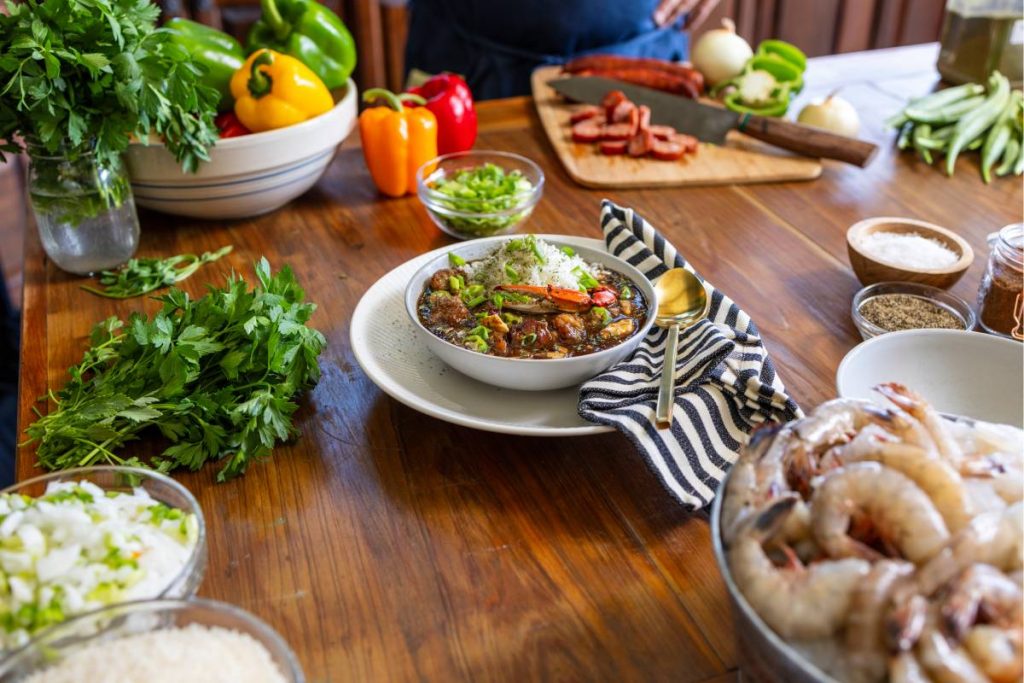
The official dish of Louisiana, Gumbo, is an irresistible amalgamation of dark roux (butter or oil mixed with flour), rice, seafood or chicken and sausage, “the trinity” (a combination of onions, bell peppers, and celery) and often okra. Head to Rocky and Carlo’s in Chalmette for one of the best bowls in South Louisiana. In Northeast Louisiana, Warehouse No. 1 in Monroe is your go-to spot for great seafood gumbo. For a how-to on roux, take part in Spuddy’s Cajun Cooking Experience.
Jambalaya is a Creole take on Spanish paella containing chicken, sausage, long-grain rice, and the trinity. Served traditionally out of a big black pot, it is one of the spicier signature dishes you will find in Louisiana. Start in Gonzales, a town known as the world capital of jambalaya, Jambalaya Festival is held every May. In Lafayette, Johnson’s Boucanière has been a local favourite since 1937. While most known for fresh, homemade boudin, Johnson’s also offers Cajun delicacies like jambalaya.
Boudin consists of rice, pork, and spices in a smoked sausage casing. Boudin is served in links or in boudin balls, which are deep-fried cousins of the iconic Cajun delicacy. If you want an all-encompassing boudin experience, head to the Lake Charles area to eat your way across the SWLA Boudin Trail with more than 25 restaurants serving up this unique dish. Earl’s Cajun Market in Lafayette serves up excellent boudin and plate lunches, and then head to Scott, Louisiana, which is the Boudin Capital of the World. While there, stop in Don’s Specialty Meats.
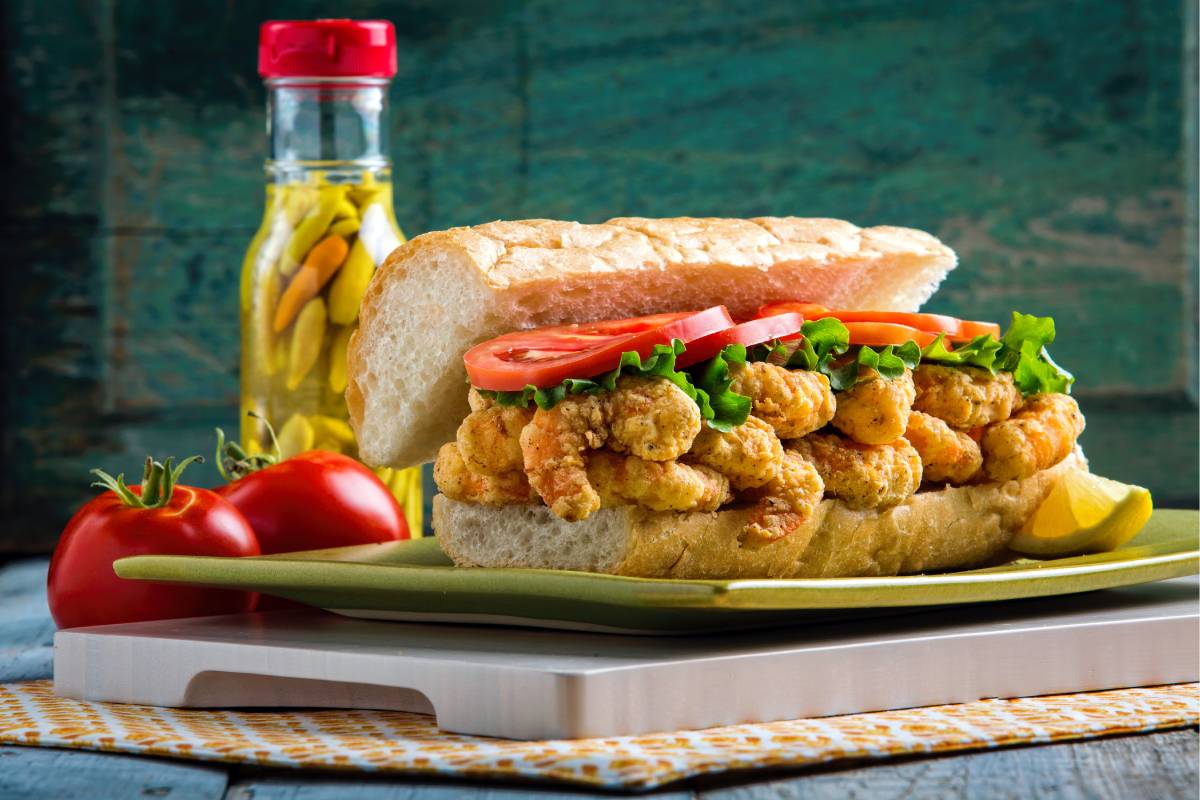
 Po’boys are a submarine-type sandwich made with French bread. Order it “dressed” if you like your po’boy with mayonnaise, lettuce, pickles, and tomato. Throughout the state, restaurants serve a wide variety of this sandwich. Mother’s Restaurant in New Orleans is famous for the original Ferdi po’boy, stuffed with ham, roast beef and debris in au jus (charred bits of beef flavoured with delicious rendered fat, dripping in gravy). Chris’ Po’boys in Lafayette is among the best restaurants in South Louisiana’s Cajun heartland to satisfy your po’boy cravings. Darrell’s in Lake Charles is famous for serving up both the classics and innovations like the Darrell’s Special, made with ham, turkey, roast beef, and gravy, plus three types of cheese.
Seafood in Louisiana– Louisiana seafood shines in their signature dishes. The state has hundreds of miles of coastline along the Gulf, making it one of North America’s most productive shrimp, oyster, and crab fisheries, while inland marshes and swamps contribute catfish and crawfish.
Étouffée is a Creole dish of rice smothered in a stew of roux, crawfish or shrimp, herbs and vegetables. The roux (called a “blonde roux” for its lighter colour than the kind typically used in gumbo) is a mixture of butter and flour, mixed with celery, bell peppers and onion. In New Orleans, find crawfish étouffée at Oceana Grill and Jacque-Imo’s. You will find more mouthwatering étouffée at The Chimes in Baton Rouge and at Boudreau & Thibodeau’s in Houma. Find crawfish étouffée and other tasty crawfish dishes all along the Bayou Country Crawfish Trail.
Shreveport-Style Stuffed Shrimp is a local delicacy which was cooked up in the 1950s by Freeman & Harris Café, a historic Black-owned restaurant that opened in 1921 and fed legends like Rev. Martin Luther King Jr. and B.B. King. This was one of the first places in Shreveport where people of all races could dine together, and what better meal to share than a plate of large fried shrimp, stuffed with a Creole dressing and served with spicy tartar sauce. Freeman & Harris closed in 1994 (it was believed to be the oldest continually operated, Black-owned restaurant in the United States), but Orlandeaux’s continues the legacy today! You can find stuffed shrimp in eateries all over the area, like Eddie’s Seafood & Soulfood.
Charbroiled Oysters- Louisiana adores its oysters, prized for their tenderness and flavour. Restaurants across the state have many variations of oyster-based dishes, but one favourite preparation is charbroiled. The half-shell treasures are topped with a sauce of butter, garlic and herbs, then dusted with Pecorino Romano cheese and cooked on a grill. The sizzling result has become a legendary staple of Louisiana cuisine. To try the original, head to Drago’s Seafood Restaurant in Metairie or one of its other locations in New Orleans, Baton Rouge, Lake Charles, and Bossier City. You can also savour them along the Louisiana Oyster Trail in Jefferson Parish at stops like Acme Oyster House and Deanie’s Seafood. In Columbia, Fontenot’s Cajun Way often features charbroiled oysters as a special, while Don’s Seafood in Lafayette serves a version topped with bacon, jalapeños, and pepper jack cheese.
Louisiana’s Sweat Treats
Beignets are square-shaped pieces of fried dough, topped with powdered sugar. You can also find these beignets stuffed with savoury or sweet ingredients at restaurants and cafés across Louisiana. Cafe Du Monde in New Orleans’ French Quarter is the unofficial world capital of beignets. New Orleans even has an annual Beignet Festival in November that is a must-visit.
King Cake is a round, cinnamon-filled cake made with braided dough, covered in icing, and coloured sugar and containing a little plastic baby. The three colours symbolise justice (purple), faith (green) and power (gold). King cakes can have all sorts of fillings, like cream cheese and fruit jams. Manny Randazzo’s King Cakes in Metairie is the king of Louisiana king cakes, though you can also find them at stores from Shreveport to the Gulf Coast, and all points in between. Other standouts include Atwood’s Bakery in Alexandria, Daily Harvest Bakery & Deli in Monroe and Haydel’s Bakery in New Orleans.
Praline is a sugary, buttery candy made from butter, brown sugar and pecans, cooked in a kettle, and dried on wax paper. French nuns brought these Creole treats to New Orleans in the 1700s. Aunt Sally’s Pralines in New Orleans’ French Market is among the most famous.
Louisiana’s Signature Sip
Sazerac is a New Orleans-born cocktail containing rye whiskey, bitters, Herbsaint and lemon peel. Purists will want to try a Sazerac at the Sazerac Bar in The Roosevelt New Orleans hotel. Learn more about the history of the Sazerac through interactive exhibits and tastings at The Sazerac House.
***

Comments are closed.