

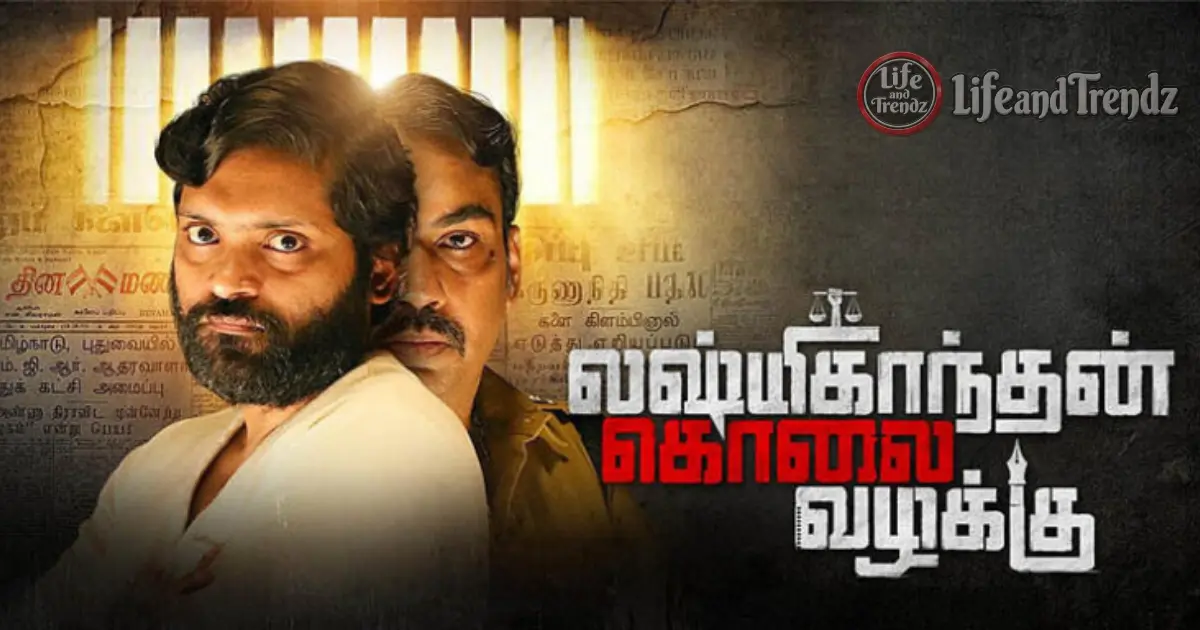
Lakshmikanthan Kolai Vazhakku takes a different route. The film begins with a crime story, but its real interest lies in what happens after the investigation starts raising uncomfortable questions about justice, punishment and the value of a human life.
Directed by Dayal Padmanabhan, the film is inspired by real-life events. Yet it does not play like a conventional murder mystery built around twists and reveals. Instead, the director gradually shifts the focus towards the people caught inside the case and the consequences of the justice system.
And that’s where the film gets interesting.
The central question is straightforward, but difficult to answer: Is the death penalty truly a just punishment?
The film does not treat that question as a decorative social message. It builds the emotional weight of the story around it.
What Is Lakshmikanthan Kolai Vazhakku About?
At its core, the film follows a crime case and the people affected by its investigation and legal proceedings. The story moves from the initial conflict towards increasingly intense courtroom and emotional confrontations.
Rather than turning the case into a puzzle for the audience to solve, the screenplay uses it to examine justice from a more human perspective.
That approach gives the film its identity.
The first half establishes the characters and conflict without wasting too much time. Once the story moves deeper into the legal battle, the second half gains intensity. Courtroom sequences and personal confrontations become more important, and the emotional stakes rise with them.
The Backstory
The film draws inspiration from real-life events, which gives its central conflict an additional layer of seriousness.
However, Lakshmikanthan Kolai Vazhakku does not appear interested in simply recreating a case for the sake of realism. Dayal Padmanabhan uses the premise to explore a broader issue that has been debated for decades: capital punishment.
Tamil cinema has dealt with crime, courts and social justice many times before. The challenge is making such subjects feel relevant without turning the film into a lecture.
Here, the director largely keeps that balance.
The film’s argument develops through its characters and situations rather than through long explanations. That makes the debate easier to engage with emotionally.
What’s New in Lakshmikanthan Kolai Vazhakku?
The subject of capital punishment is certainly not new in cinema. What works here is the film’s relatively restrained treatment of the subject.
The screenplay does not constantly remind the viewer that it has an important message. It lets the characters carry much of the emotional burden.
The writing is also economical. Scenes generally have a purpose, and the narrative avoids the kind of commercial distractions that could have weakened the central story.
The dialogues are simple and sharp. More importantly, several of them leave room for the audience to think rather than telling viewers exactly what they should believe.
That’s a good choice for a film built around a moral argument.
Vetri Gives the Film Its Emotional Centre
Vetri’s performance as Arivumathi is one of the film’s strongest elements.
He plays the character with restraint, allowing pain, fear and helplessness to emerge without excessive dramatics. That makes Arivumathi easier to connect with, particularly as the pressure surrounding the case increases.
The mother-son relationship gives the film another emotional dimension.
Lissy Antony, playing Vetri’s mother, delivers some of the most affecting work in the movie. Her emotional jail sequence stands out because it feels personal rather than staged simply to extract tears from the audience.
The performances work because they keep the human story visible beneath the legal proceedings.
Rangaraj Pandey Adds Weight
Rangaraj Pandey brings maturity and conviction to his role. His screen presence gives several important scenes additional weight, particularly when the film moves into its more serious legal and ethical territory.
Brigida Saga and Maran have comparatively smaller roles, but both make an impression through natural performances.
There is no sense that every character has been designed to dominate the screen. That restraint suits the film.
Why Does the Capital Punishment Debate Matter?
This is the question sitting underneath the entire movie.
Capital punishment remains one of the most emotionally and ethically charged subjects connected to criminal justice. Supporters often argue from the perspective of punishment and deterrence. Opponents raise questions about state power, human rights and the possibility of irreversible judicial mistakes.
Lakshmikanthan Kolai Vazhakku does not need to settle that debate.
Its value comes from making the viewer sit with the question.
That is also why the emotional scenes matter as much as the courtroom sequences. Legal arguments can be understood intellectually. The personal consequences make them harder to dismiss.
The Context Most AI Summaries Miss
A quick description of the film could easily reduce it to “a courtroom thriller about a murder case.”
That misses what gives the movie its emotional identity.
The film is less interested in the mechanics of a murder investigation than in what justice means to the people living through the consequences of a case.
The mother-son relationship, the emotional pressure surrounding imprisonment and the debate over capital punishment all push the story beyond the standard crime thriller format.
This distinction matters. The movie’s strongest moments are not necessarily the ones built around suspense. They are the moments when the legal argument becomes personal.
Yes, But…
The film is not without limitations.
Its production scale is relatively modest, and viewers expecting a slick, twist-heavy courtroom thriller may find its approach restrained. The film places greater importance on writing, performances and emotional conflict than spectacle.
That can be a strength, but it also means the movie depends heavily on whether the audience is willing to engage with its central debate.
If you are looking purely for a fast-paced murder mystery packed with twists, this may not be the right fit.
If you prefer content-driven cinema that gives you something to think about after the credits, the film has considerably more to offer.
Dayal Padmanabhan Keeps the Story Grounded
The director deserves credit for resisting unnecessary commercial additions.
Dayal Padmanabhan keeps the focus on the case, the characters and the larger question of punishment. The result is a film that feels sincere in its intentions.
The debate surrounding capital punishment could easily have become heavy-handed. Instead, the film allows the issue to emerge organically from the narrative.
That makes the message more effective.
Darbuka Siva’s music also supports the film without overwhelming the drama. The score adds tension to key moments and helps strengthen the emotional atmosphere.
What Happens Next?
For audiences who enjoy socially relevant Tamil cinema, Lakshmikanthan Kolai Vazhakku is likely to generate discussion beyond its crime story.
The film’s strongest talking point is unlikely to be a particular twist. It will be the question it leaves behind: What should justice look like when the punishment itself becomes a moral question?
That gives the movie conversation value after the viewing experience ends.
Final Verdict
Lakshmikanthan Kolai Vazhakku works because it understands that a crime case can be about much more than identifying a culprit.
It is a story about justice, fear, conscience and the consequences of punishment.
Vetri anchors the film with a sincere performance, while Lissy Antony provides its emotional core. Rangaraj Pandey adds gravitas, and the supporting cast contributes without distracting from the central story.
The screenplay remains the film’s biggest strength. It moves with purpose, keeps the courtroom portions engaging and gives the capital punishment debate enough space to breathe.
It may not have the scale or commercial gloss of a mainstream thriller. It does not need it.
Lakshmikanthan Kolai Vazhakku is best experienced as a thoughtful courtroom crime drama that asks difficult questions and trusts the audience to find its own answers.
Rating: 3.5/5
“Lakshmikanthan Kolai Vazhakku turns a murder case into a larger question about justice, punishment and the value of a human life.“
FAQ
Is Lakshmikanthan Kolai Vazhakku a true story?
Lakshmikanthan Kolai Vazhakku is inspired by real-life events. The film uses its crime-case premise to explore justice, punishment and the death penalty. While it draws from real events, its primary focus is the emotional and moral questions surrounding the case.
Who directed Lakshmikanthan Kolai Vazhakku?
Dayal Padmanabhan directed Lakshmikanthan Kolai Vazhakku. He keeps the film focused on its central crime story and the wider debate around capital punishment, avoiding unnecessary commercial distractions.
Who plays the lead role in Lakshmikanthan Kolai Vazhakku?
Vetri plays Arivumathi, the central character in the film. His performance is one of the movie’s major strengths, particularly in scenes involving fear, emotional pressure and helplessness.
What is Lakshmikanthan Kolai Vazhakku about?
The film is a courtroom crime drama about a murder case that develops into a wider discussion about justice and capital punishment. Rather than functioning solely as a murder mystery, it examines the emotional consequences of the legal process.
Is Lakshmikanthan Kolai Vazhakku worth watching?
Yes, if you enjoy serious, content-driven Tamil cinema. The film is particularly suited to viewers who appreciate courtroom dramas, socially relevant themes and performances over large-scale commercial spectacle.

Comments are closed.