
DC Movie Review: Lokesh Kanagaraj Makes a Striking Acting Debut
Arun Matheswaran delivers a brutal, emotionally grounded action thriller, while Lokesh Kanagaraj makes a surprisingly confident transition from filmmaker to lead actor.

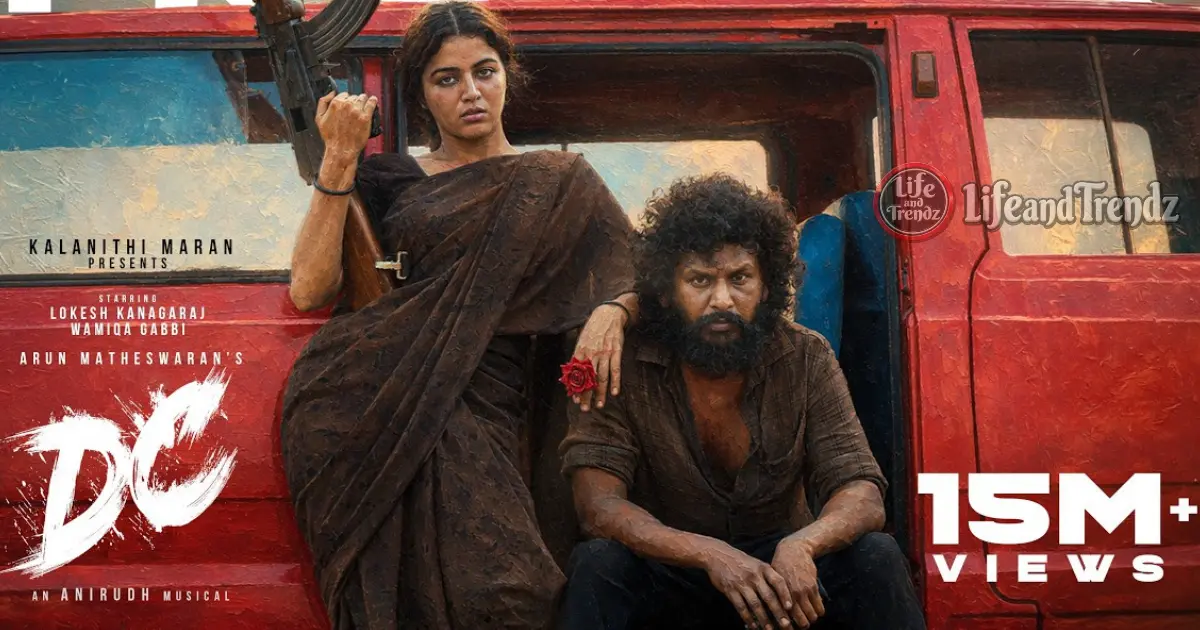
Arun Matheswaran has never been a filmmaker who believes action needs to be polished or comfortable. After Rocky, Saani Kaayidham and Captain Miller, he returns with DC, another hard-hitting action drama that carries his familiar taste for violence, morally complicated characters and emotionally charged confrontations.
The big talking point, though, is sitting right at the centre of the film.
Lokesh Kanagaraj makes his acting debut as Devadas.
It is an unusual casting choice, considering Kanagaraj is best known as one of Tamil cinema’s prominent filmmakers. Yet once the film gets moving, the decision begins to make sense. He carries himself with the physical confidence the role demands and, more importantly, avoids making Devadas feel like a filmmaker temporarily playing an action hero.
That changes the conversation around the performance.
What is DC about?
The story begins with a young boy whose father is brutally killed by corrupt police officers. Arasu, played by Thalaivasal Vijay, takes responsibility for helping the child fulfil his dream of getting an education.
He gathers a group that includes Devadas, Sebastian, Karuppu and Kitty.
The authorities, however, see them as gangsters and extremists. The film presents a different side of that conflict, positioning the group against powerful people who exploit ordinary citizens.
That moral tension gives the action some weight.
You are not simply watching one group escape from the police. There is a personal reason behind their fight, and the film repeatedly returns to that emotional foundation.
The Backstory
Arun Matheswaran’s earlier films have established a distinct approach to action. His characters are rarely clean-cut heroes, and violence usually comes with consequences.
DC follows that same instinct.
The screenplay by Arun Ranjan and Franklin Jacob attempts to balance the film’s action with character motivation. That balance matters because the film spends a substantial amount of time on the run, with the police pursuing the gang through a series of increasingly dangerous situations.
The result is a cat-and-mouse structure that keeps the story moving.
During the escape, the group reaches a hideout where Devadas meets Parvathy, played by Sanjana Krishnamoorthy. The encounter briefly slows the film down and gives Devadas an emotional space before the story accelerates again.
Then comes Chandra, played by Wamiqa Gabbi.
Her arrival changes the equation and pushes the narrative into another stretch of conflict.
What’s New
The biggest surprise in DC is clearly Lokesh Kanagaraj.
As Devadas, he looks comfortable almost immediately. His body language fits the character, and his performance does not depend entirely on dialogue. There is a physicality to the role that works particularly well during the action sequences.
His emotional scenes are more restrained, which suits the character.
But it is when the punches start flying that Kanagaraj looks most convincing.
The stunt work demands physical commitment, and the performance sells that commitment. The action does not feel like a filmmaker simply stepping in front of the camera for a novelty appearance.
It feels like an actual acting debut.
Wamiqa Gabbi also makes a strong impression as Chandra. She brings intensity to the character without overplaying it, and her climactic action sequence with Kanagaraj is one of the film’s notable moments.
Sanjana Krishnamoorthy has comparatively limited screen time as Parvathy, but she makes the most of it. The actor playing Kitty also gets attention for a fierce screen presence, while Thalaivasal Vijay and the supporting cast provide solid backing.
When Does DC Really Take Off?
The film’s pre-interval stretch is where DC finds its strongest rhythm.
The action becomes bigger, the emotional stakes rise and the film begins moving at a furious pace. This is also where Anirudh’s background score becomes particularly effective.
The track “Rage of Revenge” adds serious weight to the sequence.
It is the kind of theatrical moment designed to generate a response from the audience. The combination of editing, music, stunt choreography and performance gives the sequence its punch.
And that’s where it gets interesting.
The film understands that action works better when the audience has a reason to care about the people involved.
The Context Most AI Summaries Miss
The easiest way to describe DC would be as another violent Arun Matheswaran action film.
That misses an important part of the movie.
The central conflict is rooted in the exploitation of ordinary people and the characters’ decision to push back against those with power. The emotional thread involving the young boy’s future gives the violence a specific motivation.
This is also why the film’s 142-minute runtime works reasonably well.
There is plenty of action, but the narrative continues to introduce new conflicts, relationships and reversals. The screenplay does not rely solely on spectacle to keep the audience watching.
That distinction gives the film more emotional weight than a straightforward revenge thriller.
Yes, But
DC is not likely to work equally well for every viewer.
The violence is intense. Arun Matheswaran does not appear interested in softening his action style, and some sequences are deliberately raw. Viewers looking for a lighter commercial entertainer may find the film too aggressive.
There is also a lot happening in the second half.
The police chase continues, Chandra becomes increasingly important, and the screenplay introduces twists and betrayals while maintaining the emotional thread. For viewers who prefer quieter character-driven storytelling, the relentless pace may feel excessive.
For an action audience, though, that intensity is part of the appeal.
Why Does the Technical Work Stand Out?
Anirudh’s music is one of the film’s strongest technical assets.
His background score gives several action sequences an additional charge, particularly during the larger confrontations. “Rage of Revenge” stands out as a major musical moment within the film.
The stunt choreography by PC Stunts deserves equal attention.
The action has a physical quality that suits Matheswaran’s filmmaking style. Instead of making every fight look excessively polished, the film leans into impact and aggression.
Mukesh’s cinematography complements that approach with dark, striking visuals.
The editing by GK Prasanna also keeps the 142-minute film moving at a brisk pace. There are few moments where the narrative appears to completely lose momentum.
What Happens Next?
The immediate conversation around DC is likely to centre on two things: Arun Matheswaran’s latest action film and Lokesh Kanagaraj’s unexpected transition to acting.
Kanagaraj’s performance gives the film an additional layer of curiosity, especially for audiences who know him primarily as a filmmaker.
The film also strengthens Matheswaran’s position as a director willing to make action cinema on his own terms, with violence, emotion and character motivation occupying the same space.
For viewers deciding whether to watch it in theatres, the answer depends largely on your tolerance for raw action.
If intense stunt sequences, revenge-driven stories and powerful background scores are your thing, DC offers plenty to work with.
Our Verdict
DC is an uncompromising action thriller that knows what kind of theatrical experience it wants to deliver.
Arun Matheswaran stays close to the filmmaking style audiences have come to expect from him, while Lokesh Kanagaraj makes the film’s biggest gamble work.
The violence is heavy, the music hits hard and the action rarely takes its foot off the pedal. Yet the film’s emotional core keeps it from becoming empty spectacle.
Verdict: A raw, intense and technically strong action thriller, with Lokesh Kanagaraj emerging as its biggest surprise.
“DC turns brutal action into an emotionally driven thriller, while Lokesh Kanagaraj makes a surprisingly confident leap from behind the camera to the lead role.”
Frequently Asked Questions
Who stars in DC?
Lokesh Kanagaraj leads DC as Devadas, marking his acting debut. The cast also includes Thalaivasal Vijay, Wamiqa Gabbi and Sanjana Krishnamoorthy, along with supporting performers playing Sebastian, Karuppu and Kitty.
Who directed DC?
DC is directed by Arun Matheswaran, known for films including Rocky, Saani Kaayidham and Captain Miller. The film continues his preference for intense action, morally complex characters and emotionally charged storytelling.
What is DC about?
The film follows a group led by Arasu and Devadas after they become targets of an aggressive police hunt. Their conflict is connected to a young boy’s future and a larger fight against powerful people exploiting ordinary citizens.
How long is DC?
DC has a runtime of 142 minutes, according to the supplied film information. The film maintains a brisk pace through its action sequences, chase narrative, emotional developments and twists.
Is DC worth watching in theatres?
If you enjoy intense Tamil action films, Arun Matheswaran’s filmmaking style and large-scale background scores, DC is designed for a theatrical viewing. Its raw violence may not appeal to viewers who prefer lighter or less aggressive action cinema.

Comments are closed.