
From Traditional Grace to Modern Glamour: The Timeless Beauty of Red and Rose-Gold Fashion

Indian fashion has always had a remarkable ability to bring together tradition, emotion and contemporary glamour. Few garments demonstrate this better than the saree. Across generations, the saree has remained an essential part of Indian style, constantly changing in colour, fabric, silhouette and presentation while preserving its unmistakable identity.
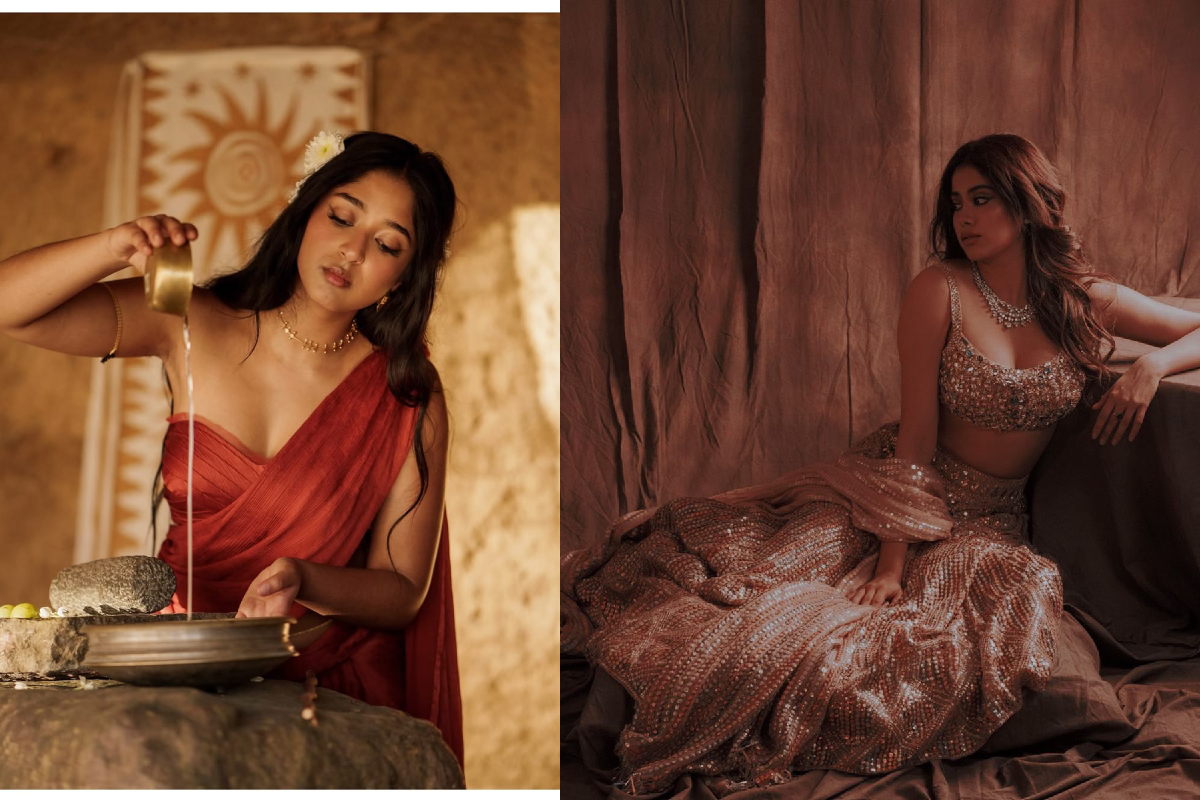
The looks showcased here offer two beautifully contrasting interpretations of saree fashion. One embraces the warmth and cultural richness of a deep red saree, while the other moves toward sophisticated contemporary glamour with a shimmering rose-gold ensemble. Although the two styles create very different moods, both demonstrate how colour, fabric, jewellery, lighting and styling can transform traditional Indian fashion into a powerful visual statement.
The Timeless Beauty of Red
Red has an especially strong presence in Indian fashion.
For generations, it has been associated with celebration, love, prosperity, confidence and auspicious occasions. Red sarees have therefore remained popular for weddings, festivals, receptions and other important cultural events.
The deep red saree in the first look creates a warm and traditional atmosphere. Its flowing fabric gives the outfit an elegant quality, while the simplicity of the styling allows the colour itself to become the main attraction.
Red does not require excessive decoration to make an impact.
A beautifully draped red saree can immediately create a sophisticated and confident appearance, particularly when combined with understated jewellery and soft makeup.
The Importance of Fabric
Fabric plays a major role in determining the personality of a saree.
A lightweight fabric creates movement and softness, while richer fabrics can create a more regal appearance.
In the red look, the flowing material contributes to an almost cinematic quality. The fabric falls naturally around the body, creating gentle folds and movement.
This is particularly effective in photography because flowing fabric interacts beautifully with light.
Every movement creates a slightly different silhouette.
The saree therefore becomes more than clothing. It becomes part of the composition.
A Traditional Yet Relaxed Appearance
The first look presents a softer interpretation of traditional Indian fashion.
The jewellery is relatively delicate, while the hairstyle remains loose and natural. A small floral detail in the hair adds another traditional element without making the styling feel overly elaborate.
This creates an atmosphere that feels intimate and graceful.
It demonstrates that traditional fashion does not always have to involve heavy jewellery, elaborate hairstyles or excessive embellishment.
Sometimes, simplicity allows the beauty of the garment to become more visible.
The Ritual-Inspired Setting
The first photograph also incorporates elements associated with traditional Indian rituals.
The presence of a brass vessel and ceremonial setting creates a cultural atmosphere around the fashion presentation.
This adds storytelling to the image.
Instead of simply presenting an outfit, the photograph places the saree within a recognizable cultural environment.
This approach can be particularly effective in fashion photography because it connects clothing with tradition and heritage.
The result feels less like a conventional fashion portrait and more like a visual story.
Warm Lighting Enhances the Red Saree
Lighting is one of the most important elements in fashion photography.
Warm lighting works particularly well with red clothing because it enhances the richness of the colour.
The golden tones in the background complement the red fabric, creating a cohesive visual palette.
Soft shadows also add depth to the photograph, allowing the folds of the saree and details of the jewellery to remain visible.
The overall atmosphere feels warm, traditional and intimate.
Jewellery Does Not Need to Be Excessive
The jewellery in the first look demonstrates the beauty of restraint.
A delicate necklace and understated earrings complement the saree without competing with it.
This is an important styling principle.
When the clothing already has a strong colour, accessories do not necessarily need to be equally dramatic.
Minimal jewellery can actually make the overall appearance feel more sophisticated.
The focus remains on the face, saree and natural beauty of the styling.
From Heritage to High Fashion
The second look creates a completely different mood.
The traditional saree silhouette is transformed through shimmering fabric, contemporary styling and dramatic lighting.
The rose-gold colour immediately introduces a glamorous character.
Unlike the earthy warmth of the red saree, this look feels more luxurious and editorial.
The fabric catches the light, producing subtle reflections that give the ensemble a jewel-like appearance.
It demonstrates how the saree can move effortlessly from traditional cultural fashion into modern evening glamour.
The Appeal of Rose Gold
Rose gold has become an increasingly popular colour in contemporary fashion.
It combines the warmth of gold with the softness of pink, producing a sophisticated metallic tone.
This makes it particularly suitable for eveningwear.
Unlike bright gold, which can sometimes appear strongly traditional, rose gold has a more modern character.
It works beautifully with neutral surroundings, soft lighting and contemporary jewellery.
In the second look, the colour creates a refined and glamorous atmosphere.
Sequins and Shine
The shimmering surface of the second outfit introduces a completely different visual experience.
Reflective details catch the light as the fabric moves, creating small points of brightness across the outfit.
Sequins and metallic embellishments have become popular in modern Indian fashion because they allow traditional silhouettes to take on a more glamorous personality.
A saree with this type of finish can work particularly well for receptions, cocktail events, evening celebrations and fashion editorials.
Statement Jewellery Changes Everything
The second look uses more elaborate jewellery than the first.
A layered necklace and statement earrings introduce a stronger sense of luxury.
This demonstrates how accessories can completely change the personality of a saree.
The same basic silhouette with minimal jewellery might feel elegant and understated.
Add statement jewellery and dramatic lighting, and it immediately becomes a glamorous evening ensemble.
Jewellery therefore functions as an important styling tool rather than merely an accessory.
The Power of Contrast
The two photographs are particularly interesting when viewed together because they represent two ends of the saree-fashion spectrum.
The first is warm, traditional and intimate.
The second is glamorous, dramatic and contemporary.
Yet both rely on the same fundamental principles.
Colour creates the mood.
Fabric creates movement.
Jewellery creates personality.
Lighting creates atmosphere.
Styling creates identity.
This is why the saree remains such a versatile fashion garment.
Hair Styling Creates Different Personalities
The hairstyles also contribute to the contrast.
The first look uses soft, natural hair that complements the traditional atmosphere.
The second embraces a more glamorous hairstyle with loose waves and volume.
Neither approach is necessarily better than the other.
They simply communicate different moods.
A traditional bun decorated with jasmine flowers would push the first look further toward classic Indian styling.
A sleek hairstyle could make the second look even more contemporary.
Hair therefore becomes another important component of saree styling.
Makeup and Mood
Makeup can also determine the personality of a saree.
For the red look, softer makeup helps maintain the natural and traditional character.
For the rose-gold ensemble, more defined eyes and a polished complexion support the glamorous mood.
This demonstrates the importance of coordinating beauty styling with clothing.
The strongest fashion looks are rarely created by treating each element separately.
Instead, the saree, blouse, jewellery, makeup and hairstyle should work together to communicate a single overall mood.
The Saree as a Storytelling Garment
One of the most fascinating aspects of Indian fashion is its ability to tell stories.
A red saree can represent celebration, tradition or romance.
A shimmering rose-gold saree can represent glamour and modern sophistication.
The surrounding environment can reinforce those themes.
The first photograph connects clothing with ritual and heritage.
The second creates a more theatrical, fashion-editorial environment.
This makes the photographs more than simple outfit showcases.
They become visual narratives.
Modern Indian Fashion Is About Reinvention
The saree has survived changing fashion trends because it is incredibly adaptable.
Designers continue to experiment with fabrics, blouse silhouettes, embroidery, draping styles and accessories.
Modern wearers are also becoming more experimental.
Traditional sarees are now being styled with contemporary blouses, statement jewellery, belts, jackets and unconventional accessories.
The result is an exciting fashion landscape where heritage and modernity can exist together.
Perfect Occasions for a Red Saree
A red saree remains a strong choice for many celebrations.
It can be worn at weddings, receptions, festive gatherings and traditional ceremonies.
For a daytime event, softer jewellery and natural makeup can keep the look elegant.
For an evening occasion, gold jewellery, stronger makeup and embellished footwear can increase the glamour.
The versatility of red makes it one of the most reliable colours for Indian ethnic fashion.
When to Choose Rose Gold
Rose gold works particularly well when the occasion calls for contemporary glamour.
It is an excellent choice for evening receptions, cocktail celebrations, parties and fashion-forward events.
The metallic quality of the fabric allows it to interact beautifully with artificial lighting.
Statement earrings, layered necklaces and a sophisticated hairstyle can complete the look.
For those who want the glamour of traditional Indian clothing without an overly conventional appearance, rose gold offers an excellent middle ground.
The Role of Photography
Both looks demonstrate the importance of photographic composition.
The first image uses warm tones, traditional elements and soft light.
The second relies on darker surroundings and reflective fabric.
These choices create completely different visual experiences.
Fashion photography is therefore not simply about documenting clothing.
It is about creating an atmosphere around the clothing.
The background, lighting, pose, colour grading and composition all contribute to how the outfit is perceived.
Confidence Is the Final Accessory
Regardless of the clothing, confidence remains one of the most important elements of fashion.
A beautifully designed saree becomes more powerful when it is worn naturally and confidently.
Posture, expression and movement can transform the appearance of an outfit.
This is particularly important in photography.
A relaxed pose can make a glamorous outfit feel approachable.
A confident pose can make the same outfit feel powerful.
The clothing establishes the visual foundation, but personality completes the image.
Traditional Fashion With a Contemporary Perspective
The two looks together represent the continuing evolution of Indian fashion.
The red saree connects directly with cultural traditions.
The rose-gold ensemble embraces contemporary glamour.
Neither style replaces the other.
Instead, they demonstrate the enormous range available within saree fashion.
A woman can choose traditional elegance for one occasion and modern glamour for another while wearing the same fundamental garment.
That adaptability is one of the reasons the saree continues to remain relevant.
Final Thoughts
The red and rose-gold saree looks showcased here demonstrate two beautifully different sides of Indian fashion.
The deep red saree represents warmth, tradition and cultural elegance. Its flowing fabric, delicate jewellery, soft hairstyle and ritual-inspired setting create an intimate and graceful visual story.
The shimmering rose-gold ensemble takes the saree in a more contemporary direction. Metallic fabric, statement jewellery, dramatic lighting and glamorous styling create an appearance suited to modern celebrations and evening fashion.
Together, the two looks prove that the saree is far more than a traditional garment.
It is a canvas for creativity.
It can be understated or dramatic.
Traditional or contemporary.
Soft or powerful.
Minimalist or glamorous.
Everything depends on how it is styled.
The beauty of Indian fashion lies precisely in this ability to evolve without losing its roots. Traditional colours such as red continue to carry cultural meaning, while modern shades such as rose gold introduce fresh interpretations for today’s fashion audience.
Whether it is the warmth of a red saree illuminated by soft golden light or the shimmering elegance of rose gold under dramatic lighting, both styles celebrate the same fundamental idea: Indian fashion can honour its heritage while constantly creating something new.
The saree remains timeless not because it never changes, but because it has the remarkable ability to change with us.

Comments are closed.