
The New Wave of Contemporary Indian Fashion: Tradition, Prints and Modern Confidence

Indian fashion has always been about storytelling. From handwoven textiles and intricate embroidery to traditional silhouettes and statement jewellery, clothing has often reflected culture, personality and heritage. But today’s fashion landscape is changing rapidly. A new generation of designers, creators and style enthusiasts is finding exciting ways to combine traditional Indian aesthetics with contemporary silhouettes, creating looks that feel both rooted and modern.
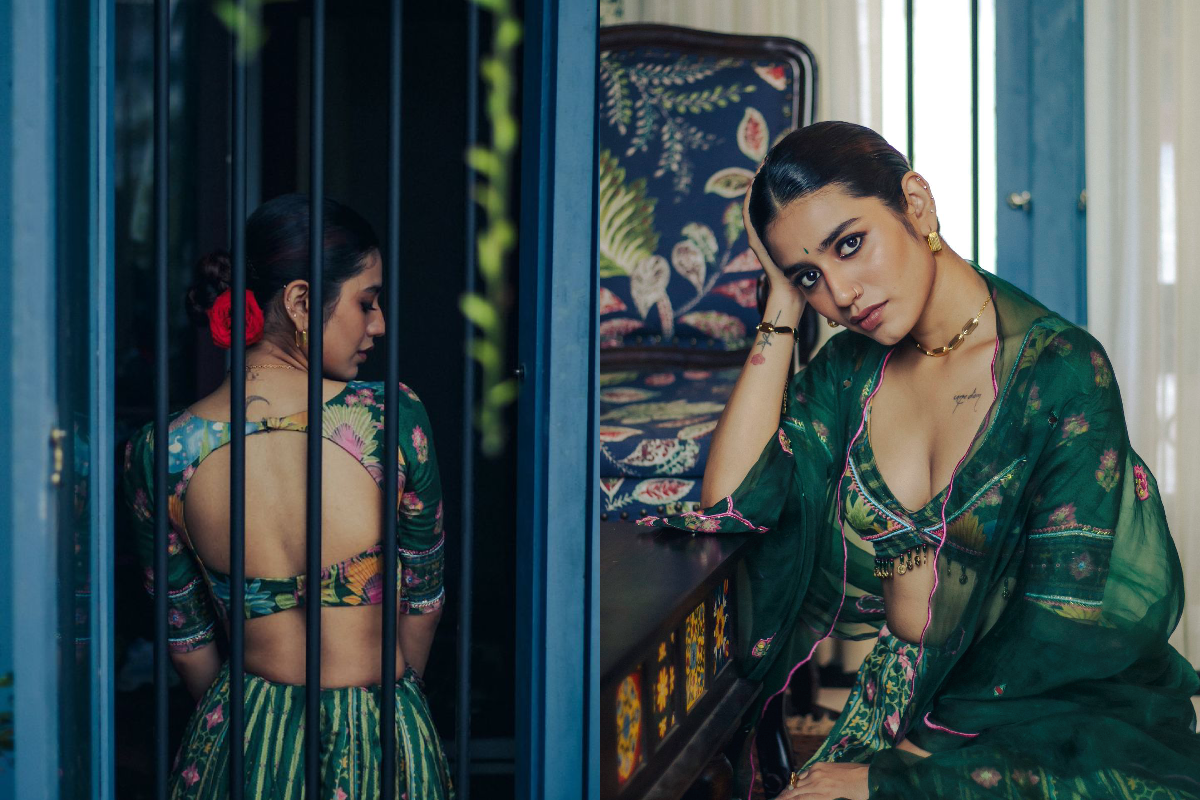
The latest fashion look featured in these photographs is a beautiful example of that evolution. Set against a richly styled interior, the ensemble combines deep green tones, floral patterns, delicate detailing and traditional-inspired elements with a relaxed contemporary silhouette.
The result is a look that feels artistic, youthful and effortlessly elegant.
The Beauty of Deep Green
Green has always had a strong connection with Indian fashion.
Associated with nature, freshness, prosperity and richness, the colour has appeared across traditional Indian textiles for generations. From emerald silk sarees to green lehengas and embroidered salwar suits, the colour can create an instantly luxurious appearance.
The deep green palette in this look gives it a sophisticated character.
Rather than relying on bright colours, the styling uses a darker green base that allows the floral patterns and colourful accents to stand out naturally.
This makes the outfit visually interesting without becoming overwhelming.
Traditional Inspiration with a Modern Interpretation
One of the most interesting aspects of contemporary Indian fashion is the way traditional influences are being reinterpreted.
The outfit featured here appears inspired by classic Indian clothing, but the styling feels distinctly modern.
The cropped blouse, lightweight outer layer and coordinated lower garment create a youthful silhouette while retaining familiar elements of Indian fashion.
This combination reflects a larger trend in contemporary styling: heritage-inspired fashion doesn’t necessarily have to look traditional from head to toe.
Instead, individual elements can be mixed and matched to create something completely new.
Floral Prints Bring the Outfit to Life
Floral patterns are among the most enduring motifs in Indian fashion.
Flowers have been used in textiles, embroidery, jewellery and decorative arts for centuries. They represent nature, beauty and celebration and can be adapted to almost any fashion aesthetic.
In this ensemble, floral detailing introduces multiple subtle colours into the deep green base.
The contrast gives the outfit a lively personality.
Floral prints can also make traditional-inspired clothing feel more casual and approachable, making them suitable for everything from festive gatherings to intimate celebrations and fashion-focused events.
The Importance of Colour Contrast
One of the reasons the outfit photographs so beautifully is its carefully balanced colour palette.
Deep green creates the foundation.
Pink and lighter floral shades provide contrast.
Gold accessories add warmth.
Together, these colours create a rich visual composition.
This demonstrates an important styling principle: you don’t always need many colours to create an eye-catching outfit.
Two or three complementary shades can be enough when they are used thoughtfully.
Statement Jewellery Completes the Look
Jewellery plays an important role in Indian fashion, and this styling demonstrates how even relatively simple accessories can elevate an outfit.
The gold-toned necklace and earrings complement the green clothing beautifully.
Gold and green have long been a popular combination in Indian festive fashion because the warmth of gold contrasts naturally with deeper shades of green.
The jewellery also frames the face and draws attention toward the neckline.
Rather than overwhelming the outfit with multiple layers of heavy jewellery, the styling keeps the accessories relatively controlled.
This creates a more contemporary appearance.
The Power of a Coordinated Look
Matching separates are becoming increasingly popular in modern Indian fashion.
Instead of a traditional saree or heavily embellished lehenga, coordinated sets offer a more relaxed alternative.
A matching blouse and skirt or trouser combination can provide the visual appeal of traditional dressing while offering greater freedom of movement.
This makes coordinated outfits particularly appealing to younger fashion audiences.
They can also transition easily between different occasions.
With minimal accessories, the same outfit can feel casual.
With statement jewellery and heels, it can instantly become festive or glamorous.
The Role of the Dupatta-Inspired Layer
The lightweight green outer layer adds another dimension to the styling.
It creates movement and gives the outfit a softer appearance.
Traditional Indian fashion has always used layers—whether saree pallus, dupattas, shawls or veils—to create elegance and movement.
Contemporary styling often takes these ideas and makes them lighter and more relaxed.
The result is a look that feels connected to traditional fashion without appearing overly formal.
Beauty Styling That Complements the Outfit
The makeup in the photographs is relatively refined, allowing the clothing to remain the main focus.
Defined eyes, carefully shaped brows and a neutral lip create a polished appearance.
This approach works particularly well with richly patterned clothing.
When the outfit already contains detailed prints and accessories, excessive makeup can compete with the overall look.
A balanced beauty approach allows the clothing, jewellery and facial features to work together.
Sleek Hair Adds Contemporary Appeal
The neatly styled hair provides a strong contrast to the colourful outfit.
A clean hairstyle can make traditional-inspired clothing appear more contemporary.
It also keeps attention on the face and jewellery.
This is a useful styling trick for anyone experimenting with Indian fashion.
Instead of pairing traditional clothing with an equally traditional hairstyle, try something more modern.
A sleek bun, ponytail, soft waves or straight hair can completely change the personality of the outfit.
Fashion Photography and Storytelling
The photographs themselves also contribute to the overall appeal.
One frame captures the subject from behind, using a mirror-like reflection and architectural elements to create visual depth.
Another focuses directly on the subject, creating a more intimate portrait.
This combination tells a story rather than simply presenting clothing.
The reflection introduces an interesting contrast between front and back views, allowing the viewer to appreciate the outfit’s design from different perspectives.
It also gives the photographs an editorial quality.
The Rise of Contemporary Indian Aesthetics
Across social media and fashion platforms, contemporary Indian aesthetics are becoming increasingly popular.
Young audiences are experimenting with sarees, blouses, jewellery and traditional prints while combining them with modern silhouettes.
This movement is helping Indian fashion reach audiences beyond conventional festive occasions.
Traditional clothing is no longer limited to weddings and festivals.
It is being adapted for photoshoots, travel, parties, celebrations, dinners and even everyday fashion.
Comfort Is Becoming Part of Style
Another important development in modern fashion is the growing importance of comfort.
People want clothes that look beautiful but also allow them to move naturally.
Lightweight fabrics, relaxed silhouettes and coordinated separates can provide that balance.
The outfit featured here demonstrates how an ensemble can retain an elegant appearance without depending entirely on heavy embellishment.
That makes contemporary Indian fashion more practical for modern lifestyles.
How to Recreate This Style
Recreating this aesthetic doesn’t require an identical outfit.
Start with a deep green printed blouse or crop top.
Pair it with a matching or complementary skirt, palazzo trousers or flowing lower garment.
Add a lightweight dupatta or sheer layer.
Choose gold-toned earrings and a delicate necklace.
Keep the makeup sophisticated and relatively natural.
For the hairstyle, experiment with a sleek bun or polished ponytail.
The final result should feel coordinated rather than overloaded.
Choosing the Right Accessories
Accessories can completely change the mood of an Indian-inspired outfit.
For daytime styling, delicate jewellery and simple footwear can keep the look understated.
For an evening event, statement earrings, bangles and embellished footwear can create a more glamorous appearance.
Gold works particularly well with deep green, burgundy, navy and other jewel tones.
If the clothing already contains significant embroidery or prints, however, it is often better to let one accessory become the focal point.
Why Green Continues to Trend
Deep green has become an increasingly popular colour in contemporary fashion because it combines sophistication with a connection to nature.
It works particularly well with metallic accents.
It can also be styled across seasons.
Lighter greens create a fresh summer aesthetic, while darker emerald and forest tones feel luxurious during evening occasions.
In Indian fashion, green also works beautifully with gold embroidery, floral motifs and traditional jewellery.
A Fashion Statement Rooted in Culture
Perhaps the most appealing quality of this look is that it doesn’t attempt to abandon tradition.
Instead, it reimagines it.
The floral motifs, jewellery, draping and colour palette all carry elements of Indian fashion heritage.
The silhouette, styling and photography give those elements a contemporary identity.
This balance between old and new is likely to remain one of the most exciting directions in Indian fashion.
Final Thoughts
Contemporary Indian fashion is proving that tradition and modernity can exist beautifully together.
The deep green ensemble featured in these photographs captures that idea through its rich colour, floral detailing, elegant accessories and contemporary silhouette.
It is sophisticated without feeling overly formal, traditional without appearing dated and glamorous without becoming excessive.
More importantly, it reflects how fashion is increasingly becoming a form of personal expression.
Today’s Indian fashion enthusiast doesn’t necessarily have to choose between traditional and modern clothing.
They can combine both.
A traditional motif can appear on a contemporary blouse. A classic gold necklace can be paired with a modern silhouette. A familiar floral pattern can be styled in an entirely new way.
That is the real beauty of contemporary Indian fashion—it respects where it comes from while confidently creating something new.

Comments are closed.