

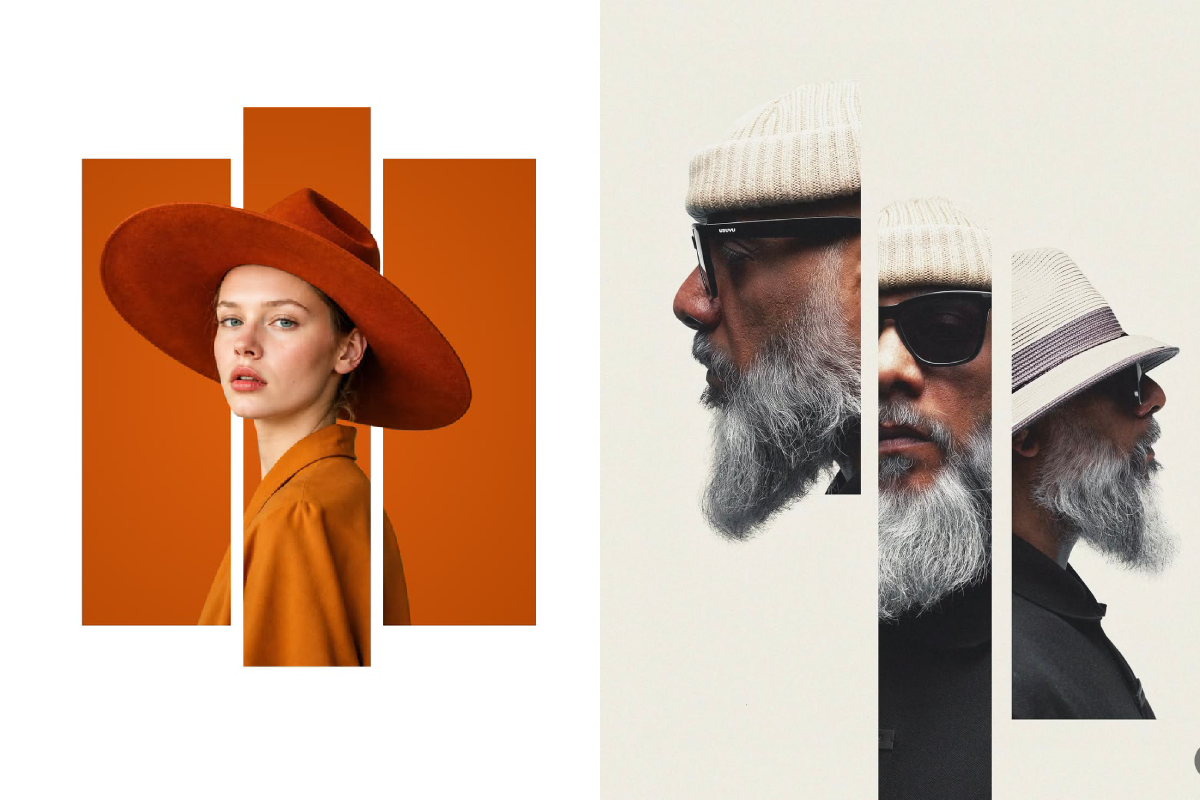
Fashion is often about the details that transform a simple outfit into a memorable look. Few accessories have the ability to create an instant visual statement quite like a well-chosen hat.
The images featured here explore two very different approaches to statement headwear: a dramatic oversized rust-orange hat styled with a minimalist outfit, and a series of sophisticated neutral-toned hats paired with dark clothing. Together, they demonstrate how shape, colour, texture and styling can turn a hat into the centrepiece of an entire fashion story.
The Power of a Statement Hat
A hat can be much more than a practical accessory.
The right design can influence the entire character of an outfit. A wide-brimmed hat can create a dramatic, elegant appearance, while a structured fedora or trilby can bring a sharper, more sophisticated edge.
In contemporary fashion, statement hats are increasingly being used as visual focal points. Instead of matching every accessory perfectly, designers and stylists can build an outfit around one distinctive piece.
That approach creates a stronger and more memorable silhouette.
Rust Orange Creates an Immediate Impact
The first look demonstrates the power of colour.
The oversized rust-orange hat immediately draws attention against the clean white background and geometric orange panels. The warm shade gives the image a rich, autumn-inspired quality while maintaining a modern editorial feel.
Orange and rust tones work particularly well with:
- Cream
- Beige
- White
- Brown
- Black
- Olive green
- Camel
A statement hat in a warm colour can therefore become an easy way to introduce personality into a neutral wardrobe.
Why Oversized Shapes Work
The wide brim of the hat dramatically changes the proportions of the look.
Its scale creates a strong silhouette around the face and shoulders, giving the outfit a fashion-editorial quality. Oversized hats are particularly effective in photographs because their shape remains visually distinctive even from a distance.
However, the rest of the styling is relatively restrained.
This balance is important.
When the hat is already dramatic, keeping the clothing and accessories simple allows the headwear to remain the focus.
Minimalism Makes the Hat Stand Out
The first image uses a deliberately clean composition.
The model’s outfit is simple, the background is largely white and the orange geometric shapes echo the colour of the hat.
This is an example of fashion minimalism, where fewer visual elements are used to make one particular feature more powerful.
The concept can easily be recreated in everyday styling.
Choose a neutral outfit, add one statement hat and allow the accessory to become the defining feature.
Neutral Hats Bring a Different Personality
The second visual takes a completely different approach.
Instead of one large colourful hat, it presents multiple neutral-toned designs worn with dark clothing and sunglasses.
The overall effect is more masculine, understated and sophisticated.
Cream, beige and off-white hats are particularly versatile because they can work with a wide range of colours. They can also soften darker outfits while maintaining a polished appearance.
The Relationship Between Hats and Sunglasses
The second look also demonstrates how hats and sunglasses can work together.
Both accessories frame the face, creating a strong visual identity.
Dark sunglasses provide contrast against the lighter hats, while the structured hat shapes add definition to the overall silhouette.
This combination works especially well for:
- Resort fashion
- Travel outfits
- Summer styling
- Streetwear
- Editorial photography
- Smart-casual looks
The key is to maintain balance between the size and shape of both accessories.
Texture Adds Another Dimension
Hat fashion isn’t only about colour and shape.
Texture can completely change how an accessory feels.
The knitted or woven textures visible in the neutral hats create a relaxed, tactile quality. In contrast, the smooth, structured appearance of the orange wide-brimmed hat feels more dramatic and editorial.
Common hat materials such as wool, felt, straw, cotton and woven fibres can each create a different aesthetic.
For example:
Felt — sophisticated and structured.
Straw — relaxed and summery.
Wool — warm and classic.
Cotton — casual and practical.
Woven fibres — natural and resort-inspired.
Choosing the material according to the season and occasion can make the overall styling feel more intentional.
Hats as a Form of Personal Expression
One reason hats remain popular across fashion generations is their ability to communicate personality.
A dramatic wide-brimmed hat can suggest confidence and creativity.
A classic fedora can create a refined and timeless impression.
A simple beanie can make an outfit feel casual and relaxed.
A structured trilby can introduce a sharper, more tailored aesthetic.
This makes hats particularly useful for people who want to experiment with fashion without completely changing their wardrobe.
How to Style a Statement Hat
If you’re new to statement hats, start with a simple outfit.
A monochrome base is one of the easiest options.
For example:
White shirt + neutral trousers + statement hat
or
Black outfit + beige hat + sunglasses
or
Denim + simple shirt + wide-brimmed hat
The simpler the clothing, the more attention the hat receives.
Once you’re comfortable, you can experiment with colour coordination by matching the hat with shoes, a handbag or another small detail in the outfit.
Choosing the Right Hat Shape
Different face shapes and hairstyles can interact differently with hat silhouettes, but comfort and personal preference should always be central.
Wide-brimmed hats create a dramatic horizontal shape.
Structured hats create sharper lines.
Soft hats create a more relaxed appearance.
When shopping for a hat, consider not only how it looks from the front but also how the entire silhouette works from the side.
A good hat should feel like part of the outfit rather than something added at the last moment.
The Return of Editorial Hat Fashion
Statement headwear has a strong place in fashion photography because it immediately creates visual interest.
The images here demonstrate how hats can be used almost like architectural elements within a photograph.
The orange hat becomes part of a geometric composition, while the neutral hats are arranged through contrasting vertical panels.
This approach shows that fashion photography isn’t only about clothing. Accessories, composition, lighting and graphic design can all work together to tell a visual story.
From Street Style to High Fashion
Hats can easily move between different fashion categories.
A simple baseball cap can become part of streetwear.
A straw hat can define a resort look.
A wool fedora can complement tailored clothing.
A dramatic wide-brimmed design can become a high-fashion statement.
This versatility explains why headwear continues to appear across seasonal collections and fashion editorials.
Building a Hat-Focused Wardrobe
You don’t need dozens of hats to experiment with this trend.
A small collection of versatile styles can cover many occasions:
- A neutral wide-brimmed hat for statement outfits.
- A classic fedora for smart-casual styling.
- A lightweight straw hat for summer and travel.
- A simple beanie for casual winter outfits.
- A structured dark hat for evening or editorial looks.
The goal isn’t quantity. It’s finding pieces that complement your existing wardrobe.
Final Thoughts
The images featured here demonstrate two very different sides of contemporary hat fashion.
One embraces bold colour, oversized proportions and graphic minimalism.
The other focuses on neutral tones, classic shapes, texture and understated sophistication.
Both approaches prove the same point: a hat can completely transform the personality of an outfit.
Whether you prefer dramatic statement pieces or timeless neutral accessories, headwear offers an opportunity to experiment with proportion, colour and personal style.
Ultimately, the most effective fashion accessories are the ones that feel intentional — pieces that don’t simply complete an outfit but become part of its identity.
And when it comes to creating a memorable look, sometimes the perfect finishing touch is the piece sitting right on top.

Comments are closed.