
The New Face of Indian Fashion: Where Tradition Meets Bold Contemporary Expression

Indian fashion has always been deeply connected to culture, craftsmanship and identity. But today, traditional aesthetics are being reimagined through a much more experimental lens.
The latest generation of fashion photography is showing that heritage-inspired clothing does not have to look conventional. Traditional jewellery, flowing fabrics, bold colours and classical silhouettes can be combined with dramatic photography, contemporary styling and unconventional settings to create something entirely new.
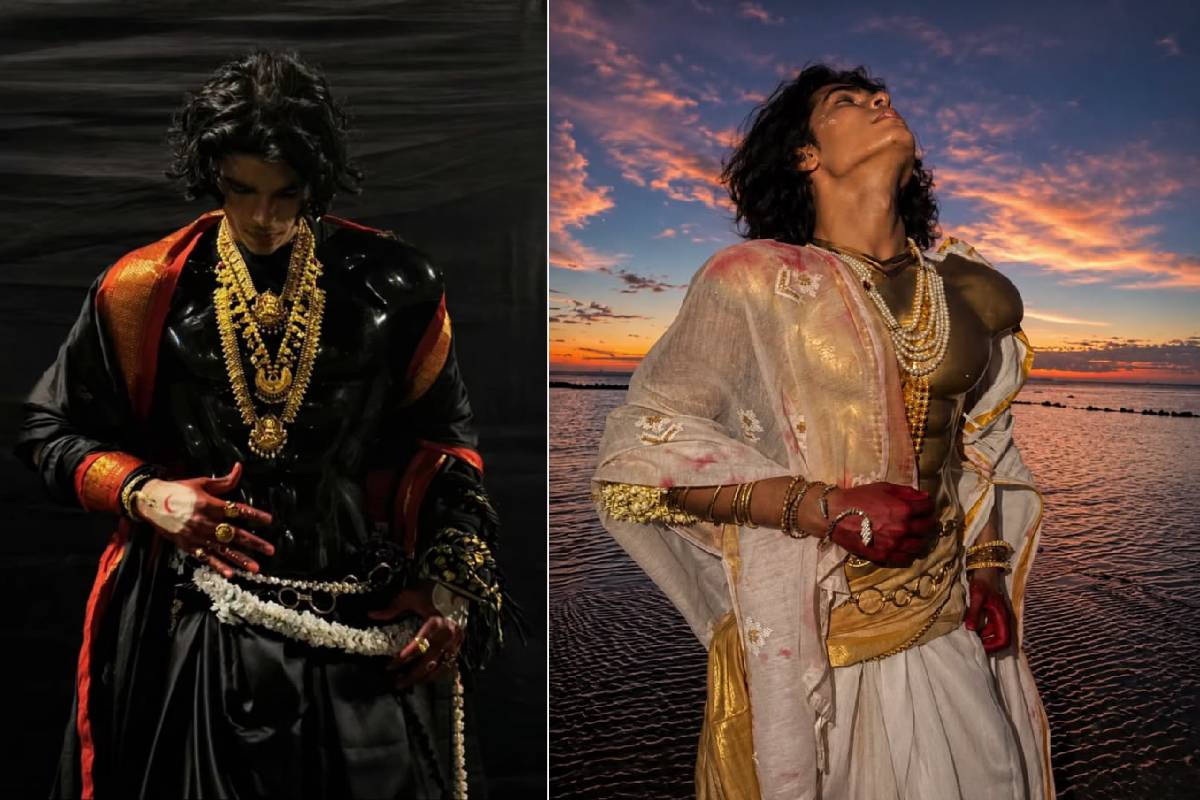
The images featured here capture that transformation beautifully — bringing together Indian heritage, statement jewellery, theatrical styling and modern visual storytelling.
Tradition With a Dramatic Twist
Traditional Indian fashion is often associated with celebrations, weddings and cultural occasions. But contemporary creators are increasingly taking these familiar elements outside their conventional settings.
The result is fashion that feels theatrical and expressive.
Dark clothing, metallic jewellery and strong contrasts can create a completely different mood from the soft, pastel aesthetics commonly associated with traditional Indian fashion.
In one of the looks, a dark ensemble is elevated with multiple layers of gold jewellery and a traditional floral garland. The styling feels powerful, dramatic and almost cinematic.
The second look takes a different direction, combining a light traditional outfit with gold accessories against a spectacular sunset backdrop.
Both approaches demonstrate how the same cultural influences can produce completely different visual identities.
The Power of Statement Jewellery
Jewellery is one of the strongest visual elements in these looks.
Multiple necklaces are layered together, creating depth and drawing attention to the upper half of the outfit. Gold bangles, waist jewellery, rings and other traditional accessories add further detail.
Statement jewellery has the ability to transform an otherwise simple garment into a complete fashion statement.
Instead of treating jewellery as an afterthought, contemporary styling often makes it the centrepiece.
This approach is particularly effective in photography because metallic jewellery catches light and creates highlights, texture and visual contrast.
Gold as a Symbol of Heritage
Gold has a particularly important place in Indian fashion.
Across generations, gold jewellery has been associated with celebrations, family traditions, craftsmanship and cultural identity. Its presence in modern fashion photography therefore carries both aesthetic and cultural significance.
But today’s styling doesn’t always use gold in a conventional way.
Layering different pieces, combining traditional ornaments with contemporary clothing and using dramatic lighting can make familiar jewellery feel completely modern.
Fashion Inspired by Performance
There is a theatrical quality to these photographs that makes them feel closer to performance art than conventional fashion photography.
The poses, costumes, jewellery and lighting work together to create characters rather than simply showcase clothing.
This is an increasingly interesting direction for fashion creators.
Instead of asking only, “What is the person wearing?”, the image encourages viewers to think about:
- Who is this character?
- What story does the outfit tell?
- What cultural references are being used?
- What emotion does the image communicate?
- How does the environment change the meaning of the clothing?
This turns a fashion photograph into a visual narrative.
The Importance of Location
The background plays an equally important role.
The dark setting in the first photograph creates an intense and mysterious atmosphere. The sunset and water in the second image create a completely different feeling — open, dramatic and almost dreamlike.
This shows how location can completely change the perception of fashion.
A traditional outfit photographed inside a heritage building can communicate history. The same outfit photographed beside the ocean at sunset can feel contemporary and cinematic.
The clothing remains important, but the environment becomes part of the story.
Contemporary Styling Meets Cultural Identity
Modern Indian fashion is increasingly moving beyond strict categories.
Traditional garments can now be styled with:
- Contemporary jewellery
- Modern hairstyles
- Experimental makeup
- Unusual layering
- Western-inspired silhouettes
- Statement accessories
- Editorial photography
This flexibility allows people to express cultural identity without being restricted to a single traditional aesthetic.
The result is a fashion language that feels personal rather than prescribed.
The Role of Colour
Colour is another major element in these photographs.
The contrast between black, gold and red creates a powerful visual identity in the first look. In the second, white, cream and gold are balanced against the deep blue and orange tones of the sunset.
This demonstrates an important principle of fashion photography: colour doesn’t simply decorate an outfit — it creates mood.
Dark colours can create intensity and drama, while lighter colours can create an impression of softness and elegance.
Gold acts as a bridge between both, adding warmth and visual richness.
Traditional Fabrics in a Modern Visual World
Traditional fabrics continue to influence contemporary fashion because of their texture and visual character.
Flowing fabrics photograph beautifully because they create movement. Gold borders catch light. Embroidery adds depth. Handcrafted details provide visual texture.
When these elements are photographed using modern lighting and composition, they can appear completely different from their traditional presentation.
This is one reason heritage-inspired fashion remains relevant to contemporary audiences.
Social Media Is Changing Fashion Photography
Social media has also changed how fashion is presented.
A fashion image no longer needs to belong exclusively to a magazine editorial or professional campaign. Independent creators can experiment with concepts and publish their work directly to an audience.
This has encouraged more experimentation with:
- Cinematic photography
- Cultural storytelling
- Vintage-inspired visuals
- Experimental portraits
- Traditional fashion
- Conceptual styling
As a result, fashion photography is becoming increasingly diverse.
From Outfit to Visual Story
The strongest fashion photographs often communicate more than clothing.
They create a world around the subject.
The jewellery, fabric, pose, lighting, architecture and landscape all contribute to the final image. When these elements work together, the photograph becomes memorable because it tells a story rather than simply displaying an outfit.
That storytelling approach is particularly effective when working with traditional fashion because the clothing itself already carries cultural history.
Why Heritage Fashion Continues to Evolve
Tradition is not static.
Every generation interprets cultural clothing differently. New designers introduce different cuts and silhouettes. Stylists experiment with accessories. Photographers change the way traditional clothing is presented.
This constant reinterpretation allows heritage fashion to remain relevant.
The goal is not necessarily to replace traditional aesthetics but to find new ways of presenting them.
A New Era of Indian Fashion
The future of Indian fashion is likely to be increasingly experimental.
Traditional jewellery may appear alongside contemporary clothing. Heritage fabrics may be photographed in unexpected locations. Classic silhouettes may be redesigned for modern lifestyles.
The result is a fashion culture that can respect its roots while continuing to evolve.
The images featured here represent that balance — heritage presented with confidence, individuality and a distinctly contemporary visual language.
Final Thoughts
Indian fashion has never been limited to a single definition.
It can be elegant, dramatic, traditional, experimental, minimal or theatrical — sometimes all at once.
The combination of elaborate jewellery, flowing fabrics, strong styling and cinematic photography demonstrates how powerful traditional influences can become when viewed through a modern creative lens.
Ultimately, the future of fashion may not be about choosing between tradition and modernity.
It may be about bringing the two together and creating something that belongs to both worlds.
Because when heritage meets creativity, tradition doesn’t simply survive — it evolves.

Comments are closed.