

Bharathiraja, Iyakkunar Imayam of Tamil Cinema, Dies at 84
The man who gave Tamil cinema its soul — and its soil — is gone. Bharathiraja's death marks the end of an era that taught an entire industry to look inward, and outward into the fields.

He Gave Tamil Cinema Its Soil
There’s a scene etched in the memory of every Tamil cinephile — a village woman running through fields, the red earth of Madurai under her feet, the wind doing what no studio light ever could. That image didn’t exist before 1977. Bharathiraja put it there.
Bharathiraja, Proficient Tamil actor-filmmaker, passed away due to an age-related illness in Chennai on June 10, 2026. He was 84. And with him goes a very particular kind of filmmaking — one that believed the village had stories worth telling, that farmers and labourers deserved to be at the centre of the frame, not the periphery.
Tamil cinema had seen grandeur before him. It had seen melodrama, mythological epics, and city romances. What it hadn’t seen — not quite like this — was itself.
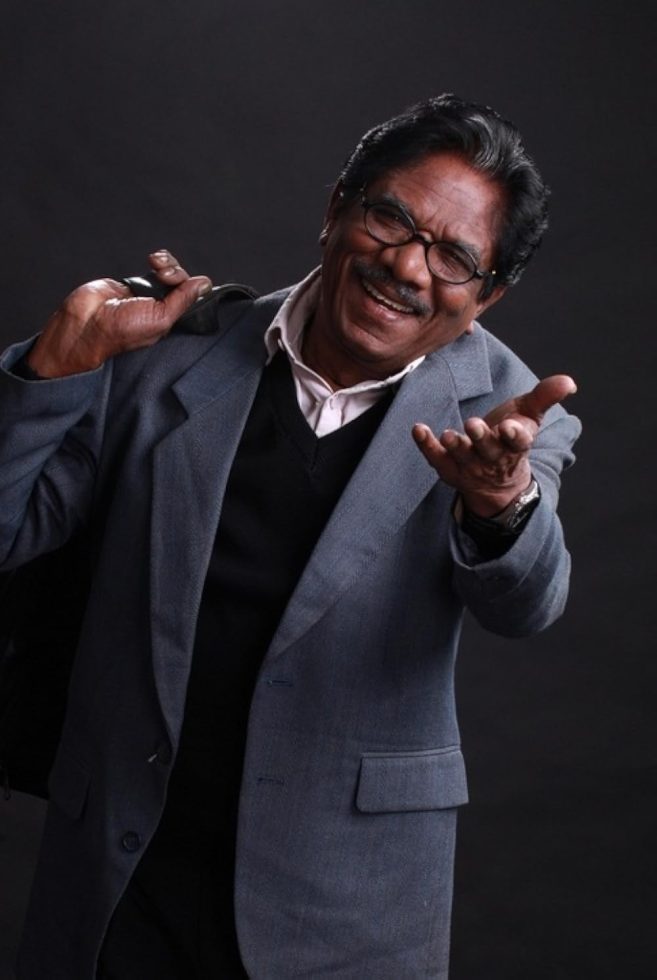
The Director Who Broke the Studio Floor
Born Chinnasamy Periyamaya on July 17, 1941, in Theni Allinagaram in the Madurai district, Bharathiraja started his film career as an assistant to Kannada filmmaker Puttanna Kanagal, later assisting directors P. Pullaiah and M. Krishnan Nair. He was learning craft, but his eye was always fixed somewhere else — on the red-dust roads of Tamil Nadu’s heartland, on the lives of people mainstream cinema barely acknowledged.
His debut came in 1977. 16 Vayathinile, his first film as director, broke the then-existing convention to create a new genre of village cinema and is now regarded as a milestone in the history of Tamil cinema. It wasn’t supposed to be a blockbuster. Bharathiraja himself said the film was meant to be a black-and-white art film produced with NFDC support — but it turned into a commercially successful colour film that launched careers and rewrote the rules of Tamil storytelling.
“Iyakkunar Imayam” — Peak of Directors. The title wasn’t handed to him at an awards ceremony. Tamil audiences gave it to him, organically, because no one was doing what he was doing.
A Launchpad Built in the Fields
Bharathiraja didn’t just direct films. He discovered people. His sets were, famously, where careers were born.
Alaigal Oivathillai (1981) introduced actor Karthik, who would go on to be known in the industry as “Navarasa Nayagan.”. 16 Vayathinile itself had given early platforms to actors who would define Tamil cinema for decades. Over a career spanning nearly five decades, Bharathiraja became known as a filmmaker whose instinct for talent was as sharp as his instinct for story.
His rural canvas was never just scenery. His biggest hits of the 1980s — Alaigal Oivathillai (1981), Mann Vasanai (1983), and Muthal Mariyathai (1985) — were strong love stories in a village backdrop. And they weren’t simple. Muthal Mariyathai explored love across an age and caste divide, with Sivaji Ganesan in a role few mainstream heroes would have accepted. Vedham Pudhithu dealt with caste discrimination in a stronger, more revolutionary manner, years before the conversation became fashionable.
That’s where it gets interesting — Bharathiraja’s courage wasn’t loud. It was embedded quietly into the grain of every frame.
Awards, Recognition, and a Legacy That Outlasted Fashion
By 2017, Bharathiraja had won six National Film Awards, four Filmfare Awards South, six Tamil Nadu State Film Awards, and a Nandi Award. In 2004, the Government of India honoured him with the Padma Shri, India’s fourth-highest civilian honour, for his contribution to the film industry. A year later, Sathyabama University conferred on him an honorary Doctorate of Letters.
The accolades tell one story. The other story is in every Tamil filmmaker who came after him and set their camera outside the city limits. Bharathiraja gave that permission. He made it artistically legitimate — and commercially viable — to tell rural Tamil stories without apology.
The Weight of His Final Years
The last two years had not been kind to him. Bharathiraja’s health had been in serious decline ever since his son Manoj passed away due to cardiac arrest at the age of 48 in March 2024. By all accounts, the loss broke something in him. His brother Jayaraj Periyamayathevar revealed that Bharathiraja’s mental health was very low and that he was unable to cope with the grief.
Manoj, born in 1976, had made his acting debut in his father’s 1999 film Taj Mahal. He had gone on to direct Margazhi Thingal in 2023 — a film that featured Bharathiraja himself. Father and son, together on screen. And then Manoj was gone — suddenly, at 48, with his best work still ahead of him.
In December 2025, Bharathiraja was hospitalised in Chennai’s T Nagar after experiencing respiratory problems including wheezing. In April 2026, he was discharged from hospital after undergoing treatment for an unspecified illness. He returned home. And on June 10, 2026, he passed away at his residence — quietly, as the city moved through another Tuesday morning.
Actor-politician Khushbu Sundar, expressing her grief on social media, wrote that his films were “benchmarks and shall continue to be the actual school of filmmaking,” and that “he leaves behind a huge legacy for every cinema lover.”
What Tamil Cinema Loses Today
Bharathiraja is survived by his daughter Janani. He leaves behind a filmography that reads like a lesson plan for anyone serious about Indian cinema — not just Tamil cinema. His films proved that language is never a barrier when a story is told with enough truth.
Every frame he shot of red-soiled Tamil Nadu was an argument: that this place matters, that these people matter, that their love and grief and defiance deserve the big screen. For nearly five decades, he won that argument. Consistently.
Tamil cinema will make more films. It will discover more stars. It will win more awards. But the particular alchemy Bharathiraja brought — that ability to make a field feel sacred, to make rural Tamil life feel epic — that’s not easily replicated. Some directors leave behind a style. Bharathiraja left behind a conscience.
FAQ SECTION
Q: Who was Bharathiraja and why was he called Iyakkunar Imayam? A: Bharathiraja was a veteran Tamil filmmaker who pioneered realistic rural cinema in India. He was called “Iyakkunar Imayam,” meaning Peak of Directors, by Tamil audiences in recognition of his unparalleled contribution to Tamil cinema, spanning nearly five decades of directing, producing, and acting.
Q: What was Bharathiraja’s most famous film? A: His 1977 debut 16 Vayathinile is widely regarded as his most iconic film and a milestone in Tamil cinema history. It launched a new genre of village-centred storytelling and helped establish the careers of several prominent actors. His 1985 film Muthal Mariyathai and 1993’s Kizhakku Cheemaiyile are also considered landmark works.
Q: Which actors did Bharathiraja introduce to Tamil cinema? A: Bharathiraja introduced several prominent actors through his films, including Karthik (in Alaigal Oivathillai, 1981) . His films were known as launchpads for actors who went on to define Tamil cinema for generations.
Q: What awards did Bharathiraja win during his career? A: Bharathiraja won six National Film Awards, four Filmfare Awards South, six Tamil Nadu State Film Awards, and a Nandi Award. In 2004, the Government of India awarded him the Padma Shri, the country’s fourth-highest civilian honour, for his contributions to Indian cinema.
Q: What caused Bharathiraja’s death? A: Bharathiraja passed away on June 10, 2026, at the age of 84 in Chennai due to age-related illness and prolonged health complications. His health had declined significantly following the death of his son Manoj Bharathiraja in March 2025, and he had been hospitalised multiple times in his final months.
View this post on Instagram

Comments are closed.