

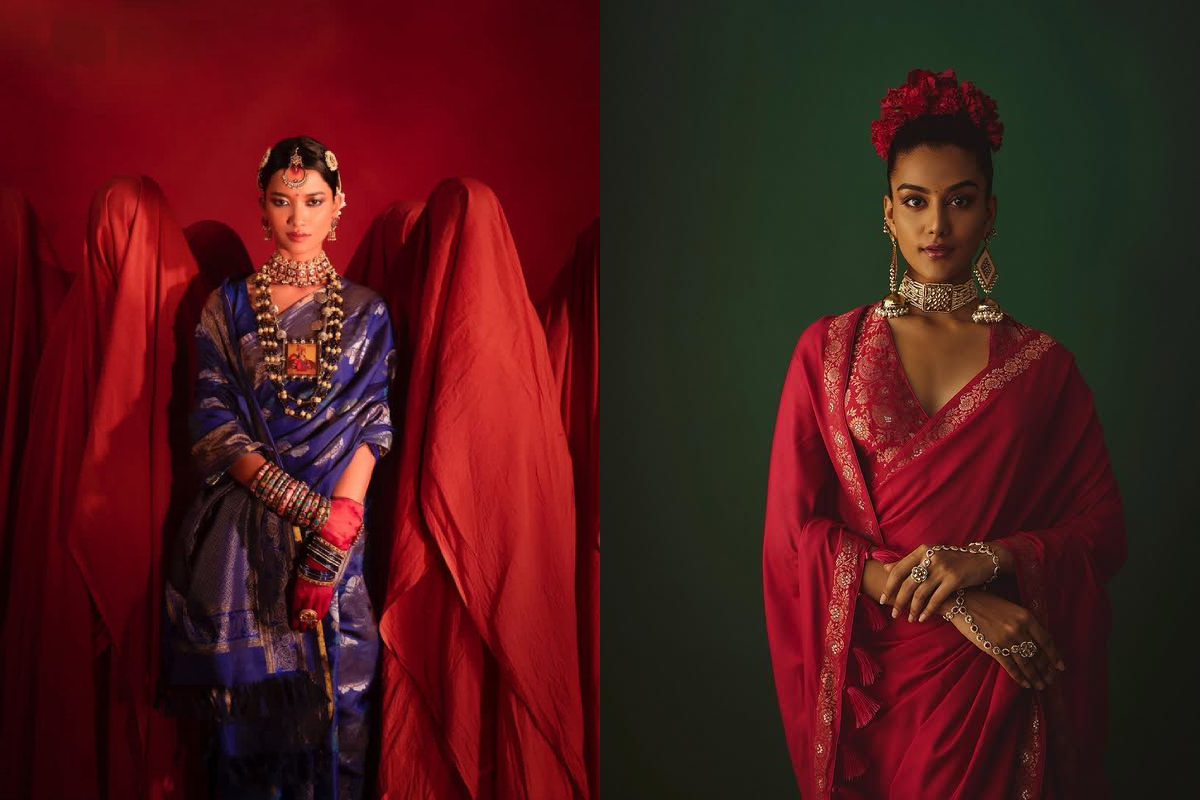
Indian ethnic fashion has a language of its own, and sometimes, all it takes is the right colour, exquisite jewellery and confident styling to tell a story of timeless elegance. From the royal richness of sapphire blue to the dramatic beauty of deep crimson, these two fashion portraits celebrate the artistic possibilities of traditional Indian attire.
Both looks draw inspiration from heritage while embracing a contemporary editorial aesthetic. Rich colours, intricate embroidery, statement jewellery and carefully styled hair transform classic ethnic silhouettes into striking fashion statements.
Sapphire Blue: The Beauty of Royal Tradition
The first look captures the grandeur of traditional Indian fashion through a deep blue silk ensemble accented with golden motifs. The rich fabric creates an elegant contrast against the dramatic red backdrop, allowing the outfit’s texture and detailing to stand out.
Layered necklaces, traditional earrings, a statement maang tikka and colourful bangles bring depth to the styling. Each accessory contributes to the overall composition, creating a look that feels rooted in Indian craftsmanship and ceremonial dressing.
The structured drape and composed posture add to the regal atmosphere. Rather than relying on excessive embellishment alone, the ensemble combines colour, jewellery and fabric to create a balanced visual statement.
Sapphire blue is particularly effective for festive and celebratory fashion because it offers depth without losing its sophistication. Paired with gold jewellery, it creates a classic combination that remains relevant across generations.
Crimson Red: A Modern Expression of Elegance
The second look explores a different side of ethnic fashion. A rich crimson-red saree with delicate gold detailing creates a luxurious silhouette against a deep green background.
The styling feels more contemporary and understated. A sculptural floral hair accessory, ornate choker, statement earrings and hand jewellery introduce texture without distracting from the saree itself.
The combination of red and green gives the portrait a dramatic, almost cinematic quality. The clean composition also highlights the relationship between colour, lighting and styling.
Crimson has long held a special place in Indian celebrations, symbolising festivity, passion and grandeur. In modern fashion editorials, it can also communicate confidence and individuality.
The result is a look that respects traditional aesthetics while presenting them through a fresh visual perspective.
Statement Jewellery: The Finishing Touch
Jewellery plays a central role in both ensembles. In the blue look, layered necklaces and traditional ornaments create a richly detailed, heritage-inspired appearance. In the crimson look, the choker and coordinated accessories introduce a more streamlined form of luxury.
The difference demonstrates an important styling principle: jewellery should complement the outfit’s personality.
For heavily detailed traditional attire, layered pieces can create a ceremonial effect. For a more contemporary drape, one prominent necklace paired with carefully selected accessories can deliver a cleaner finish.
Hair styling matters, too. Traditional ornaments and floral accents can become focal points, framing the face while reinforcing the overall theme.
The Art of Colour in Indian Fashion
Colour is one of the most powerful tools in ethnic styling.
- Sapphire blue and gold: A timeless combination that communicates sophistication and royal elegance.
- Crimson red and gold: A celebratory palette that feels rich, expressive and luxurious.
- Red against green: A dramatic contrast that creates visual depth in fashion photography.
- Dark fabrics with antique jewellery: A combination that highlights craftsmanship and intricate details.
The surrounding environment can strengthen these choices. A bold red backdrop intensifies the richness of blue silk, while a deep green background makes crimson fabric appear even more vivid.
This thoughtful relationship between clothing, accessories and setting is what gives fashion editorials their distinctive visual identity.
Traditional Fashion Meets Contemporary Photography
These portraits also demonstrate how photography can transform the perception of ethnic wear. The first image uses a dramatic red setting and carefully arranged silhouettes to create a theatrical atmosphere. The second relies on a deep green background, controlled lighting and a composed pose to deliver a more intimate, luxury-fashion aesthetic.
In both cases, the styling is supported by the visual environment rather than competing with it.
For fashion photographers and content creators, the lesson is simple: strong colour coordination, deliberate lighting and carefully selected accessories can make traditional clothing feel editorial, modern and memorable.
Why Timeless Ethnic Fashion Continues to Inspire
Indian ethnic wear continues to evolve because it offers an extraordinary balance of cultural heritage and creative freedom. Traditional fabrics and jewellery can be styled in ways that feel ceremonial, minimalist, dramatic or contemporary, depending on the choices made.
The sapphire-blue ensemble celebrates the richness of heritage, while the crimson-red look embraces a more modern interpretation of elegance. Together, they demonstrate that traditional fashion does not need to remain confined to a single aesthetic.
True style lies in the details: the way a fabric catches the light, the balance of jewellery, the confidence of the silhouette and the colours that bring everything together.
Sometimes, the most powerful fashion statement is one that honours tradition while allowing personal expression to shine.

Comments are closed.