

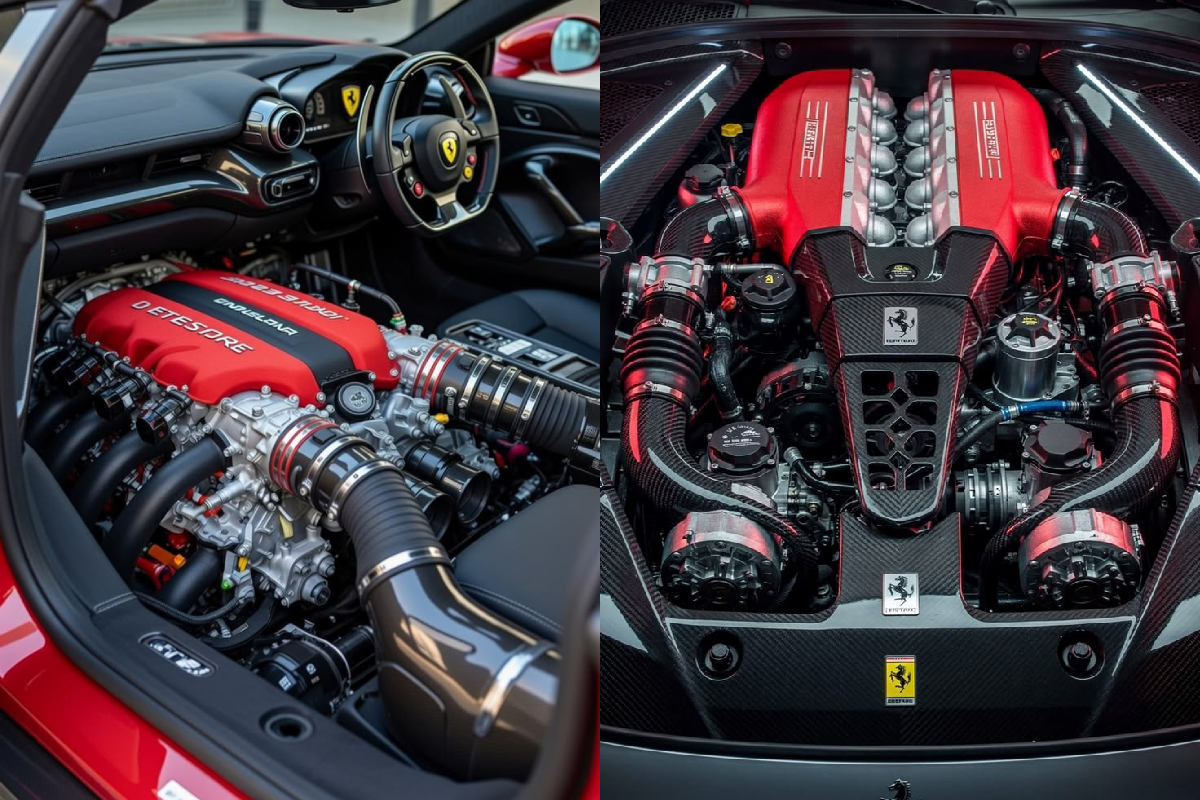
The unmistakable combination of Ferrari red, precision-engineered components and sculpted mechanical details captures the essence of high-performance automotive engineering. For supercar enthusiasts, the engine bay is more than a collection of metal parts—it is where design, technology and performance come together.
These two detailed views offer a closer look at the world of Ferrari-inspired engineering, highlighting the dramatic red engine covers, intricate intake systems, carbon-fibre components and carefully arranged mechanical hardware that make exotic cars so fascinating.
Ferrari’s Engineering Philosophy: Performance Meets Precision
Ferrari has built its reputation around performance-focused engineering, motorsport heritage and distinctive Italian design. Every component in a high-performance powertrain serves a purpose, from delivering air to the engine to managing heat and transferring power efficiently.
The red engine covers in these photographs immediately draw the eye. Set against dark mechanical components and metallic finishes, they create a striking visual contrast that reflects Ferrari’s recognisable performance aesthetic.
The result is an engine bay that feels purposeful, technical and visually dramatic.
The Engine Cover: A Signature of Performance
The red covers provide the visual centrepiece of both images. Their bold colour contrasts with the black hoses, silver hardware and carbon-fibre-style surfaces surrounding them.
Beyond appearance, engine covers and surrounding components help organise and protect parts of the engine assembly. Their exact functions depend on the vehicle and engine design.
The carefully arranged components also demonstrate how modern supercar engineering balances accessibility for servicing, thermal management, packaging constraints and visual presentation.
Air Intake Systems: Helping the Engine Breathe
The prominent black intake tubing and connected ductwork are among the most interesting details in the photographs.
An engine requires a controlled supply of air for combustion. Intake systems guide that air toward the engine, while their design can influence airflow, throttle response and overall performance.
In high-performance vehicles, engineers must consider airflow resistance, temperature, space limitations and the demands placed on the engine at high speeds. The tubing, clamps and connectors visible here illustrate the complexity hidden beneath a supercar’s bodywork.
Carbon Fibre and Lightweight Construction
The dark, patterned surfaces surrounding the engine in the second image resemble carbon-fibre components. Carbon fibre is valued in performance-car engineering for its high strength-to-weight ratio and its ability to be formed into complex shapes.
Reducing weight can help improve acceleration, braking and handling, although the benefits depend on where weight is removed and how the vehicle is engineered.
Combined with metallic hardware and red engine covers, these darker materials create the high-tech appearance associated with modern exotic cars.
Why the Engine Bay Looks So Dramatic
Several visual elements make these photographs particularly striking:
-
Ferrari red: Creates an immediate focal point against darker mechanical surfaces.
-
Symmetrical layout: The second view emphasises the organised arrangement of major components.
-
Metallic finishes: Silver hardware adds contrast and highlights the precision of the assembly.
-
Dark intake tubing: Creates visual depth and guides the eye through the engine bay.
-
Close-up photography: Reveals mechanical details that are often hidden during everyday driving.
This combination of engineering and visual presentation is part of what makes exotic-car photography so appealing to enthusiasts.
More Than Horsepower: The Craft Behind a Supercar
A high-performance engine is the result of numerous engineering decisions involving combustion, cooling, lubrication, air delivery and electronic control. Its output depends on the complete system rather than any single visible component.
Ferrari’s wider engineering heritage also reflects decades of experience in motorsport, where reliability, efficiency and performance must work together under demanding conditions.
Although these images do not establish the exact Ferrari model or engine specification, they showcase the visual language of performance engineering: bold colours, intricate hardware and carefully packaged mechanical systems.
Engineering as Art
A supercar’s beauty does not end with its exterior styling. Beneath the bodywork lies a world of mechanical complexity, where every pipe, connection and structural component contributes to the vehicle’s operation.
These Ferrari-inspired engine-bay photographs celebrate that hidden world. The vivid red covers, dark intake systems and detailed construction remind us that automotive excellence is as much about engineering precision as it is about speed.
For car enthusiasts, the engine bay is where the soul of a supercar becomes visible—an extraordinary meeting of technology, craftsmanship and performance.

Comments are closed.