

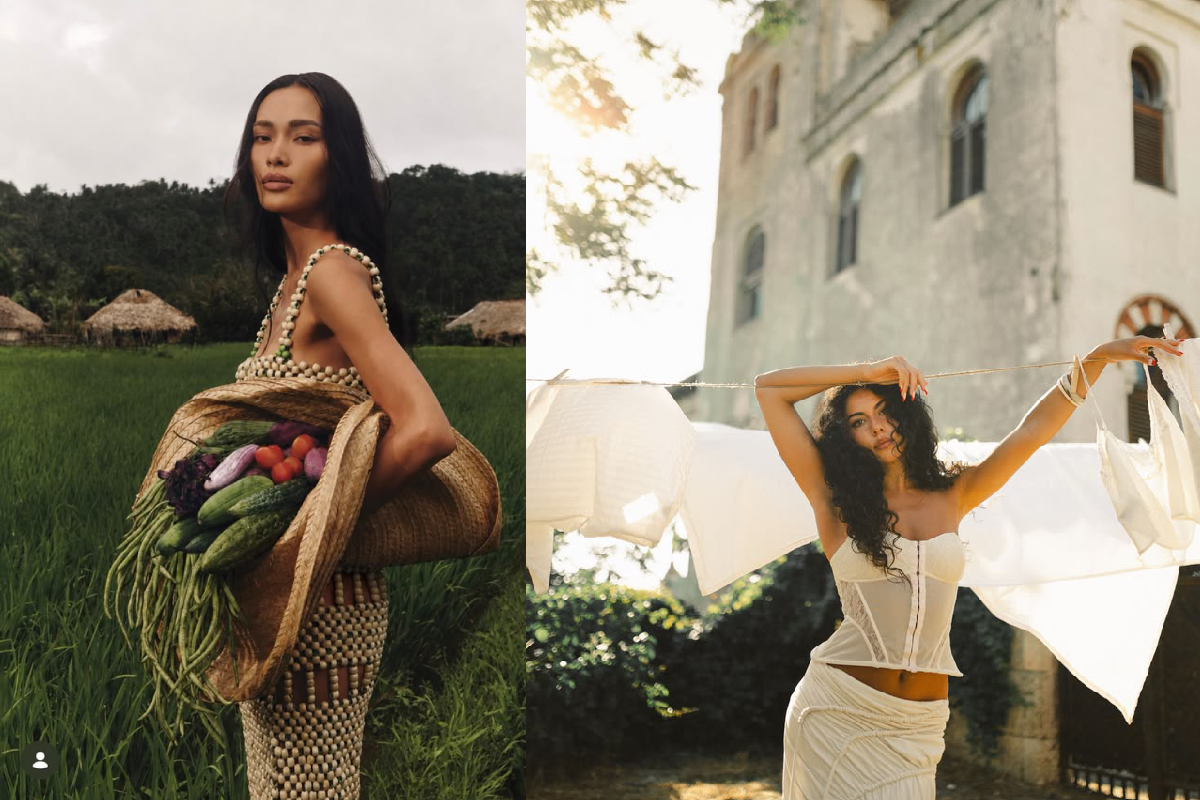
Fashion becomes truly meaningful when it connects style with a sense of place. From lush green fields and handcrafted textures to sunlit architecture and flowing ivory fabrics, these two editorial portraits explore a softer, more thoughtful approach to contemporary fashion.
One look celebrates the beauty of natural materials and rural landscapes, while the other embraces romantic minimalism through delicate tailoring and warm, natural light. Together, they tell a visual story about individuality, simplicity and the timeless appeal of understated elegance.
Nature-Inspired Fashion: Where Earth Meets Elegance
The first portrait brings together a vibrant agricultural landscape and a distinctive, nature-inspired ensemble. Surrounded by green fields, the model carries a woven basket filled with fresh vegetables, creating a striking connection between fashion, craftsmanship and the natural world.
The basket’s earthy texture contrasts beautifully with the green surroundings, while the outfit’s intricate beadwork introduces an element of artisanal detail. The styling feels sculptural yet organic, allowing the materials and setting to work together.
The vegetables add colour and visual interest, transforming an everyday object into part of a carefully composed fashion statement. Rather than relying on conventional luxury accessories, the image draws attention to the beauty of familiar materials and traditional craftsmanship.
This approach reflects an increasingly influential idea in fashion: inspiration can come from nature, local culture and the objects that shape everyday life.
Ivory Minimalism: The Romance of Soft Styling
The second portrait presents a completely different mood. An ivory corset-style top and a softly draped skirt create a delicate silhouette against an old architectural setting.
The light fabric, subtle construction and warm sunlight give the outfit a romantic quality. A line of white garments hanging overhead adds movement and texture, turning an ordinary outdoor scene into an atmospheric fashion backdrop.
The palette remains intentionally restrained. Ivory tones complement the sunlit surroundings, while the architectural details introduce contrast and character.
The result is an editorial look that feels relaxed yet carefully styled. Its appeal lies in the relationship between the clothing, natural light and environment rather than excessive embellishment.
The Power of Texture in Fashion
Texture is the connecting element between these two portraits.
In the first look, woven fibres, beadwork, fresh produce and leafy surroundings create a layered visual experience. In the second, soft fabric, structured seams, flowing material and weathered architecture create a more delicate composition.
These contrasts demonstrate why texture is so important in fashion styling. Even a limited colour palette can feel rich when different materials interact thoughtfully.
For a nature-inspired wardrobe, woven accessories, linen, cotton and handcrafted details can introduce an earthy character. For romantic minimalism, lightweight fabrics, subtle tailoring and soft draping can create an elegant finish without overwhelming the silhouette.
Sustainable Fashion and the Beauty of Craftsmanship
The first image also opens up a conversation about sustainability in fashion. Its rural setting and woven accessories suggest a connection to traditional craft, local materials and the natural environment.
Sustainable fashion involves more than choosing earthy colours or photographing clothing outdoors. It can include selecting durable garments, supporting responsible production, choosing quality over quantity and appreciating the people and skills behind handmade products.
Natural materials and traditional techniques can inspire more thoughtful design, but their environmental impact depends on how they are sourced, produced and maintained.
The broader message is that fashion can be expressive without being disposable. Investing in versatile pieces and appreciating craftsmanship can help create a wardrobe with lasting appeal.
How to Recreate These Editorial Looks
Both styles offer practical inspiration for anyone interested in contemporary fashion photography or everyday dressing.
For a nature-inspired aesthetic:
- Choose earthy shades such as olive, beige, brown and muted green.
- Incorporate woven bags or accessories with handcrafted details.
- Experiment with natural textures and sculptural silhouettes.
- Use outdoor locations to create a stronger visual connection with the environment.
For a romantic minimalist look:
- Build an outfit around ivory, cream or soft neutral tones.
- Combine structured tops with fluid skirts or relaxed trousers.
- Keep accessories understated to preserve the clean silhouette.
- Photograph the outfit in soft daylight to highlight the fabric’s texture.
The key is to maintain a clear visual direction. A few carefully selected details often make a stronger impression than an outfit crowded with competing elements.
Why Natural Settings Make Fashion Photography Special
Natural and heritage-inspired locations add a sense of authenticity to fashion imagery. Green fields create depth and freshness, while weathered walls and old buildings introduce history and atmosphere.
Sunlight can also transform the appearance of a garment, revealing its texture and creating subtle shadows. Meanwhile, ordinary objects such as woven baskets or hanging fabrics can become meaningful visual elements when used thoughtfully.
For fashion creators, these portraits demonstrate that a compelling editorial does not always require an elaborate studio. A strong concept, a distinctive location and thoughtful styling can create a memorable visual narrative.
A New Definition of Modern Elegance
The beauty of contemporary fashion lies in its ability to embrace different interpretations of elegance. One can be earthy, tactile and inspired by traditional craftsmanship; another can be delicate, architectural and minimalist.
The first portrait celebrates the relationship between fashion and the natural world. The second finds beauty in simplicity, soft light and the textures of everyday surroundings.
Together, they remind us that style is not defined only by labels or trends. It also emerges from creativity, cultural inspiration and the ability to see beauty in unexpected places.
Sometimes, the most memorable fashion statement is the one that feels connected to the world around us.

Comments are closed.