

The saree is more than a garment; it is a celebration of Indian heritage, femininity and artistic expression. From the richness of traditional silk to the striking simplicity of contemporary drapes, this timeless attire continues to evolve while preserving its cultural soul.
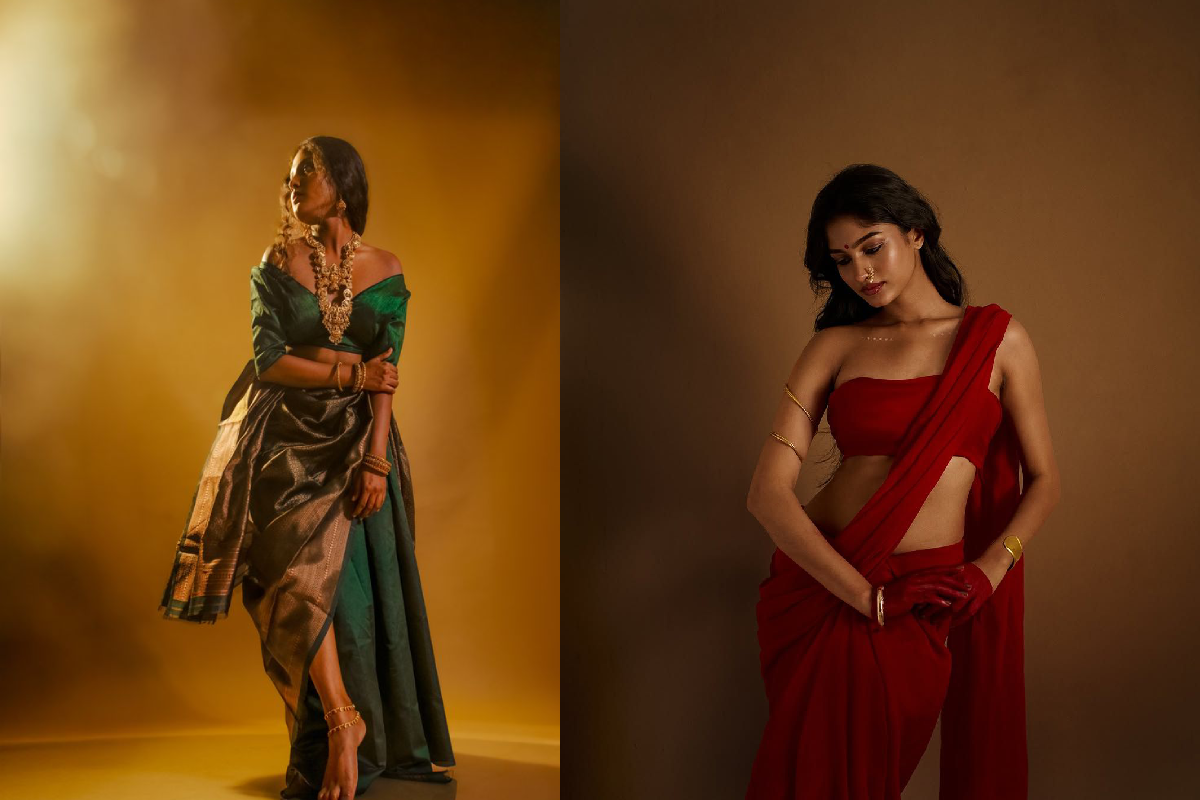
These two fashion portraits beautifully capture the versatility of the saree. One celebrates the regal charm of deep emerald green paired with a lustrous gold-toned silk drape, while the other embraces the bold sophistication of a vibrant red saree styled with a modern silhouette. Though different in colour and mood, both looks share one defining quality: effortless elegance.
Emerald Green and Gold: A Royal Expression of Tradition
There is something undeniably captivating about the combination of emerald green and gold. Rich, graceful and deeply connected to traditional Indian aesthetics, this pairing creates a look that feels both luxurious and timeless.
The green blouse brings depth to the ensemble, while the shimmering gold-toned silk fabric adds richness and movement. Traditional gold jewellery, layered necklaces and delicate bangles complete the styling, creating a regal appearance without taking away from the beauty of the saree itself.
The warm golden lighting enhances the fabric’s sheen, giving the portrait an almost cinematic atmosphere. Every fold, highlight and accessory contributes to a visual story rooted in heritage and craftsmanship.
This colour combination is particularly suited to weddings, festive celebrations, cultural events and traditional photoshoots. For anyone seeking an elegant ethnic look, emerald green and gold remain a combination that rarely loses its appeal.
The Red Saree: Bold, Beautiful and Unforgettable
Red has always held a special place in Indian fashion. Associated with celebration, passion and auspicious occasions, it carries a visual impact that few other colours can match.
In the second portrait, the red saree takes on a contemporary identity. Its clean draping, modern blouse design and minimal gold accessories create a balance between traditional elegance and modern styling.
The monochromatic colour palette allows the silhouette to stand out. Rather than relying on elaborate embellishments, the look draws attention through its colour, structure and carefully arranged pleats.
The result is an outfit that feels confident and sophisticated. It demonstrates how a saree can retain its traditional essence while adapting to contemporary fashion preferences.
Traditional Draping Meets Contemporary Styling
One of the reasons the saree remains relevant across generations is its remarkable adaptability. The same garment can communicate royal grandeur, understated sophistication or bold modernity depending on how it is styled.
Traditional silk sarees often draw attention through their rich textures, woven borders and heritage-inspired accessories. Contemporary interpretations, meanwhile, experiment with structured blouses, unconventional draping and simpler jewellery.
Both approaches offer something different, and neither needs to replace the other. The beauty lies in the freedom to choose a style that reflects personal taste and the occasion.
These portraits illustrate that versatility particularly well: one leans towards traditional richness, while the other explores a sleek, modern interpretation of ethnic fashion.
The Role of Jewellery in Saree Styling
Jewellery can transform the overall mood of a saree ensemble. In the green-and-gold look, layered traditional necklaces and gold-toned accessories reinforce the regal aesthetic. The jewellery becomes part of the outfit’s visual identity.
The red look takes a more restrained approach, using delicate gold accents to complement the vivid fabric without overwhelming it.
A useful styling principle is to create balance. Heavily woven sarees can work beautifully with statement jewellery, while simpler drapes often benefit from one carefully chosen accessory. Necklines, blouse designs and the saree’s border should also guide the selection.
The objective is not to wear the most jewellery possible, but to create a cohesive appearance in which each detail has a purpose.
Lighting, Colour and the Art of Fashion Photography
The atmosphere of these portraits is shaped as much by lighting as by clothing. Warm amber tones enhance the richness of the green, gold and red fabrics, while the darker backgrounds draw attention to the models and their silhouettes.
In the first image, the golden environment complements the reflective texture of the silk. In the second, the restrained brown background allows the red drape to become the visual centrepiece.
Posing adds another dimension. Relaxed hand placement and gentle changes in posture make the photographs feel expressive rather than overly formal. The result is a fashion editorial that celebrates the saree through colour, composition and mood.
For photographers and content creators, these images offer a useful lesson: thoughtful lighting and uncluttered backgrounds can make traditional fashion feel fresh and visually compelling.
How to Style a Saree for a Modern Fashion Statement
Creating a memorable saree look does not always require an elaborate wardrobe. A few intentional choices can make a significant difference:
- Choose colours with character: Emerald green, gold and deep red create rich, striking looks.
- Find the right blouse: A classic fitted blouse offers timeless appeal, while a contemporary cut introduces a modern edge.
- Balance your jewellery: Let either the outfit or the accessories take the lead.
- Pay attention to draping: Neat pleats and a thoughtfully arranged pallu can elevate the entire ensemble.
- Use complementary makeup: Warm, defined eyes and a suitable lip colour can enhance the richness of the fabric.
- Keep the occasion in mind: Traditional silk works beautifully for celebrations, while minimalist drapes can suit fashion events and editorial shoots.
The best styling choices are those that complement the wearer and allow the beauty of the saree to remain central.
Why the Saree Continues to Inspire Fashion
Fashion trends change, but the saree continues to find new ways to remain relevant. Its appeal comes from the combination of heritage, craftsmanship and creative freedom it offers.
It can be traditional without feeling dated, glamorous without being excessive, and contemporary without losing its cultural identity. Each drape creates an opportunity to reinterpret an enduring Indian classic.
The emerald-and-gold ensemble celebrates the grandeur of traditional styling, while the red saree demonstrates the power of simplicity and modern design. Together, they remind us that saree fashion is not defined by a single silhouette or aesthetic.
Ultimately, the saree’s lasting charm lies in its ability to tell different stories through fabric, colour and personal style. Whether styled for a festive occasion or captured in a carefully composed fashion editorial, it remains one of the most expressive and enduring garments in Indian fashion.

Comments are closed.