

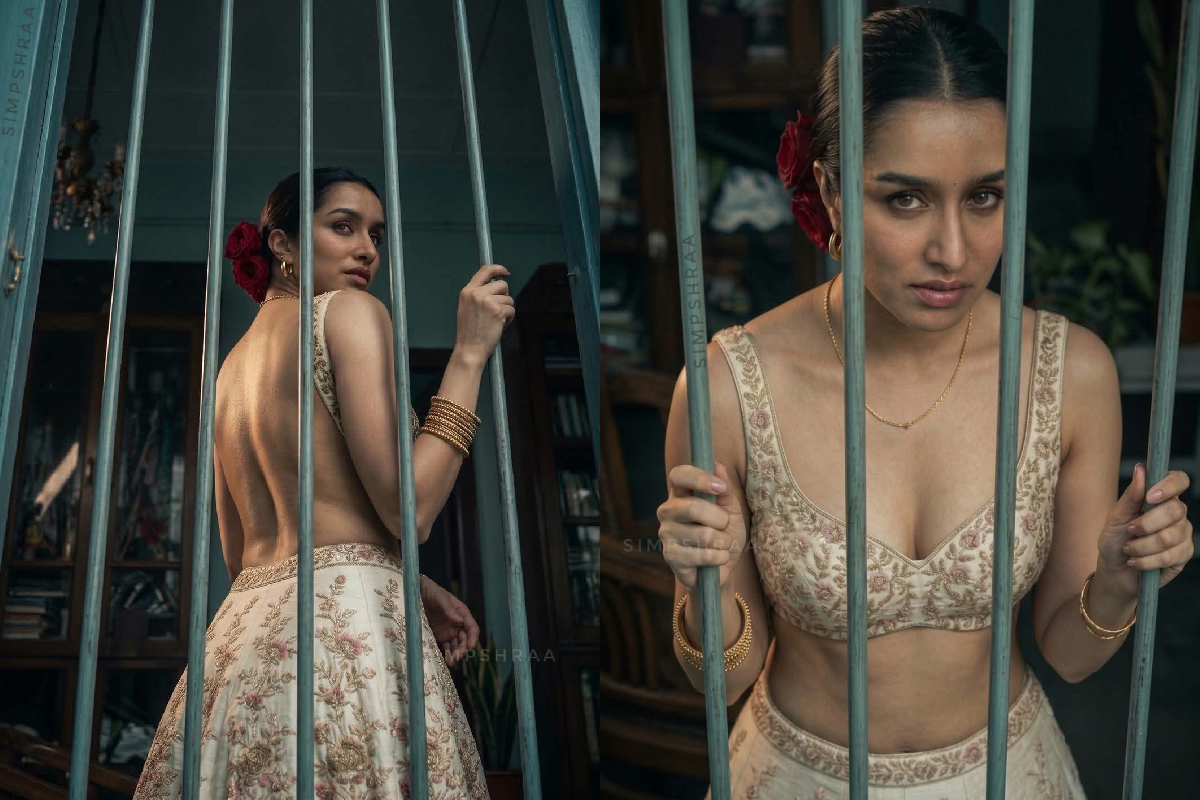
Fashion photography is often about more than clothing. The strongest images can communicate mood, identity, emotion and atmosphere through a combination of styling, composition, location and light.
The latest image is a striking example of this approach. A traditional-inspired outfit, detailed embroidery, gold jewellery and deep architectural shadows are combined with metal bars to create a powerful visual contrast.
Rather than simply presenting fashion as something beautiful to look at, the photograph creates a sense of mystery and invites the viewer to interpret the scene.
Tradition Meets Contemporary Photography
The outfit immediately draws from traditional Indian fashion.
The embroidered fabric, coordinated blouse and skirt, gold bangles, earrings and flowers in the hair create a distinctly Indian aesthetic. The styling is elegant but relatively restrained, allowing the embroidery and accessories to remain the visual focus.
What makes the photograph contemporary is the way these traditional elements are presented.
Instead of a conventional festive or wedding setting, the subject is photographed behind metal bars. This unexpected environment gives the traditional styling a completely different visual identity.
The Power of Contrast
Contrast is one of the most effective tools in photography.
Here, several contrasts work simultaneously:
- Traditional clothing against industrial metal bars
- Soft skin tones against a darker background
- Delicate embroidery against rigid structures
- Gold jewellery against cool-toned surroundings
- Romantic floral details against a visually restrictive environment
These differences immediately attract attention.
The photograph demonstrates that fashion doesn’t need an elaborate background to create impact. Sometimes, an unexpected setting can make a relatively familiar outfit feel completely new.
When Clothing Becomes Storytelling
The metal bars introduce an element of visual storytelling.
They naturally create associations with boundaries, restriction and separation. However, the photograph does not explicitly explain what those ideas mean.
Instead, the viewer is left to interpret the contrast.
This is an important characteristic of editorial fashion photography. The image doesn’t always need to tell a literal story. It can create a feeling or question that encourages the audience to look more closely.
The clothing provides the cultural context, while the environment provides the tension.
The Importance of Traditional Embroidery
Embroidery plays an important role in the overall aesthetic.
The detailed floral patterns add texture to the outfit and give the clothing a handcrafted appearance. Against the relatively dark background, these details become particularly noticeable.
Embroidered garments have long been associated with Indian festive and occasion wear. Contemporary styling, however, is increasingly bringing these details into fashion editorials and creative portrait photography.
The result is a look that feels traditional without appearing overly conventional.
Gold Jewellery Adds Warmth
The gold accessories provide another layer of contrast.
The bangles, earrings and delicate necklace introduce warm metallic tones into an otherwise muted scene. Even the flowers placed in the hair contribute to the overall colour story.
Accessories can be particularly important in minimalist fashion photography because small details become more visible when the composition is carefully controlled.
Here, the jewellery reinforces the traditional character of the outfit while also helping the subject stand out from the surroundings.
Flowers and Feminine Details
The red flowers positioned in the hair add a subtle but important visual element.
Their colour creates a connection between the jewellery, skin tones and embroidered details while introducing a softer, more organic element into the composition.
Flowers are frequently used in Indian styling because of their connection to traditional beauty, celebrations and cultural practices.
In a contemporary photograph, however, they can also function simply as a colour and texture element.
Architecture as a Fashion Element
The setting deserves as much attention as the clothing.
The vertical bars create strong lines throughout the photograph. These lines divide the composition and guide the viewer’s attention toward the subject.
This demonstrates how architecture can become part of fashion styling.
Doors, windows, staircases, old buildings, textured walls and architectural structures can all provide interesting shapes and patterns for fashion photography.
The environment doesn’t simply sit behind the subject — it becomes part of the composition.
A Modern Approach to Indian Fashion
Contemporary Indian fashion increasingly exists between different worlds.
Traditional garments can be photographed in modern urban environments. Heritage jewellery can be paired with contemporary silhouettes. Classic fabrics can be presented through experimental photography.
This flexibility allows cultural fashion to reach audiences beyond conventional occasions.
The goal isn’t necessarily to change traditional clothing. Instead, creative photography can change how audiences perceive it.
Fashion Photography and Mood
Lighting plays a major role in establishing the mood of this photograph.
The darker surroundings create a more intimate atmosphere, while the subject is illuminated enough for the embroidery, jewellery and facial expression to remain visible.
This type of lighting creates depth and prevents the image from feeling flat.
It also demonstrates why fashion photography isn’t simply about having good clothing. Lighting, shadows and composition can completely change how an outfit is perceived.
The Rise of Editorial Indian Aesthetics
Indian fashion photography is increasingly embracing editorial concepts that combine culture with contemporary visual storytelling.
Instead of relying exclusively on traditional poses and familiar backgrounds, photographers are experimenting with:
- Dramatic shadows
- Architectural settings
- Unusual framing
- Cinematic lighting
- Strong contrasts
- Minimal colour palettes
- Symbolic environments
- Traditional jewellery
These techniques give familiar fashion elements a new context.
Individuality Is Driving Modern Style
Perhaps the biggest shift in contemporary fashion is the move toward individuality.
There is no single way to wear traditional Indian clothing anymore.
One person may prefer a classic presentation with traditional jewellery and flowers. Another may choose a minimalist approach. Someone else might combine heritage clothing with modern styling and experimental photography.
All of these approaches can coexist.
Fashion becomes more interesting when people use cultural influences as a starting point rather than a strict set of rules.
The Future of Heritage-Inspired Fashion
Traditional Indian fashion has an enormous visual vocabulary — embroidery, textiles, jewellery, flowers, draping, colour and craftsmanship.
Modern photographers and stylists have the opportunity to reinterpret these elements in countless ways.
The image featured here shows exactly what can happen when traditional styling is placed within an unexpected environment.
The result is not simply a fashion photograph. It becomes a visual conversation between heritage and modernity, softness and structure, beauty and tension.
Final Thoughts
The most memorable fashion photographs often come from unexpected combinations.
In this case, traditional-inspired clothing and jewellery are placed against a rigid architectural setting, creating a striking contrast that immediately captures attention.
It demonstrates how fashion can communicate more than appearance. Through styling, location, lighting and composition, an outfit can become part of a much larger visual story.
Traditional fashion carries history. Contemporary photography gives that history a new frame.

Comments are closed.