

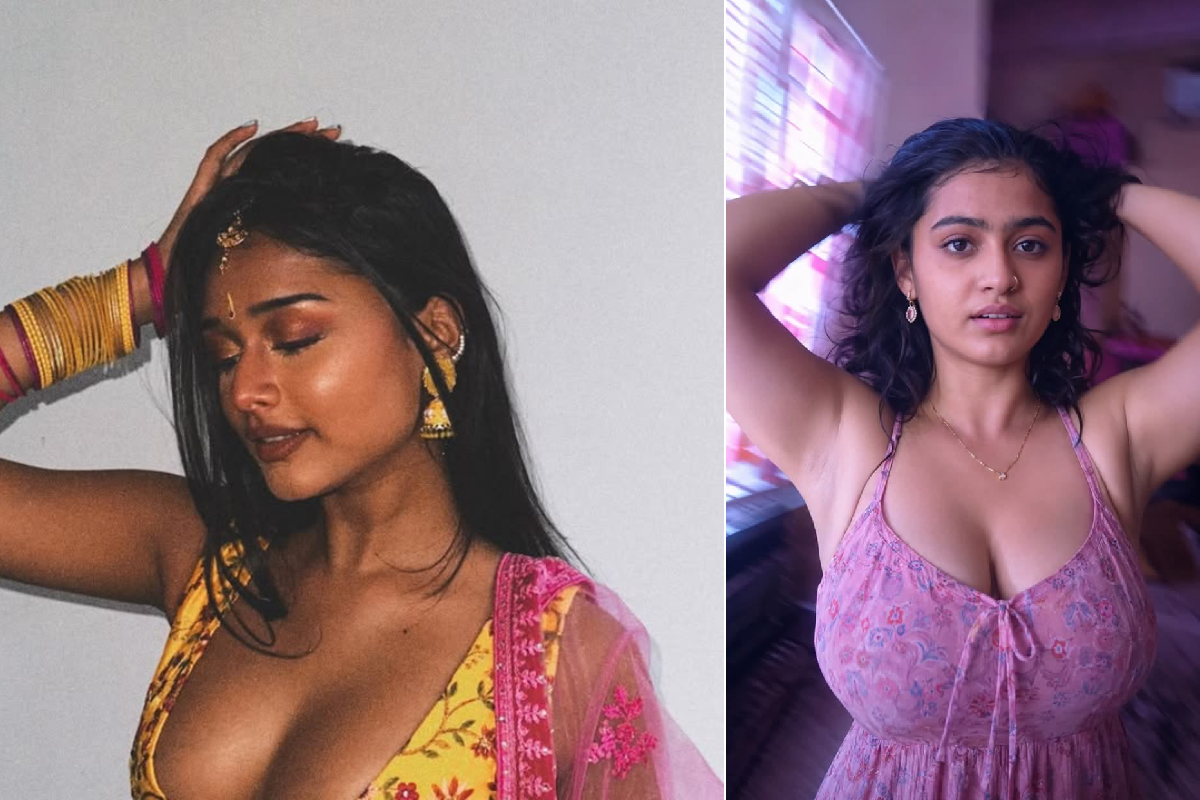
Fashion is increasingly becoming a conversation between tradition and modern self-expression. The latest looks featured here capture that evolution beautifully, bringing together Indian-inspired styling, contemporary silhouettes, statement jewellery and relaxed modern fashion.
From vibrant traditional attire to soft pastel dresses, these contrasting looks demonstrate how personal style can move effortlessly between cultural influences and contemporary trends.
The Beauty of Contrasting Styles
The two looks immediately present two different fashion directions.
The first embraces a distinctly Indian aesthetic, combining a colourful printed blouse, a sheer pink drape and traditional jewellery. The styling feels festive, feminine and rooted in South Asian fashion traditions.
The second takes a completely different approach with a soft pink printed dress, loose hair and minimal jewellery. It feels casual, youthful and contemporary.
Despite their differences, both outfits share an important quality: individual expression.
Traditional Indian Styling With a Modern Touch
The first look demonstrates how traditional Indian clothing can be styled in a more relaxed and contemporary way.
The colourful blouse provides a strong visual foundation, while the translucent pink fabric creates layers and movement. Traditional accessories—including stacked bangles, earrings and forehead jewellery—complete the ensemble.
Rather than relying exclusively on heavy traditional garments, this styling uses colour, texture and accessories to create its character.
This approach works particularly well for:
- Festive celebrations
- Wedding functions
- Cultural events
- Traditional photo shoots
- Family occasions
- Festival fashion
The Importance of Jewellery
Jewellery plays a major role in the traditional look.
Gold-toned earrings, bangles and delicate forehead jewellery immediately establish a connection with Indian fashion traditions.
Accessories can also completely change the personality of an outfit.
A simple contemporary outfit can become festive with the addition of statement earrings, bangles or layered necklaces. Similarly, traditional clothing can feel more modern when paired with understated jewellery.
The key is finding the right balance.
Soft Pink Takes Over Contemporary Fashion
The second look moves toward a much softer aesthetic.
The pastel pink dress features a printed design and a relaxed silhouette, creating an approachable everyday appearance.
Pink has become increasingly versatile in contemporary fashion. Rather than being limited to traditionally feminine styling, different shades of pink can be incorporated into casual, formal and evening wardrobes.
Soft pink works particularly well with:
- White
- Cream
- Beige
- Brown
- Silver
- Denim
- Soft grey
Relaxed Hair Creates a Natural Finish
The second look also demonstrates the popularity of effortless beauty styling.
Rather than a highly structured hairstyle, the loose, naturally textured hair contributes to the relaxed character of the outfit.
This reflects a broader movement toward effortless beauty, where styling looks polished without appearing overly constructed.
Natural-looking hair, minimal accessories and soft makeup can make even a carefully planned outfit appear spontaneous.
From Festive Glamour to Everyday Fashion
One of the most interesting aspects of these looks is the contrast in occasion.
The traditional ensemble is suited to moments where cultural expression and celebration are central.
The pink dress, meanwhile, could work for:
- Brunch
- Casual outings
- Holidays
- Daytime events
- Coffee dates
- Social gatherings
This demonstrates how modern wardrobes can accommodate both cultural traditions and contemporary lifestyle dressing.
Colour as a Form of Expression
Both looks rely heavily on colour.
The first combines yellow, pink and gold, producing a vibrant festive palette.
The second uses pink and soft neutral tones, creating a calmer visual impression.
Colour can influence how an outfit is perceived without requiring dramatic silhouettes.
Bright colours can create energy and celebration, while pastel shades can create a softer and more understated appearance.
The Growing Influence of Indo-Western Fashion
The boundary between Indian and Western fashion continues to become less defined.
Contemporary designers and fashion enthusiasts increasingly combine elements from both traditions.
Examples include:
- Sarees with contemporary blouses
- Traditional jewellery with Western dresses
- Kurtas with tailored trousers
- Crop tops with Indian drapes
- Indian prints on modern silhouettes
- Saree-inspired dresses
This fusion allows people to retain cultural influences while experimenting with contemporary fashion.
How to Create an Indo-Western Look
Creating an Indo-Western outfit doesn’t necessarily require buying an entirely new wardrobe.
Start with one traditional element.
For example, pair a modern dress with traditional earrings.
Alternatively, take a saree and combine it with a contemporary blouse, belt or minimalist jewellery.
The objective is not to make every element traditional or Western. Instead, the contrast between the pieces becomes the style statement.
Styling Traditional Jewellery With Modern Clothing
Traditional jewellery can work surprisingly well with Western silhouettes.
A statement jhumka can elevate a simple dress.
Gold bangles can complement a contemporary jumpsuit.
A traditional necklace can become the focal point of a minimalist outfit.
This approach gives older jewellery styles a new context while creating a more personalized wardrobe.
Why Personal Style Matters More Than Trends
Fashion trends change constantly, but personal style tends to remain more meaningful.
The two looks demonstrate that there isn’t one definition of modern fashion.
One embraces cultural heritage and traditional accessories.
The other prioritizes comfort, simplicity and contemporary styling.
Both approaches can coexist in the same wardrobe.
Modern fashion increasingly gives people the freedom to move between aesthetics depending on their mood, occasion and personality.
Building a Versatile Wardrobe
A versatile wardrobe can include both traditional and contemporary pieces.
Consider keeping:
Traditional pieces
- Sarees
- Printed blouses
- Statement earrings
- Bangles
- Ethnic jewellery
Contemporary pieces
- Printed dresses
- Minimal tops
- Relaxed trousers
- Casual skirts
- Lightweight jackets
These categories can also be mixed to create completely new combinations.
The Future of Indian Fashion
Indian fashion continues to evolve while maintaining strong connections to traditional craftsmanship, textiles, jewellery and silhouettes.
The growing popularity of fusion dressing suggests that the future isn’t necessarily about choosing between traditional and modern fashion.
Instead, it is about combining them creatively.
A traditional drape can be styled with a modern blouse. A Western dress can be accessorised with Indian jewellery. Familiar fabrics can be reimagined through contemporary cuts.
This flexibility gives Indian fashion an increasingly diverse visual language.
Final Thoughts
The contrasting looks showcased here highlight two sides of contemporary fashion.
One celebrates colour, tradition, jewellery and cultural expression.
The other embraces soft tones, relaxed styling and modern simplicity.
Together, they demonstrate that fashion doesn’t have to fit into a single category.
The most exciting style often emerges when traditional influences meet contemporary ideas. Whether through jewellery, colour, silhouettes or fabrics, the combination creates opportunities for individuals to express both their cultural influences and their personal identity.
In today’s fashion landscape, tradition isn’t being replaced by modernity—it is being reinvented through it.

Comments are closed.