
Yellow Saree Fashion: A Radiant Blend of Tradition, Femininity and Contemporary Glamour

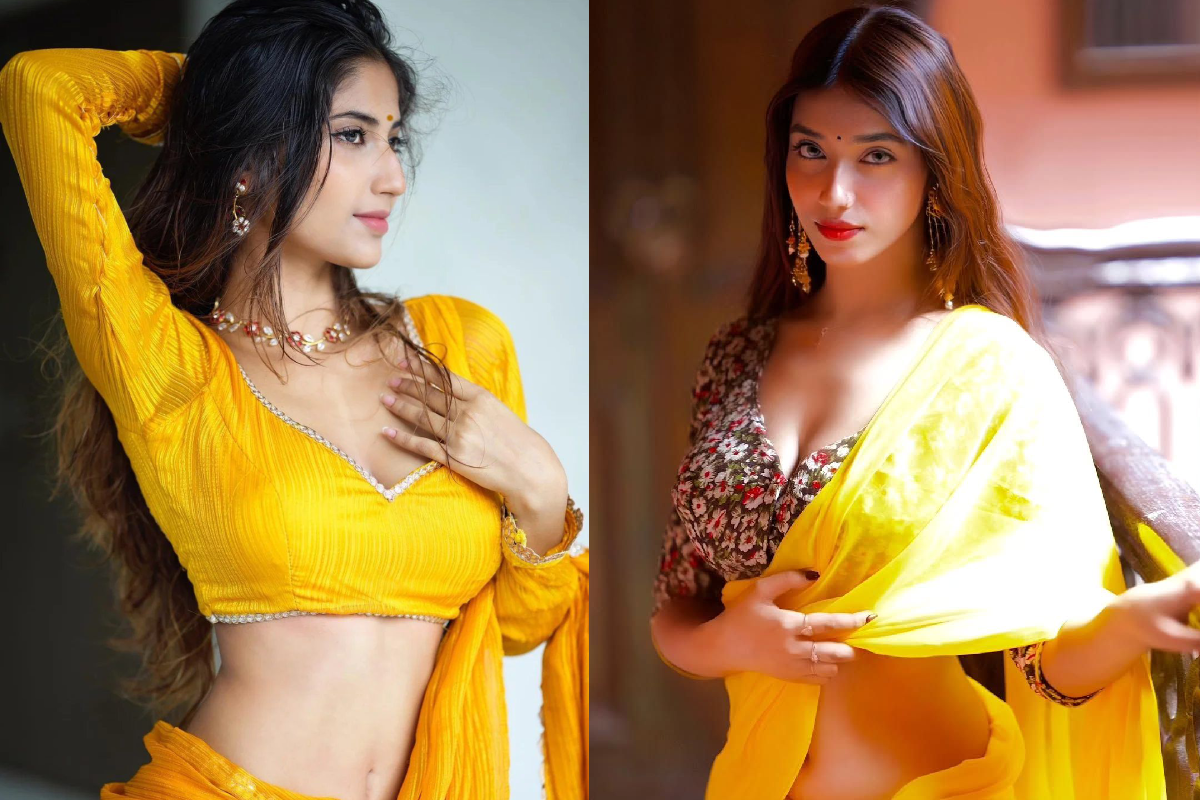
Indian fashion has an extraordinary ability to transform colour into emotion. Among the many shades associated with ethnicwear, yellow holds a particularly vibrant place. It represents warmth, optimism, celebration and energy, making it a natural choice for festive occasions, weddings, traditional ceremonies and modern fashion photography. The yellow ensemble showcased here presents a beautiful contemporary interpretation of Indian-inspired fashion, combining a bright yellow drape, a fitted blouse, delicate embellishments, traditional jewellery and modern beauty styling.
The first thing that immediately captures attention is the vibrant yellow colour. It creates a sense of brightness and warmth, especially when paired with the darker and more muted surroundings. Rather than relying on heavy decorative elements, the outfit allows colour to become its strongest visual feature.
Yellow has traditionally been associated with auspicious occasions in Indian culture and fashion. Shades of yellow are frequently seen during celebrations and ceremonies because of their cheerful and welcoming character. Modern designers have expanded this traditional association by introducing yellow into contemporary silhouettes, partywear, resortwear and editorial fashion.
This particular styling demonstrates how yellow can feel both traditional and modern at the same time.
The Appeal of Bright Yellow
Yellow is naturally an attention-grabbing colour. Unlike neutral shades, it immediately creates energy within an outfit. It can make a look appear youthful, lively and confident.
The shade used here has a rich golden-yellow quality that feels especially appropriate for Indian-inspired fashion. It carries the warmth associated with traditional festive clothing while maintaining a fresh contemporary appearance.
The monochromatic approach also strengthens the visual impact. The yellow drape and yellow blouse create continuity throughout the outfit, allowing the colour to become the central theme.
Rather than breaking the look into several contrasting shades, the styling embraces yellow and allows subtle details to provide variation.
A Contemporary Saree-Inspired Silhouette
The outfit combines a fitted yellow blouse with a flowing draped fabric. The blouse has a modern silhouette, while the drape provides the traditional visual language associated with Indian clothing.
This combination creates an interesting fusion between contemporary fashion and ethnic styling.
The fitted upper portion gives the outfit structure and definition, while the softer draped fabric creates movement. This contrast prevents the ensemble from appearing rigid.
Modern ethnic fashion increasingly uses this technique. Traditional garments are reinterpreted through contemporary cuts, while familiar elements such as draping, jewellery and decorative borders preserve their cultural character.
The Detailed Blouse
The blouse is one of the most distinctive elements of the outfit.
The yellow fabric features subtle texture, giving the surface additional depth. Fine detailing around the neckline and sleeves introduces a refined decorative quality without overwhelming the bright colour.
The neckline is finished with a delicate contrasting trim, creating definition around the upper portion of the garment. This small detail demonstrates how even minimalist embellishment can elevate a simple design.
The second styling introduces an interesting contrast by pairing the yellow drape with a darker patterned blouse. This demonstrates the versatility of the same colour palette.
A yellow saree does not necessarily have to be paired with a matching blouse. A contrasting printed or embroidered blouse can create a completely different personality while allowing the yellow drape to remain the dominant element.
Yellow and Metallic Detailing
Metallic accents complement yellow particularly well.
Gold can create a traditional and luxurious appearance, while silver provides a slightly cooler contemporary contrast. The styling shown here incorporates delicate metallic detailing, helping the outfit maintain a festive character without becoming overly ornate.
This is an excellent example of balanced ethnic styling.
When the primary garment already has a vibrant colour, accessories do not need to be excessively elaborate. A few carefully selected details can provide enough sparkle.
Traditional Jewellery
Jewellery plays an important role in connecting the modern silhouette with Indian fashion traditions.
The necklace provides a subtle decorative element around the neckline, while the earrings add sparkle around the face. Together, they create a refined ethnic appearance.
Traditional jewellery does not always need to be heavy.
Minimal gold jewellery can be particularly effective with vibrant sarees because it allows the colour and silhouette to remain dominant.
For weddings or more formal celebrations, the same look could be elevated with layered necklaces, bangles and statement earrings.
For a contemporary party, the jewellery could be reduced to a single statement piece.
Long Flowing Hair
The hairstyle adds softness and movement to the overall appearance.
Long, flowing hair contrasts with the structured blouse and provides a relaxed quality. Loose waves are especially effective with sarees because they create a modern fashion-editorial mood.
The hairstyle also works beautifully with the bright yellow palette. Dark hair creates strong contrast, ensuring that the yellow clothing remains visually prominent.
For a traditional interpretation, the hair could instead be styled into a bun decorated with jasmine or other floral accessories.
A sleek ponytail could create a more contemporary fashion look.
This demonstrates how hairstyle can completely transform the personality of ethnicwear.
The Role of Makeup
The makeup is polished but remains complementary to the clothing.
Defined eyes, shaped brows, a glowing complexion and a soft lip colour create a balanced beauty look.
When working with a bright colour like yellow, it is often useful to avoid overly complicated makeup. The outfit already creates significant visual impact.
A warm-toned makeup palette can enhance the golden quality of yellow, while neutral tones can create a more modern contrast.
For an evening event, stronger eyeliner and a deeper lip colour could add drama.
For a daytime celebration, softer makeup would maintain the fresh and vibrant character of the outfit.
The Bindi Adds Tradition
The small bindi provides an important cultural accent.
Although subtle, it immediately reinforces the Indian identity of the ensemble. Combined with the jewellery and draped silhouette, it creates a connection between contemporary fashion and traditional styling.
This is one of the most effective aspects of modern ethnic fashion: traditional elements can be incorporated in small ways without dominating the entire look.
A bindi, pair of earrings or traditional bracelet can be enough to establish an ethnic aesthetic when combined with modern clothing.
Indoor Lighting Creates Two Different Moods
The photographs showcase the outfit in two distinct lighting environments.
One image has a cooler, cleaner appearance, allowing the yellow fabric to stand out sharply against the background.
The other uses warm lighting, creating a golden atmosphere that complements the colour of the outfit.
This demonstrates how dramatically lighting can influence fashion photography.
Yellow responds particularly strongly to warm light because both colours share similar visual warmth. Under golden illumination, the outfit can appear richer and more luxurious.
Cooler lighting, on the other hand, can make yellow appear brighter and more contemporary.
Yellow as a Festive Colour
Yellow has a natural connection with celebration.
It is often associated with festive ceremonies, traditional functions and joyful occasions. Its brightness creates an immediate sense of positivity.
For this reason, yellow sarees and lehengas remain popular choices for daytime weddings, festive events and cultural celebrations.
Modern styling has expanded its use further. Yellow can now be seen in cocktail-inspired ethnicwear, contemporary sarees, party dresses and fashion editorials.
The colour works equally well in traditional and modern settings.
The Beauty of Monochromatic Styling
The matching yellow blouse and drape create a strong monochromatic effect.
Monochromatic styling can make an outfit appear more sophisticated because the eye moves naturally across the silhouette without being interrupted by multiple contrasting colours.
However, texture becomes important.
Different fabric finishes, subtle embellishments and varying levels of transparency can prevent the outfit from looking flat.
The photographs demonstrate this effectively through the combination of textured blouse fabric and flowing draped material.
Contrast Through the Blouse
The second styling provides an excellent lesson in colour coordination.
Instead of using an entirely yellow ensemble, the yellow drape is paired with a darker patterned blouse. This creates visual contrast while retaining the bright yellow as the main colour.
This type of styling offers endless possibilities.
A yellow saree could be paired with:
- A black blouse for a dramatic appearance
- A green blouse for a festive combination
- A maroon blouse for a rich traditional look
- A white blouse for a fresh daytime aesthetic
- A metallic blouse for evening glamour
- A floral blouse for a softer contemporary appearance
The choice of blouse can therefore completely transform the same saree.
Yellow and Nature
Yellow also works beautifully in outdoor photography.
Against green foliage, the colour creates strong visual contrast. Against stone or architectural backgrounds, it introduces warmth.
This makes yellow particularly versatile for fashion shoots.
A yellow saree photographed in a garden can feel fresh and romantic.
The same saree photographed against a heritage building can feel traditional and regal.
Placed inside a modern studio, it can become a contemporary editorial statement.
The colour adapts remarkably well to different environments.
Fashion Photography and Composition
The close-up framing of these photographs emphasizes the beauty details.
The viewer can notice the jewellery, makeup, hair and fabric texture rather than seeing only the complete outfit.
This type of composition is useful for fashion content because it allows individual styling elements to become part of the story.
The face becomes an important focal point, while the bright clothing creates the surrounding visual frame.
A wider photograph would provide more information about the complete drape and silhouette, while a close-up emphasizes beauty and accessories.
Using both approaches can create a more comprehensive fashion series.
The Importance of Fabric
Fabric selection is particularly important when working with yellow.
Silk can create a traditional and luxurious appearance.
Chiffon can create softness and movement.
Georgette can provide a lightweight flowing drape.
Organza can create a more structured contemporary silhouette.
Cotton can give yellow a casual and comfortable character.
Sequined materials can transform it into glamorous eveningwear.
The styling shown here demonstrates how texture can influence the personality of the colour.
Suitable for Different Occasions
A yellow saree is remarkably versatile.
For a daytime wedding ceremony, it can be paired with traditional gold jewellery and floral hair accessories.
For a festive celebration, statement earrings and bangles can add energy.
For an evening reception, metallic accessories and a glamorous blouse can elevate the look.
For a fashion photoshoot, contemporary styling and dramatic lighting can turn the saree into an editorial statement.
For a cultural event, traditional jewellery and a classic drape can emphasize its heritage.
This adaptability makes yellow an excellent addition to a modern ethnic wardrobe.
Modern Indian Fashion and Individuality
Contemporary Indian fashion is increasingly about personal interpretation.
There is no single correct way to wear a saree.
Some prefer traditional draping and elaborate jewellery.
Others choose contemporary blouses, minimal accessories and modern hairstyles.
Both approaches can be equally elegant.
The outfit shown here sits comfortably between the two. It maintains traditional visual elements while embracing modern proportions and beauty styling.
This makes it particularly relevant to younger audiences who want to celebrate Indian fashion while expressing their own personalities.
Why Yellow Creates Optimism
Fashion is closely connected to emotion, and colour plays a major role in that relationship.
Yellow naturally communicates brightness and optimism.
When incorporated into ethnicwear, it can create a sense of celebration even before accessories or styling are added.
This emotional quality makes yellow especially appropriate for joyful occasions.
It can brighten photographs, create warmth in indoor settings and stand out beautifully against darker backgrounds.
The Balance Between Glamour and Simplicity
Perhaps the strongest lesson from this look is balance.
The clothing is vibrant but not excessively embellished.
The jewellery is elegant but not overwhelming.
The hair is glamorous but relaxed.
The makeup is polished but controlled.
The setting is sophisticated without being overly elaborate.
Every element supports the others.
This is what gives the overall appearance its refined quality.
Modern fashion often achieves its strongest results when there is a clear focal point and the supporting elements remain relatively restrained.
Here, that focal point is undoubtedly the yellow ensemble.
How to Recreate the Look
For anyone interested in recreating a similar aesthetic, begin with a vibrant yellow saree or saree-inspired outfit.
Choose a blouse that reflects the desired mood. A matching blouse creates a monochromatic appearance, while a contrasting blouse can introduce a more contemporary character.
Add delicate gold jewellery for a traditional look.
Keep the hair loose and softly styled for a modern interpretation.
Use warm, glowing makeup to complement the yellow.
For photography, choose a location with neutral or contrasting colours so the outfit remains prominent.
Soft lighting can create elegance, while warm lighting can emphasize the golden richness of the colour.
A Colour That Transcends Trends
Fashion trends change constantly, but yellow remains remarkably adaptable.
It can appear traditional one season and contemporary the next.
Designers can change the silhouette, fabric and embellishment, yet the colour continues to retain its joyful identity.
This is one reason yellow remains an important part of Indian fashion.
It is familiar without being predictable.
It is vibrant without necessarily being overwhelming.
And it can be styled in countless ways.
Final Thoughts
The yellow saree-inspired ensemble showcased in these photographs is a beautiful example of how traditional Indian fashion can be reinterpreted through modern styling.
The vibrant yellow colour creates warmth and confidence.
The fitted blouse provides contemporary structure.
The flowing drape introduces grace and movement.
The delicate jewellery connects the outfit to Indian tradition.
The long, flowing hair adds softness.
The bindi provides a subtle cultural accent.
And the carefully chosen lighting transforms the outfit into a visually striking fashion statement.
What makes the look particularly appealing is its versatility. It can be adapted for weddings, festive celebrations, daytime functions, evening events and creative fashion photography simply by changing the blouse, jewellery, hairstyle or makeup.
Ultimately, yellow represents more than just a colour in this ensemble. It becomes an expression of joy, confidence, elegance and celebration.
The look demonstrates that contemporary Indian fashion does not have to choose between tradition and modernity. The two can coexist beautifully.
With its radiant colour, graceful draping, subtle embellishments and modern presentation, the yellow saree becomes a timeless yet contemporary fashion statement—one that celebrates the richness of Indian style while embracing the individuality and creativity of modern fashion.

Comments are closed.