
Baththa Movie: Vijay Sethupathi’s Powerful Performance in Balaji Tharaneetharan’s Tamil Drama

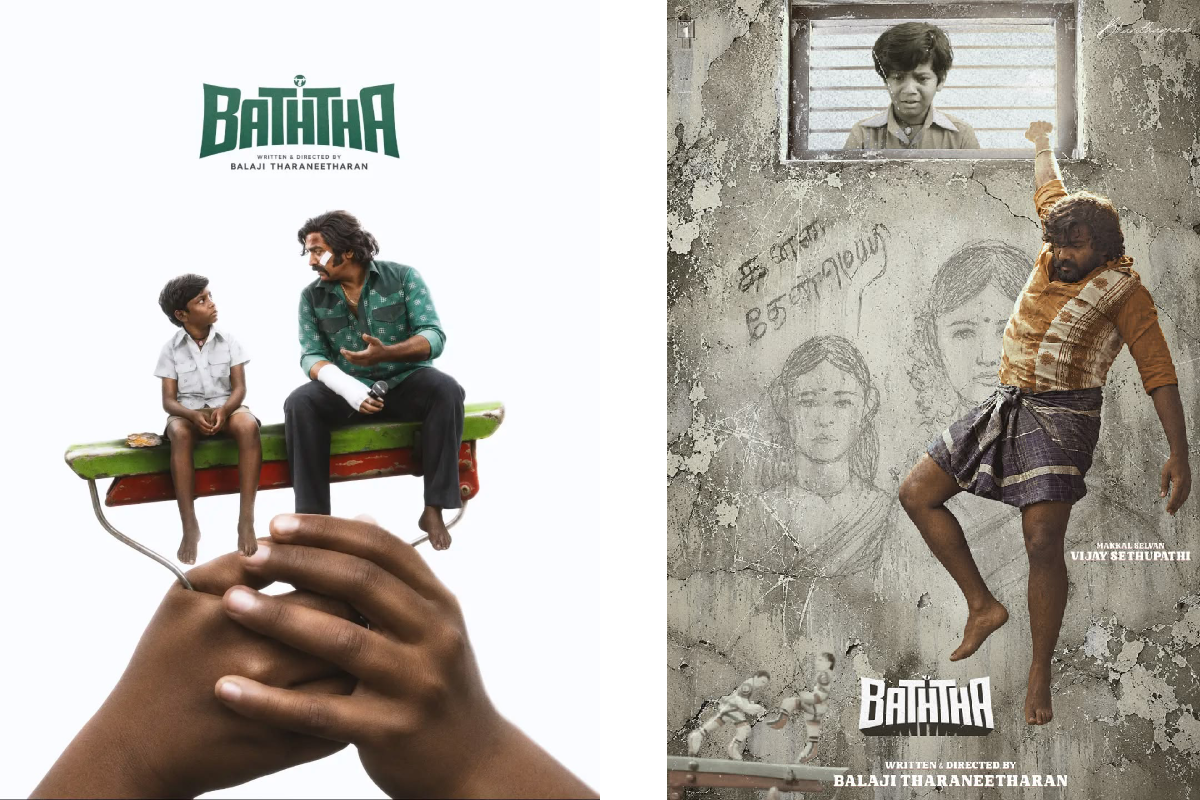
What happens when a man feared by everyone is forced to confront his own vulnerability? Can an unexpected friendship change the life of someone who has spent years building an image of power and fear?
These questions form the emotional foundation of Baththa (2026), the Tamil film starring Makkal Selvan Vijay Sethupathi and Lijomol Jose.
Written and directed by Balaji Tharaneetharan, Baththa brings together humour, drama, nostalgia and emotional storytelling. Set against the backdrop of 1986 Madras, the film explores the unexpected relationship between a feared gangster and a young schoolboy.
Released in theatres on October 1, 2026, the film offers a refreshing take on the gangster genre. Instead of concentrating entirely on violence and action, it explores the human emotions hidden behind a character’s intimidating public image.
With Vijay Sethupathi leading the cast, the film reminds audiences that sometimes the most unexpected people can teach us the most important lessons about life.
Vijay Sethupathi: The Journey of Makkal Selvan
Vijay Sethupathi has established himself as one of the most distinctive actors in Indian cinema.
Born on January 16, 1978, in Rajapalayam, Tamil Nadu, he initially worked in different jobs before pursuing his passion for acting.
His journey in cinema was not an overnight success. After working in supporting roles and gaining experience in the film industry, he gradually established himself through performances that challenged conventional hero stereotypes.
His breakthrough came with Thenmerku Paruvakaatru (2010), followed by the critically acclaimed Pizza (2012) and Naduvula Konjam Pakkatha Kaanom (2012).
Over the years, he has delivered memorable performances in films such as:
- Soodhu Kavvum (2013)
- Idharkuthane Aasaipattai Balakumara (2013)
- Vikram Vedha (2017)
- 96 (2018)
- Super Deluxe (2019)
- Master (2021)
- Vikram (2022)
- Maharaja (2024)
What makes Vijay Sethupathi different is his willingness to experiment with characters. He has played heroes, villains, ordinary individuals and complicated personalities with equal enthusiasm.
His performance in Baththa continues this tradition, allowing him to explore a character whose transformation becomes the emotional centre of the story.
Baththa (2026): A Different Kind of Gangster Story
Directed by Balaji Tharaneetharan, Baththa is set in 1986 Madras and introduces audiences to a feared local gangster played by Vijay Sethupathi.
Baththa has built his identity around power, intimidation and the fear he creates among people.
His world changes unexpectedly when an eight-year-old schoolboy named Sabari accidentally locks him inside a deserted school restroom.
What initially appears to be an unusual and humorous situation gradually develops into something much deeper.
The unexpected encounter brings the gangster face-to-face with a different perspective on life.
As the relationship between Baththa and Sabari develops, the film explores vulnerability, innocence, family relationships and the possibility of personal transformation.
The story uses an unusual situation to explore a meaningful question: Can a person change when they are forced to look beyond the identity they have created for themselves?
Vijay Sethupathi as Baththa: A Character Beyond Fear
One of the film’s biggest attractions is Vijay Sethupathi’s portrayal of the titular character.
Baththa is introduced as a man who commands fear and expects everyone around him to respect his authority.
His intimidating personality influences not only his enemies but also his family relationships.
However, the unexpected encounter with Sabari gradually exposes another side of his character.
Vijay Sethupathi brings multiple dimensions to the role, balancing aggression, humour, vulnerability and emotional depth.
The character gives him an opportunity to move beyond the conventional gangster image and explore the emotional complexities of a man confronting his own behaviour.
His performance demonstrates how an actor can make an unconventional character engaging through subtle expressions, natural dialogue delivery and carefully controlled emotions.
The Young Boy Who Changes Everything
One of the most important elements of Baththa is the character of Sabari, played by Sai Prithvi Raj.
Sabari is an eight-year-old schoolboy whose innocent actions unexpectedly change the course of Baththa’s life.
Unlike the adults who fear the gangster, Sabari approaches the situation from a completely different perspective.
His interactions with Baththa create several humorous and emotionally meaningful moments.
The relationship between the two characters forms the heart of the film.
What makes their bond interesting is that it develops without conventional expectations. A feared gangster and an innocent child gradually find themselves connected through an unusual situation.
The film explores how innocence can challenge arrogance and how an unexpected friendship can influence someone’s understanding of life.
Lijomol Jose: Adding Emotional Depth to the Story
Lijomol Jose plays Kannima, Baththa’s wife.
Her character adds an important family dimension to the narrative.
While Baththa maintains a feared identity outside his home, his relationship with his wife and daughter reveals the consequences of his behaviour within the family.
Lijomol’s performance contributes to the emotional foundation of the film, highlighting the importance of family relationships in Baththa’s journey.
Her character also helps audiences understand that personal transformation is not simply about changing one’s public image but also about recognising the impact of one’s actions on loved ones.
Balaji Tharaneetharan’s Direction: Finding Humanity Behind a Gangster
Balaji Tharaneetharan has developed a distinctive identity through his unconventional storytelling.
He made his directorial debut with Naduvula Konjam Pakkatha Kaanom (2012), a comedy that became popular for its unusual premise and natural performances.
He later collaborated with Vijay Sethupathi on Seethakaathi (2018), which explored the relationship between theatre, cinema and artistic expression.
With Baththa, the filmmaker reunites with Vijay Sethupathi for another character-driven story.
The director takes a familiar gangster setting and introduces an unusual narrative situation.
Instead of presenting the protagonist as an invincible criminal, he explores the emotional consequences of living behind a frightening public identity.
The storytelling combines humour and emotional drama, allowing the relationship between the gangster and the young boy to develop naturally.
The result is a film that uses a simple situation to explore complicated human emotions.
The Supporting Cast
Baththa features a supporting cast that contributes to its narrative and emotional development.
Some of the notable performers include:
- Sai Prithvi Raj: Plays Sabari, the young schoolboy whose encounter with Baththa becomes central to the story.
- Lijomol Jose: Plays Kannima, Baththa’s wife.
- Sahasra Shree: Plays Thenmozhi, Baththa’s daughter.
- Arjun Chidambaram: Appears as Jyoti, an important character in the gangster’s world.
- Ajay Ghosh: Adds another dimension to the film’s supporting cast.
- Hari Krishnan: Appears in an important supporting role.
The supporting characters help establish the social and family environment surrounding Baththa.
Sai Abhyankkar’s Music: A Fresh Musical Collaboration
Baththa features music composed by Sai Abhyankkar.
The project marks his first collaboration with Vijay Sethupathi and director Balaji Tharaneetharan.
Known for his youthful musical identity and contemporary sound, Sai Abhyankkar brings a fresh creative association to the film.
The soundtrack and background score contribute to the film’s retro setting, humour and emotional atmosphere.
The music also supports the contrast between Baththa’s intimidating world and the innocence associated with the schoolboy’s character.
The 1986 Madras Setting: Nostalgia and Visual Storytelling
One of the interesting aspects of Baththa is its period setting.
The film takes audiences back to 1986 Madras, creating an atmosphere that reflects an earlier era.
The costumes, hairstyles, streets and production design contribute to the film’s nostalgic identity.
Vijay Sethupathi’s retro appearance, complete with distinctive clothing, moustache and accessories, helps establish the character’s personality.
The visual treatment also creates a contrast between the gangster’s intimidating surroundings and the relatively innocent world of the schoolboy.
The cinematography by Selvakumar S.K. and production design by T. Muthuraj help establish the film’s period atmosphere.
What Makes Baththa Different from Other Gangster Films?
Gangster films traditionally focus on power struggles, rivalries, revenge and violence.
Baththa takes a different approach by placing human relationships at the centre of its narrative.
1. A Different Perspective on Power
The film explores how a person who controls others can become vulnerable when placed in an unfamiliar situation.
2. Friendship Across Generations
The relationship between Baththa and Sabari demonstrates how meaningful connections can develop between people from completely different backgrounds.
3. Family and Responsibility
The story examines how a person’s behaviour affects the people closest to them.
4. Humour in Unexpected Situations
The unusual circumstances create opportunities for comedy without completely abandoning the emotional aspects of the story.
5. Personal Transformation
The film explores whether a person can recognise their mistakes and begin changing their approach to life.
Baththa and Its Message About Humanity
Beyond its gangster premise, Baththa explores a simple but meaningful idea: people are more complicated than the identities they create.
A person who appears powerful may also have fears, insecurities and emotional struggles.
Similarly, someone who seems insignificant may possess the ability to influence another person’s life in unexpected ways.
Through Baththa and Sabari, the film explores innocence, empathy, responsibility and the possibility of change.
It also encourages audiences to think about the difference between being feared and being respected.
The film’s emotional core lies in its exploration of how relationships can challenge our assumptions and encourage personal growth.
The Reunion of Vijay Sethupathi and Balaji Tharaneetharan
The collaboration between Vijay Sethupathi and Balaji Tharaneetharan is another major attraction.
Their earlier films, Naduvula Konjam Pakkatha Kaanom and Seethakaathi, demonstrated their interest in unconventional storytelling.
Baththa marks their third film collaboration, bringing them together for another distinctive character-driven project.
The reunion also represents a continuation of their creative association, with Vijay Sethupathi once again taking on a character that moves beyond conventional commercial hero roles.
Baththa: A Film That Finds a Human Story Behind a Gangster
Baththa offers audiences a different experience from conventional gangster dramas.
With Vijay Sethupathi delivering a performance built around multiple emotional layers, the film explores the possibility of transformation through an unexpected friendship.
Balaji Tharaneetharan’s direction, Sai Abhyankkar’s music and the supporting performances help create a film that balances humour with emotional storytelling.
At its heart, Baththa is not simply about a gangster trapped inside a school restroom. It is about a man confronting the limitations of his own identity and discovering that strength does not always come from fear.
Sometimes, the most important lessons come from the most unexpected people.
And sometimes, it takes the innocence of a child to remind an adult what it means to be human.

Comments are closed.