

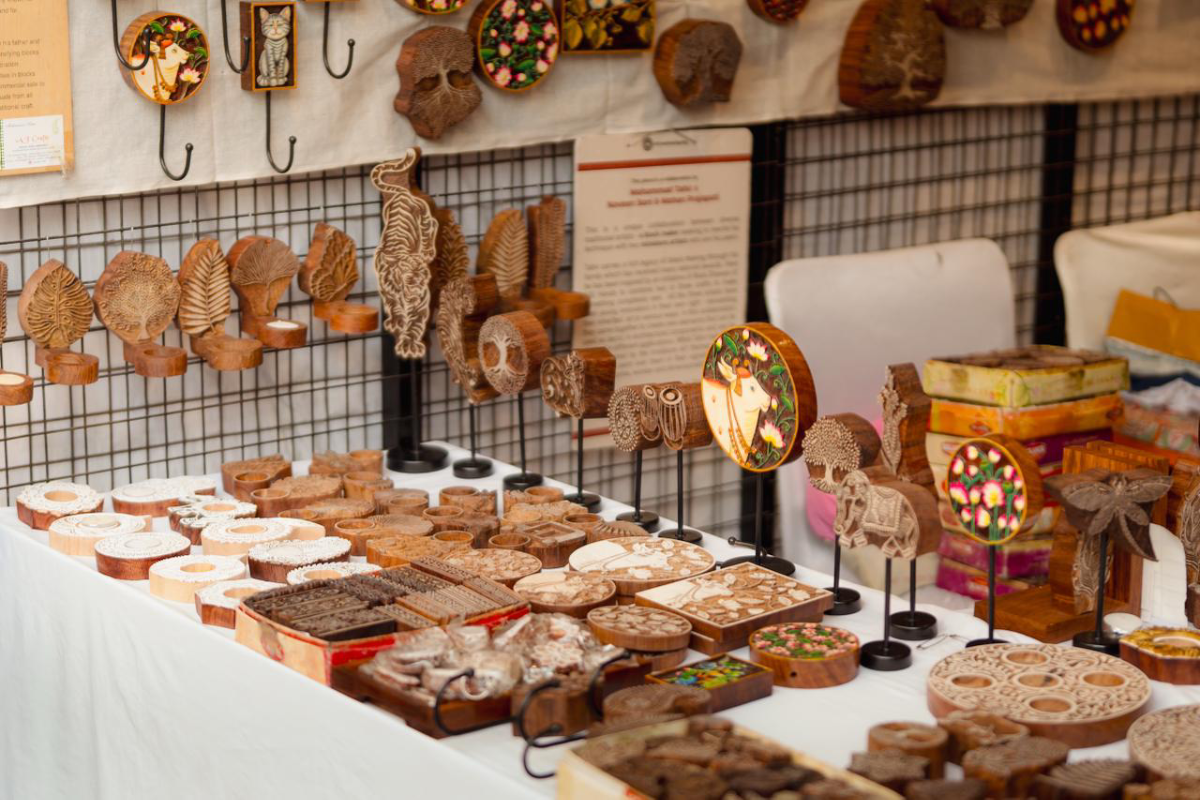
Pune is set to celebrate India’s rich tapestry of craft traditions, colours and communities as Dastkari Haat Samiti brings its annual craft bazaar back to the city.
From 21 to 29 November 2026, Dastkari Haat Samiti (DHS) brings the 12th edition of Pune Dastkari Haat to Kalagram, P.L. Deshpande Gardens, next to the well-known Pune-Okayama Friendship Garden. Over nine days, master artisans and craftspeople from across the country will come together across 160 stalls, showcasing handlooms, textiles, jewellery, paintings, natural-material crafts, home objects, accessories and other handmade treasures. This year’s edition will also introduce 20 new crafts, art forms and textile traditions.
More than a craft bazaar, the event offers an opportunity to experience India through its materials, regional traditions and the people who keep these practices alive – meeting makers, discovering diverse craft practices and encountering the stories and skills behind the objects.
Since 2014, Dastkari Haat Samiti has been bringing its craft bazaar to Pune, creating platforms for master artisans and traditional craftspeople from across India. Over the years, the event has grown into a much-awaited celebration of India’s rich craft heritage. Founded in 1986 by Ms. Jaya Jaitly, Dastkari Haat Samiti has spent four decades creating platforms for craftspeople, strengthening market access and helping traditional knowledge find a place in contemporary life. Its annual bazaar brings this work directly to Pune, creating a space where craft, culture and commerce come together.
Exhibition Details
- What: 12th Edition of Pune Dastkari Haat 2026
- When: 21–29 November 2026
- Timings: 11:00 AM – 8:00 PM
- Where: Kalagram, P.L. Deshpande Gardens, next to Pune-Okayama Friendship Garden, Sinhagad Road, Dattawadi, Pune – 411051
What to Discover at the Bazaar
Visitors can explore a wide range of handmade traditions and contemporary craft products, including:
- Handlooms & textiles: Regional weaves, hand block prints, embroideries and distinctive textile traditions from across India.
- Paintings: Folk, tribal and traditional art including Gond, Kalighat, Phad, Pichwai, miniature painting, Tanjore, Madhubani and Pattachitra, each carrying its own visual language and cultural memory.
- Crafts in natural and other materials: Handmade objects crafted from grass, bamboo, copper, marble, metal, brass, stone, iron, wood and other plant-based materials.
- Jewellery & accessories: Handmade pieces that bring regional techniques and materials into contemporary wardrobes.
- Everyday craft: Ceramics, terracotta, stationery, home objects and other useful pieces that bring handmade traditions into modern living.
The selection reflects the extraordinary diversity of Indian craft, with 20 new crafts, art forms and textile traditions being introduced this year.
With live craft demonstrations, cultural performances and regional refreshments, the bazaar will extend beyond shopping to become a cultural gathering celebrating India’s many traditions and communities. Visitors can witness artisans at work through demonstrations of glass objects and jewellery from Firozabad, terracotta from Rajasthan, Madhubani painting from Bihar, Pattachitra painting from Odisha and West Bengal, Gond painting from Madhya Pradesh, miniature painting and Pichwai from Rajasthan, Surpur art from Karnataka and Sohrai art from Jharkhand.
The cultural programme will feature Chhau dance by the Bhawani Kalindi group from West Bengal and folk music from Kutch by Lakha Bhai from Gujarat. The performers have presented their respective traditions at various platforms in India and abroad. Visitors can also enjoy refreshments from Rajasthan and Old Delhi.
For collectors, design enthusiasts, families and those looking to discover India’s diverse craft heritage, Pune Dastkari Haat offers an opportunity to encounter handcrafted objects shaped by traditional skills, regional materials and the stories of the communities that keep these crafts alive. It is also an invitation to support the craftspeople and rural livelihoods that sustain India’s living cultural heritage.

Comments are closed.