

Every unforgettable frame begins with a vision.
Cinema has a magical way of making audiences feel emotions, discover new worlds and experience stories beyond their own lives. While actors often receive the spotlight, an equally fascinating world exists behind the camera — where cinematographers, camera operators and filmmakers transform creative ideas into powerful visual experiences.
From filming beneath an open sky to working with sophisticated cinema equipment on a carefully designed set, cinematography is a profession built on creativity, technical knowledge and an extraordinary attention to detail.
More Than Just Holding a Camera
A professional cinema camera is much more than a recording device. It is a storytelling instrument.
Every movement, angle, shadow and composition influences how an audience experiences a scene. A close-up can reveal a character’s vulnerability, a wide shot can communicate isolation, and a slow camera movement can build anticipation before a dramatic moment.
Cinematographers work closely with directors to translate a script into visual language. Their decisions influence the atmosphere, rhythm and emotional impact of a film.
The result is a carefully constructed visual experience in which every frame serves a purpose.
Life Behind the Lens: Where Passion Meets Precision
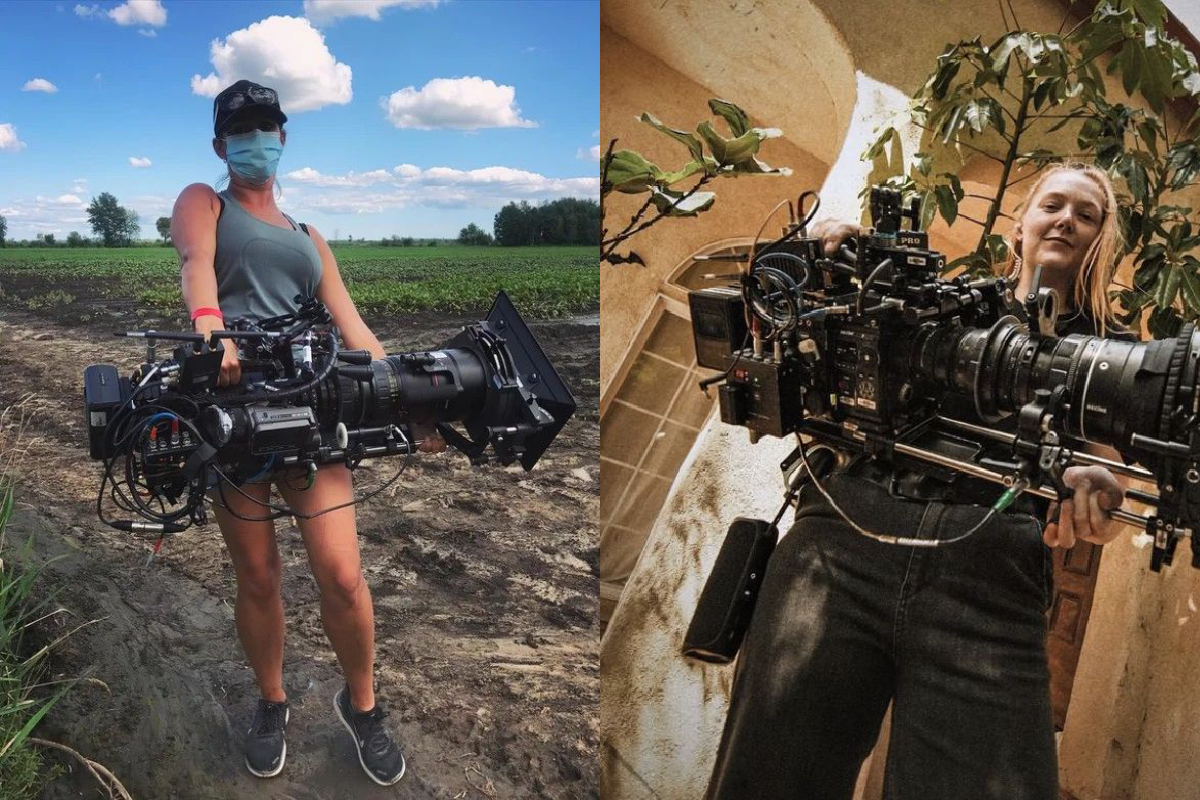
The two images capture contrasting environments that reveal the versatility of camera work. One shows a camera professional working outdoors in an expansive landscape, while the other features a filmmaker operating advanced cinema equipment in a warm, carefully arranged interior.
Although the environments differ, the central challenge remains the same: capturing the right image under the right conditions.
Outdoor filming requires adapting to changing sunlight, weather, wind and location constraints. Indoor production may demand precise control over lighting, reflections, background elements and camera movement.
In both situations, preparation and adaptability are essential. A successful shot is often the result of planning, teamwork and countless small adjustments that audiences never notice.
The Technology Behind Cinematic Images
Modern film production relies on an impressive combination of technology and artistic judgment. Professional cinema cameras can be paired with specialised lenses, external monitors, matte boxes, focus systems and stabilisation equipment.
Each component has a specific purpose.
- Cinema cameras capture the image with the resolution, colour characteristics and recording options required by a production.
- Lenses influence perspective, depth of field and the visual character of a scene.
- Focus systems help operators maintain sharp focus as subjects or cameras move.
- Matte boxes and filters help manage unwanted light and achieve particular visual effects.
- Stabilisation systems make controlled movement possible when a scene calls for smooth tracking or dynamic camera work.
However, expensive equipment alone cannot guarantee beautiful cinematography. Understanding light, composition, movement and storytelling is what allows filmmakers to use technology effectively.
The People Who Make Every Frame Possible
A film set is a collaborative environment. The cinematographer, camera operator, first assistant camera, focus puller, lighting crew and other departments work together to achieve the director’s vision.
The camera operator concentrates on framing and movement. The focus puller ensures that the intended subject remains sharp. The cinematographer oversees the broader visual approach, working with lighting and camera teams to maintain consistency throughout the production.
On demanding shoots, communication is just as important as technical ability. A small change in camera position or lighting can affect several departments, making coordination essential.
This teamwork is one of the most rewarding aspects of filmmaking: individual skills combine to create something that no single person could accomplish alone.
Why Location Filming Demands Adaptability
Filming outdoors presents challenges that cannot always be controlled. Natural light changes throughout the day, weather conditions can shift unexpectedly, and uneven terrain may complicate camera placement.
A camera professional must understand how to adapt without losing sight of the creative objective. Choosing the right lens, protecting equipment, planning movement and responding quickly to changing conditions are all part of the process.
Indoor filming presents a different set of challenges. Space restrictions, artificial lighting, practical fixtures and reflections can influence camera placement and exposure.
These contrasting environments demonstrate why cinematography is both an art and a technical discipline.
How to Begin a Career in Cinematography
For aspiring filmmakers, the journey does not have to begin with an expensive cinema camera. A smartphone, an entry-level camera or access to borrowed equipment can provide a starting point.
Build your skills step by step:
- Learn composition: Practise wide shots, medium shots, close-ups and different camera angles.
- Understand lighting: Observe how natural light changes throughout the day and experiment with simple light sources.
- Study lenses and focus: Learn how focal length, aperture and camera distance affect the image.
- Practise camera movement: Explore static shots, pans, tilts and controlled tracking movements.
- Assist experienced professionals: Working on real productions can teach you set etiquette, equipment handling and teamwork.
- Create a showreel: Collect your strongest shots into a concise portfolio that demonstrates visual consistency and storytelling ability.
Watching films with a cinematographer’s eye is equally valuable. Instead of focusing only on the plot, observe how scenes are framed, how light shapes faces and how camera movement changes the emotional tone.
The Future of Cinematography
Filmmaking technology continues to evolve through advances in digital cinema cameras, compact production equipment, virtual production and post-production workflows.
These developments offer filmmakers new ways to experiment, but the fundamentals remain important. Composition, lighting, visual continuity and emotional storytelling continue to shape compelling images.
Technology can expand creative possibilities, yet the human ability to recognise a meaningful moment and capture it beautifully remains central to the craft.
Every Frame Tells a Story
Behind every memorable cinematic moment is a combination of vision, preparation, technical expertise and teamwork.
Cinematography is not simply about recording what happens in front of a camera. It is about deciding what the audience sees, what they feel and how a story unfolds visually.
Whether on a remote outdoor location or an elaborate indoor set, the people behind the lens transform ordinary moments into images that stay with us long after the screen goes dark.
Because great filmmaking is not just about what you capture — it is about how you make people feel when they see it.

Comments are closed.