

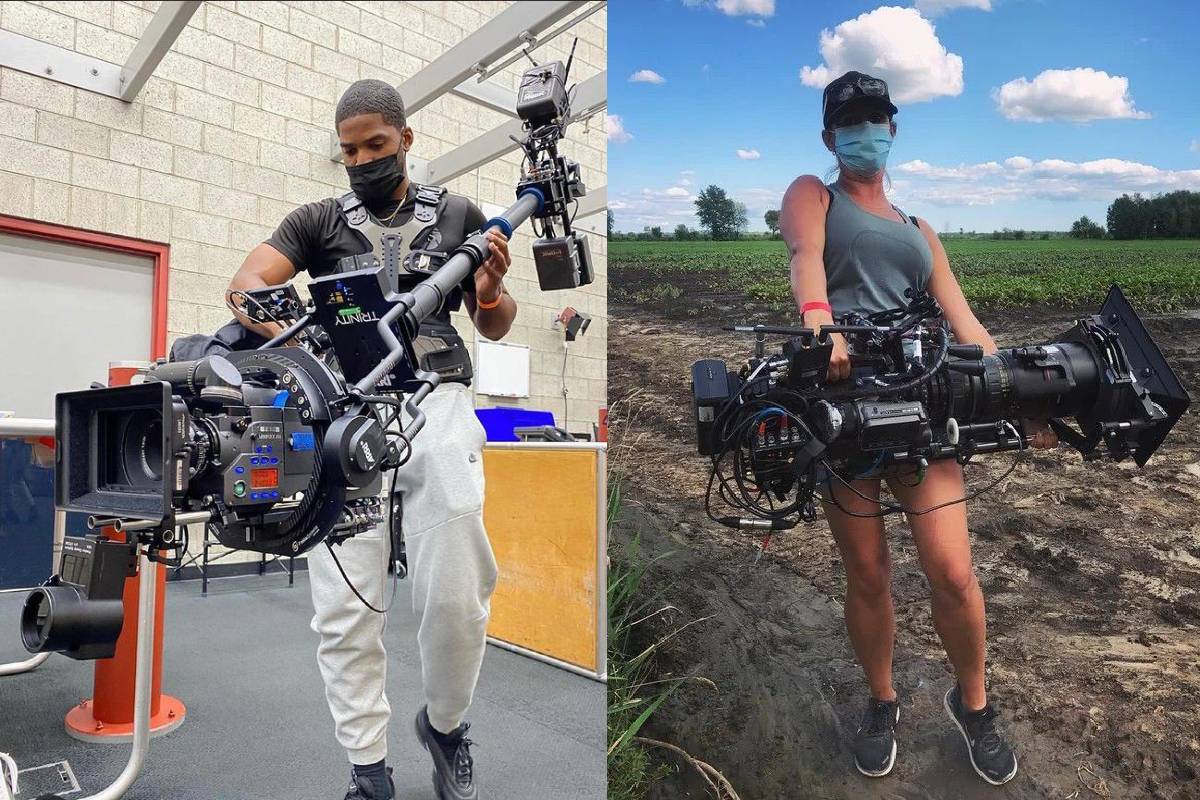
When audiences watch a film, advertisement, music video or high-end commercial, the camera often feels almost invisible. We see the actors, locations and story—but behind every moving frame is a team working with sophisticated equipment to make that image possible.
These photographs offer a fascinating glimpse into that world, showcasing professional cinema cameras, stabilising rigs and the demanding physical work of camera operators.
The Camera Operator: The Person Behind the Frame
A camera operator does much more than simply hold a camera.
They are responsible for physically controlling the camera during a shot, following movement, maintaining composition and helping translate the director’s visual idea into an actual image.
In the photographs, the operators are working with large professional camera systems mounted on specialised support rigs.
Why Cinema Cameras Are So Large
Modern cinema cameras can look dramatically different from the compact cameras many people use casually.
Professional production setups often combine:
- High-end cinema cameras
- Large lenses
- Follow-focus systems
- External monitors
- Camera batteries
- Wireless equipment
- Matte boxes
- Recording accessories
- Stabilisation systems
Once all these components are combined, the camera can become a substantial piece of equipment.
Stabilisation Is a Physical Skill
The first photograph particularly highlights the complexity of a stabilised camera rig.
The operator is wearing a support system while holding the camera in front of the body. These systems are designed to help distribute the camera’s weight and allow smoother movement.
But stabilisation isn’t simply about equipment.
The operator still needs balance, timing, coordination and precise movement to create smooth footage while walking or changing direction.
From Studio Floors to Open Fields
The two photographs also show how dramatically production environments can change.
One operator is working indoors in what appears to be a controlled production environment. The other is outdoors in an open agricultural landscape.
The equipment remains sophisticated in both situations, but the demands of the environment are completely different.
Outdoor shoots can introduce uneven terrain, changing weather, strong sunlight and other practical challenges that camera teams must work around.
The Lens Is Only One Part of the Story
The large lens visible in the photographs is an important part of the filmmaking process.
Different lenses can dramatically influence:
- Perspective
- Depth of field
- Framing
- Compression
- Subject separation
- Overall visual character
But even the most advanced lens cannot create a compelling shot by itself. Camera movement, composition, lighting and timing all contribute to the final image.
The Physical Side of Filmmaking
The photographs also highlight something audiences rarely consider: filmmaking can be physically demanding.
Camera operators may spend long periods standing, walking, crouching or carrying equipment while maintaining concentration.
A shot that lasts only a few seconds on screen can require significant preparation and physical effort behind the camera.
Technology Meets Human Skill
One of the most interesting aspects of modern cinematography is the relationship between advanced technology and human control.
Stabilisation systems can make movement smoother. Digital monitors can provide detailed viewing. Modern cinema cameras can capture extraordinary levels of detail.
Yet the final image still depends on a person deciding:
Where should the camera move?
What should the audience see?
When should the movement begin?
How should the subject be framed?
Technology provides the tools. The operator provides the execution.
The Invisible Team Behind Every Shot
A finished film rarely reveals how many people were involved in creating a single frame.
Camera operators work alongside cinematographers, camera assistants, focus pullers, lighting teams, directors and other crew members.
Together, they turn an idea on paper into something audiences can actually see.
Final Thoughts
These images offer a rare behind-the-scenes look at the craftsmanship involved in professional filmmaking.
The impressive cameras may grab attention, but the real story is the people operating them—balancing equipment, navigating locations and carefully controlling every movement to capture the shot.
The next time a beautifully composed tracking shot appears on screen, remember: there is usually a skilled human being moving with the camera, making that moment possible.

Comments are closed.