

Few things capture the imagination quite like a beautifully designed supercar. Low-slung proportions, dramatic aerodynamics, sculpted bodywork and bold colours can transform an automobile into something that feels almost like a work of art.
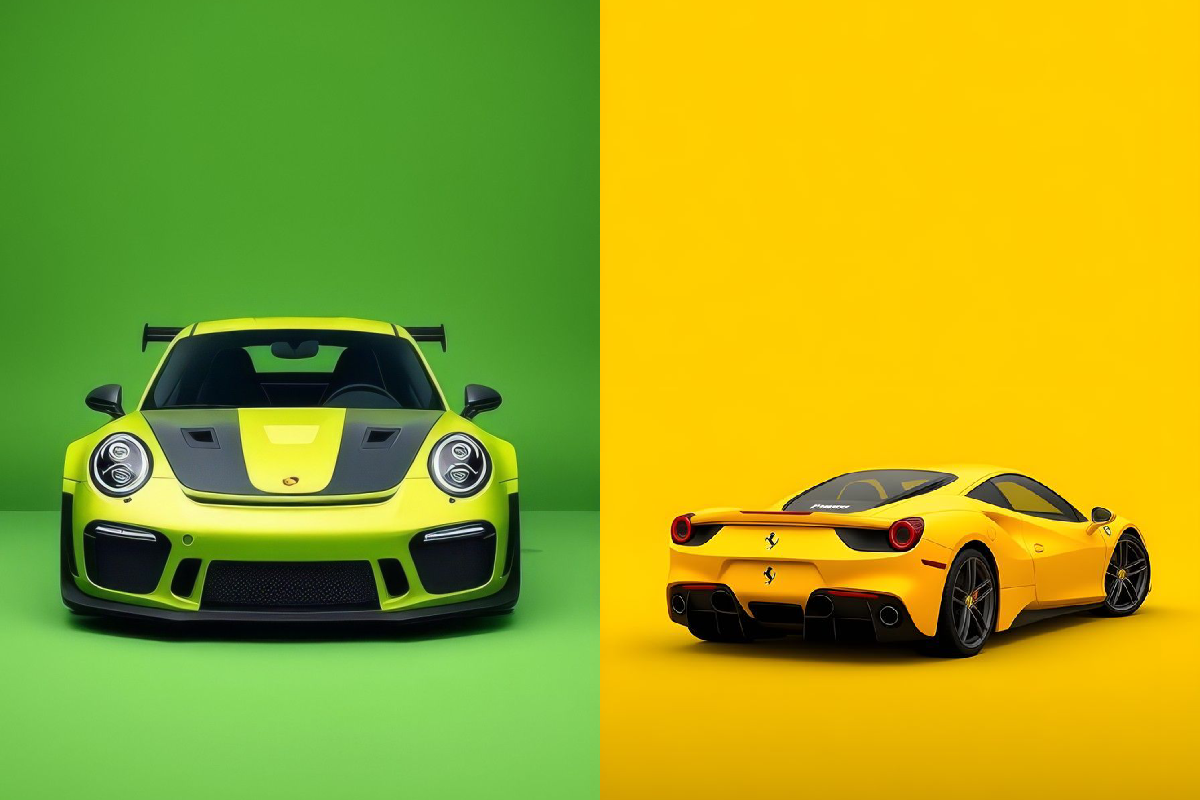
The two cars featured in this striking visual take completely different approaches to that idea. One embraces an aggressive lime-green performance aesthetic, while the other delivers the unmistakable energy of a yellow Italian-style supercar.
Together, they create a fascinating contrast between two expressions of automotive design.
The Power of Bold Colours
Colour can completely change the personality of a performance car.
The vivid green car immediately grabs attention with its fluorescent finish. Against the matching green background, the vehicle becomes almost graphic in appearance, with the black aerodynamic elements creating sharp contrast.
The yellow car takes a warmer approach. Its golden-yellow bodywork gives the vehicle a more traditional exotic-car character, while the dark rear diffuser, wheels and glass surfaces provide visual balance.
Both demonstrate the same principle: a supercar doesn’t need a complicated environment to make an impression when its colour already commands attention.
Lime Green: Aggressive and Futuristic
The green car has an unmistakably aggressive appearance.
Its low front end, large air intakes and prominent rear wing suggest a strong focus on aerodynamic performance. The dark hood sections further emphasize the centre of the car, while the circular headlights provide a distinctive visual signature.
The contrast between bright green and black gives the car a futuristic, almost motorsport-inspired personality.
It looks designed not simply to be seen—but to be noticed.
Yellow: The Classic Exotic-Car Statement
The second car takes a different visual direction.
Its bright yellow finish immediately communicates the traditional glamour associated with exotic performance cars. Viewed from the rear three-quarter angle, the sculpted bodywork and wide stance become especially prominent.
The dark rear section, exhaust outlets and aerodynamic elements create contrast against the yellow body, giving the car a sophisticated yet athletic appearance.
The result is less aggressive than the green design and more focused on elegance, drama and recognizable supercar styling.
Aerodynamics as Design
One of the most fascinating aspects of modern supercars is the way aerodynamic components have become part of their visual identity.
The green car’s large rear wing is impossible to miss. Rather than appearing like an accessory, it becomes an integral part of the vehicle’s silhouette.
The yellow car uses a different approach, with its rear diffuser, sculpted body surfaces and integrated aerodynamic detailing creating a cleaner appearance.
This demonstrates two different philosophies of performance design:
Visible aggression versus integrated sophistication.
The Beauty of the Rear Three-Quarter View
The yellow car is shown from an angle that reveals much more than simply its colour.
The rear three-quarter perspective allows the viewer to appreciate the relationship between the roofline, rear haunches, wheels and diffuser. These elements work together to create a sense of motion even though the vehicle is stationary.
For automotive photography, this is one of the most effective angles because it communicates both width and length, giving the vehicle a more dynamic appearance.
Green and Yellow: Two Different Personalities
Putting the two cars together creates an interesting visual comparison.
| Feature | Green Supercar | Yellow Supercar |
|---|---|---|
| Visual character | Aggressive and futuristic | Elegant and exotic |
| Primary colour | Lime green | Bright yellow |
| Styling emphasis | Aerodynamics | Sculpted bodywork |
| Visual contrast | Green and black | Yellow and black |
| Photography angle | Front | Rear three-quarter |
| Overall mood | Motorsport-inspired | Luxury-performance |
Neither approach needs excessive decoration.
The colours, proportions and aerodynamic details do most of the work.
Why Supercars Are More Than Transportation
At the highest levels of automotive design, a car becomes more than a machine for getting from one place to another.
Its shape communicates performance. Its colours communicate personality. Its proportions communicate purpose.
That’s why supercar design often overlaps with fashion, architecture and industrial art. Every surface is considered, from the headlights to the wheels and from the roofline to the rear diffuser.
The two vehicles in this visual demonstrate that idea perfectly.
Final Thoughts
The green and yellow supercars represent two very different interpretations of automotive excitement.
The green machine focuses on aggression, aerodynamic drama and futuristic styling, while the yellow coupe emphasizes exotic elegance, sculpted proportions and unmistakable performance-car appeal.
What connects them is their ability to turn engineering into visual emotion.
One screams performance. The other radiates exotic luxury. Both are designed to make you look twice.

Comments are closed.