

Some cars are designed to blend into the road.
Others are designed to own it.
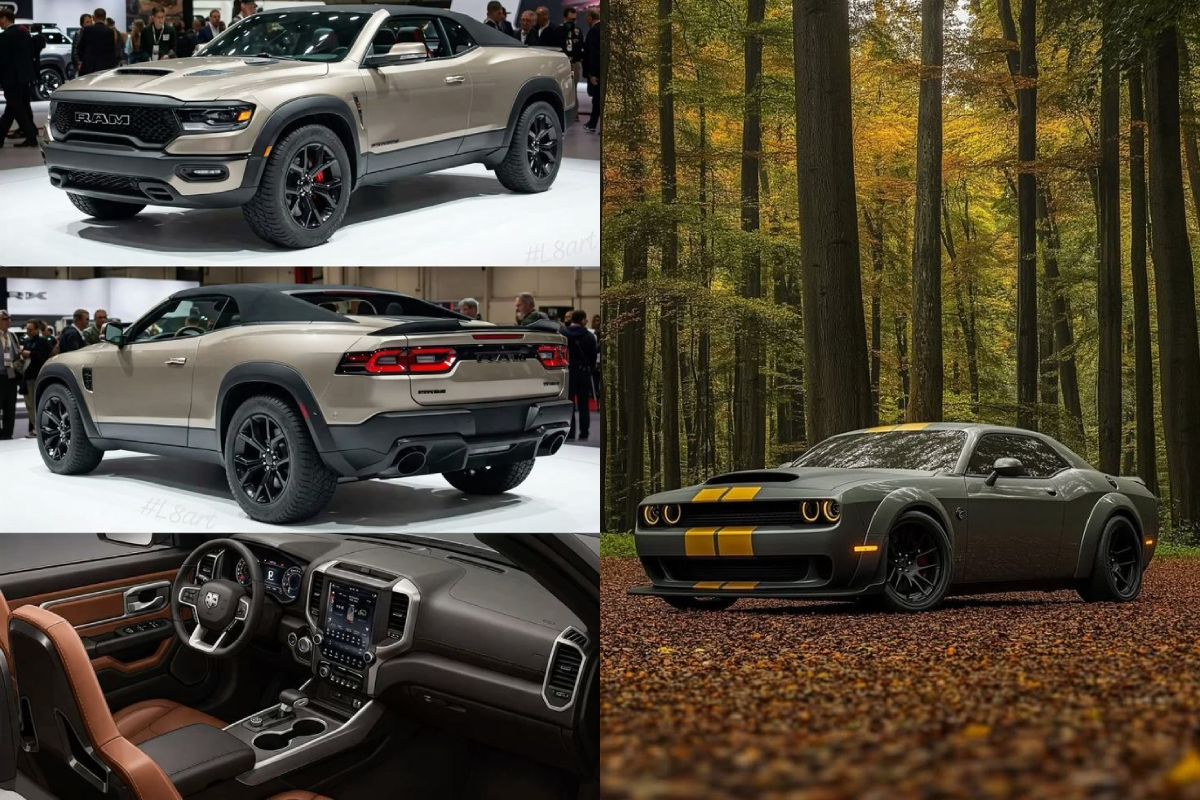
This visual brings together two very different expressions of modern performance design: a bold pickup-inspired performance vehicle and a classic American muscle-car silhouette. Despite their differences, both share the same language—wide proportions, aggressive detailing and an unmistakable road presence.
Power With a Premium Edge
The pickup-style vehicle immediately stands out with its sculpted body, broad stance and large wheels.
Its coupe-like roofline gives the traditionally rugged pickup format a more sophisticated character. The combination of a muted exterior finish, black wheels and dark detailing creates a restrained luxury aesthetic rather than an overly flashy one.
It looks powerful without needing to shout.
The Muscle-Car Influence
On the opposite side, the low-slung performance coupe brings a completely different personality.
Its long bonnet, wide stance and distinctive circular headlights immediately evoke the classic muscle-car tradition, while the modern bodywork keeps the design contemporary.
The contrasting yellow stripes add an unmistakable performance character.
It is a visual reminder that some design elements never truly go out of style.
From Showroom to Open Road
The left side of the image presents the vehicle in a polished showroom environment, surrounded by automotive enthusiasts and industry displays.
The right side tells a completely different story.
The performance coupe sits alone in a forest surrounded by autumn foliage.
That contrast is fascinating.
One setting represents technology, luxury and the automotive industry.
The other represents freedom, adventure and the open road.
Inside the Machine
The interior image adds another layer to the story.
The cabin combines leather-style seating, metallic trim and a large central infotainment display. The overall layout balances technology with the familiar character expected from a large performance-oriented vehicle.
Modern car interiors have increasingly become extensions of the exterior design philosophy.
The exterior communicates power.
The interior communicates comfort and control.
Why Proportion Matters
One of the strongest features shared by these vehicles is proportion.
Large wheels, wide bodywork and low visual centres create an immediate sense of stability and strength.
Even when parked, the vehicles appear ready to move.
That is the secret behind successful performance-car design: the sense of motion begins before the engine turns on.
A Palette Built for Performance
The colours in this visual are carefully contrasted.
The neutral beige-toned vehicle creates an understated premium appearance, while the darker performance coupe provides a stronger visual impact through its grey, black and yellow combination.
The yellow accents are particularly effective because they are used selectively.
Rather than covering the entire vehicle in bright colour, the stripes become visual signatures.
Two Interpretations of Power
What makes the image interesting is that it doesn’t present a single definition of automotive performance.
One vehicle represents size, versatility and luxury.
The other represents heritage, speed and aggressive styling.
Both approaches appeal to different ideas of what a performance car should be.
And that diversity is part of what makes modern automotive design so fascinating.
Final Take
Today’s performance vehicles are no longer defined by horsepower alone.
Design, technology, comfort and personality have become equally important parts of the experience.
From the muscular pickup-inspired silhouette to the unmistakable presence of a modern American-style muscle coupe, these vehicles demonstrate how power can be expressed through proportion, detail and attitude.
Because a great performance car doesn’t simply take you somewhere.
It makes every arrival feel like an entrance.

Comments are closed.