

The Art of Photography: More Than Just Capturing Pictures
Photography is more than pressing a button and capturing an image. It is an art form that combines creativity, technology, perspective and storytelling. A single photograph can preserve a memory, communicate an emotion or tell a story without using a single word.
From traditional film cameras to advanced digital equipment, photography has evolved tremendously. Yet, its fundamental purpose remains unchanged: capturing moments that deserve to be remembered.
1. The Evolution of Cameras
The journey of photography began with traditional photographic techniques and mechanical cameras that required patience, precision and technical understanding.
Vintage cameras introduced generations to the magic of capturing images through film. Their distinctive designs, mechanical controls and carefully constructed lenses continue to fascinate photography enthusiasts.
Modern cameras, meanwhile, offer advanced autofocus systems, high-resolution sensors, sophisticated image processing and impressive low-light performance.
Despite these technological developments, vintage cameras continue to hold a special place in photographic culture.
2. Understanding the Importance of Camera Lenses
A camera lens plays a significant role in determining the final appearance of a photograph.
Different lenses offer different creative possibilities.
- Wide-angle lenses: Ideal for landscapes, architecture and environmental photography.
- Portrait lenses: Help create beautiful portraits with attractive background separation.
- Telephoto lenses: Allow photographers to capture distant subjects.
- Macro lenses: Reveal intricate details in small objects and textures.
- Prime lenses: Offer fixed focal lengths and are popular for their optical quality and creative flexibility.
Choosing the right lens depends on the photographer’s subject, shooting environment and artistic vision.
3. Vintage Cameras and Their Timeless Appeal
Vintage cameras have a character that modern equipment cannot entirely replicate.
Their mechanical construction, classic appearance and historical significance make them attractive to collectors, filmmakers and photography enthusiasts.
Many photographers also appreciate film photography for its deliberate shooting process. Unlike digital photography, where hundreds of images can be captured instantly, film encourages photographers to think carefully about composition, exposure and timing.
The renewed interest in analogue photography demonstrates that traditional photographic experiences still have a place in a technology-driven world.
4. The Role of Tripods in Professional Photography
A tripod is one of the most useful accessories in photography.
It provides stability, reduces camera movement and helps photographers achieve sharper images, particularly in challenging lighting conditions.
Tripods are especially useful for:
- Long-exposure photography
- Night photography
- Landscape photography
- Studio product photography
- Architectural photography
- Professional video recording
Beyond stability, a tripod allows photographers to maintain consistent framing and experiment with different compositions.
5. Photography as a Form of Visual Storytelling
Every photograph communicates something.
A fashion photograph can highlight clothing, textures and personal style. A landscape photograph can capture the beauty of nature, while a portrait can communicate personality and emotion.
Lighting, composition, colour grading and perspective all contribute to the storytelling process.
Professional photographers understand that excellent photography is not simply about owning expensive equipment. It is about knowing how to use available tools to communicate a visual idea.
6. Modern Photography Meets Creative Technology
Today’s photography industry continues to evolve with technological advancements.
Mirrorless cameras, artificial intelligence-assisted autofocus, computational photography and advanced editing software have expanded creative possibilities.
Smartphone photography has also made image creation more accessible, allowing people to experiment with visual storytelling without investing in professional equipment.
However, technical advancements alone do not determine photographic quality. Creativity, observation and an understanding of light remain essential skills.
7. Choosing the Right Camera for Your Photography Journey
Selecting a camera depends on individual requirements and experience.
Beginners may prefer an easy-to-use mirrorless camera or a capable smartphone. Enthusiasts might explore interchangeable-lens systems, while professional photographers often choose equipment based on specialised requirements.
Before purchasing a camera, consider:
- Image quality and sensor size
- Lens availability
- Autofocus performance
- Video recording capabilities
- Portability and handling
- Budget and long-term requirements
The best camera is ultimately the one that supports your creative vision and photography needs.
When Every Frame Tells a Story
Photography continues to bring together art, technology and human imagination. From the charm of vintage cameras to the precision of modern photographic equipment, every generation introduces new ways to capture and interpret the world.
A camera may provide the tools, but the photographer provides the vision.
Because the most memorable photographs are not always about what we see through the lens, but about what we choose to preserve forever.
Image SEO Details
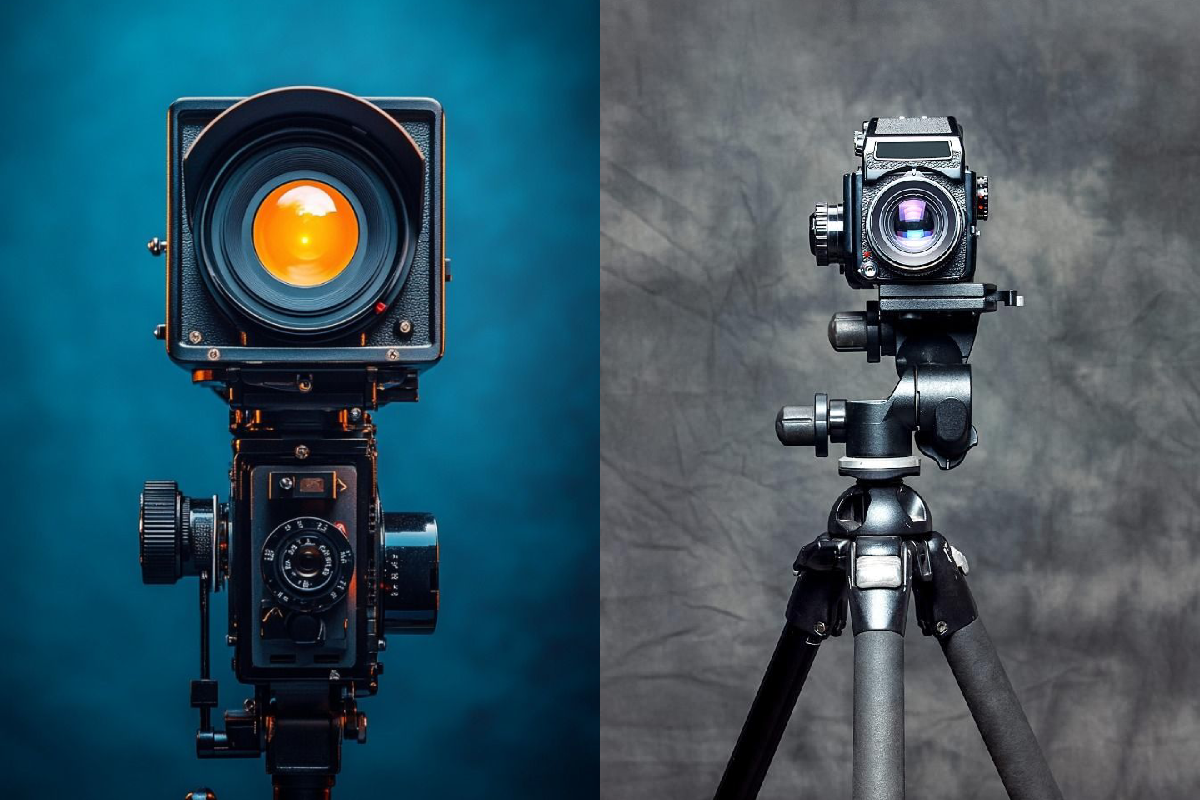
Image Alt Text: Professional vintage-style cameras and photographic equipment displayed against contrasting blue and grey backgrounds.
Image Caption: Exploring the timeless relationship between photography, camera technology and visual creativity.
Image Description: A creative photography equipment visual featuring two cameras, highlighting the beauty of photographic design and the evolution of camera technology.
Blog Tags: Photography, Vintage Cameras, Camera Technology, Professional Photography, Photography Equipment, Visual Storytelling, Digital Photography.

Comments are closed.