

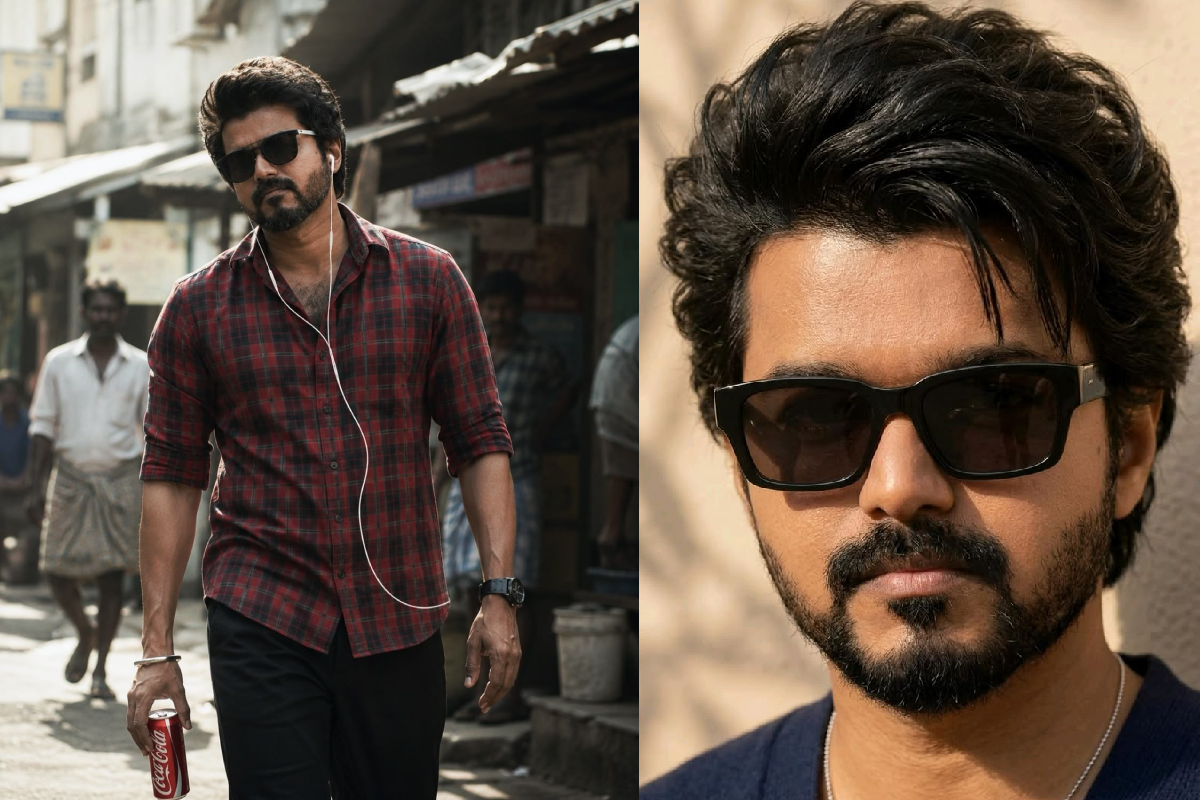
From ruling the silver screen as Thalapathy Vijay to leading Tamil Nadu as its Chief Minister, C. Joseph Vijay has experienced one of the most remarkable career transitions in contemporary Tamil public life.
For decades, Vijay entertained millions through his films, powerful screen presence, memorable dialogues and energetic dance performances. His popularity extended beyond cinema, making him one of the most recognised personalities in Tamil entertainment.
However, his ambitions eventually moved beyond the film industry. With the launch of Tamilaga Vettri Kazhagam (TVK) in 2024, Vijay officially entered politics and began a new chapter in his public life.
His political journey reached a historic milestone in May 2026, when he became the Chief Minister of Tamil Nadu following the state Assembly elections.
His transformation from an actor to a political leader has become an important chapter in Tamil Nadu’s political and cultural landscape.
Early Life and Family Background
C. Joseph Vijay was born on June 22, 1974, in Chennai, Tamil Nadu. He is the son of filmmaker S. A. Chandrasekhar and playback singer Shoba Chandrasekhar.
Growing up in a family connected to the film industry gave Vijay early exposure to cinema and filmmaking.
He completed his schooling in Chennai and later attended Loyola College, although he eventually discontinued his studies to concentrate on acting.
Vijay’s early experiences in the film industry helped him understand the different aspects of filmmaking. His determination to establish himself as an actor gradually shaped the career that would make him one of Tamil cinema’s biggest stars.
The Beginning of Vijay’s Film Career
Vijay began his journey in cinema as a child artist, appearing in films directed by his father.
His early appearances helped him gain experience in front of the camera. However, his major breakthrough as a lead actor came with the 1992 film Naalaiya Theerpu.
Although the film did not achieve major commercial success, it marked the beginning of his journey as a leading actor.
During the 1990s, Vijay appeared in several romantic and family-oriented films, gradually developing a loyal audience.
Movies such as Poove Unakkaga (1996), Kadhalukku Mariyadhai (1997) and Thulladha Manamum Thullum (1999) played important roles in establishing his popularity.
Thalapathy Vijay: Becoming a Tamil Cinema Superstar
The early 2000s marked an important phase in Vijay’s career. He increasingly became associated with commercial entertainers featuring action, comedy, romance and powerful musical performances.
Films such as Ghilli (2004), Thirupaachi (2005), Pokkiri (2007) and Vettaikaaran (2009) strengthened his position as a leading Tamil film star.
His fan following continued to grow, and the title ‘Thalapathy’ became closely associated with his public identity.
Over the years, Vijay developed a distinctive style that combined mass entertainment with socially relevant themes.
Some of his notable films include:
- Ghilli (2004): An action entertainer that became a major commercial success.
- Thuppakki (2012): A military action thriller directed by A. R. Murugadoss.
- Kaththi (2014): A film that explored agricultural struggles and corporate exploitation.
- Mersal (2017): A commercial entertainer featuring multiple roles and social themes.
- Sarkar (2018): A political drama that explored electoral participation and political accountability.
- Master (2021): An action drama directed by Lokesh Kanagaraj.
- Leo (2023): An action thriller that became a major talking point among fans.
- The Greatest of All Time (2024): A science-fiction action entertainer directed by Venkat Prabhu.
His film career played a significant role in building the public recognition that would later become an important part of his political journey.
Vijay’s Entry into Politics
Vijay’s connection with public activities and fan organisations existed long before his formal political entry.
His fan clubs gradually developed into organised welfare networks, with members participating in blood donation camps, educational assistance programmes and other community activities.
In 2009, his fan organisation was transformed into Vijay Makkal Iyakkam, creating a more structured platform for his supporters.
The organisation participated in various social activities and later became involved in local electoral politics.
However, the major turning point arrived on February 2, 2024, when Vijay officially announced the formation of his political party, Tamilaga Vettri Kazhagam (TVK).
The announcement marked his transition from an entertainer with a massive fan following to an active political participant.
Tamilaga Vettri Kazhagam (TVK): A New Political Chapter
Tamilaga Vettri Kazhagam was launched with Vijay as its founder and president.
The party announced its commitment to principles including secularism, social justice and public welfare.
Vijay also made it clear that politics would become his primary focus, announcing his intention to gradually move away from acting.
TVK’s formation attracted considerable attention across Tamil Nadu, particularly because of Vijay’s enormous popularity among younger audiences and cinema fans.
The party began building its organisational structure, appointing office-bearers and preparing for its first major electoral contest.
For Vijay, this was a significant transition that required moving beyond cinematic popularity and engaging with the practical responsibilities of political organisation and governance.
The Historic 2026 Tamil Nadu Assembly Elections
The 2026 Tamil Nadu Assembly elections became a defining moment in Vijay’s political career.
TVK contested its first Assembly election and emerged as the single-largest party in the 234-member Tamil Nadu Legislative Assembly.
According to the Election Commission of India, TVK won 108 constituencies in its electoral debut.
The election results placed Vijay at the centre of Tamil Nadu’s political developments.
Although TVK did not secure the 118 seats required for an independent majority, the party received support from post-election allies to form the government.
Vijay was subsequently sworn in as the Chief Minister of Tamil Nadu on May 10, 2026.
The development marked a major transition in his public life, taking him from the world of cinema to the highest executive office in the state.
C. Joseph Vijay Becomes the Chief Minister of Tamil Nadu
On May 10, 2026, C. Joseph Vijay officially assumed office as the Chief Minister of Tamil Nadu.
The swearing-in ceremony took place at Nehru Indoor Stadium in Chennai, with Governor Rajendra Vishwanath Arlekar administering the oath of office.
His appointment marked an important moment in Tamil Nadu’s political history, as he became the state’s Chief Minister after TVK’s electoral debut.
As Chief Minister, Vijay assumed responsibility for leading the state administration and overseeing major areas of governance.
His assigned portfolios include public administration, police, home affairs, women’s welfare, youth welfare and municipal administration, among others.
The transition also brought a new level of public responsibility, as the expectations associated with his political popularity became connected to the everyday functioning of government.
Challenges and Responsibilities of CM Vijay
Moving from cinema to public administration involves a completely different set of responsibilities.
As Chief Minister, Vijay faces several important governance areas that will shape his administration.
1. Employment and Economic Development
Creating employment opportunities, supporting industries and encouraging investment remain important priorities for Tamil Nadu’s economic development.
2. Education and Youth Welfare
Improving educational opportunities, strengthening government institutions and supporting young people are significant policy areas.
3. Women’s Safety and Welfare
Women’s safety, economic independence and access to public services remain important issues requiring sustained administrative attention.
4. Agriculture and Rural Development
Supporting farmers, improving irrigation facilities and addressing rural economic challenges are essential aspects of state governance.
5. Healthcare and Public Infrastructure
Strengthening healthcare services, improving public infrastructure and ensuring access to essential services are among the continuing responsibilities of any state government.
The performance of the administration in these areas will be an important measure of its work over time.
Vijay’s Final Film and His Transition Away from Cinema
Vijay’s political entry also brought questions about his future in cinema.
After announcing his political ambitions, he indicated that he intended to prioritise public service over his acting career.
His final announced film project, Jana Nayagan, directed by H. Vinoth, attracted enormous attention because of its association with his transition into politics.
The film became a significant talking point among fans who had followed his cinematic journey for decades.
For audiences, the transition represented the end of one important chapter and the beginning of another in Vijay’s public life.
The Legacy of Thalapathy and the Journey of CM Vijay
Vijay’s journey is an unusual example of how popularity in the entertainment industry can lead to a career in public life.
For more than three decades, he built a strong connection with audiences through films, performances and his screen identity as Thalapathy.
His entry into politics transformed that public identity into a political movement under the banner of Tamilaga Vettri Kazhagam.
His election victory and subsequent appointment as Chief Minister created a new chapter in Tamil Nadu’s political history.
However, political leadership is measured differently from cinematic success. Electoral support is only the beginning; governance, policy implementation, accountability and public welfare will shape the longer-term assessment of his administration.
From the cinema screens to Fort St. George, C. Joseph Vijay’s journey continues to attract attention across Tamil Nadu and beyond.

Comments are closed.