

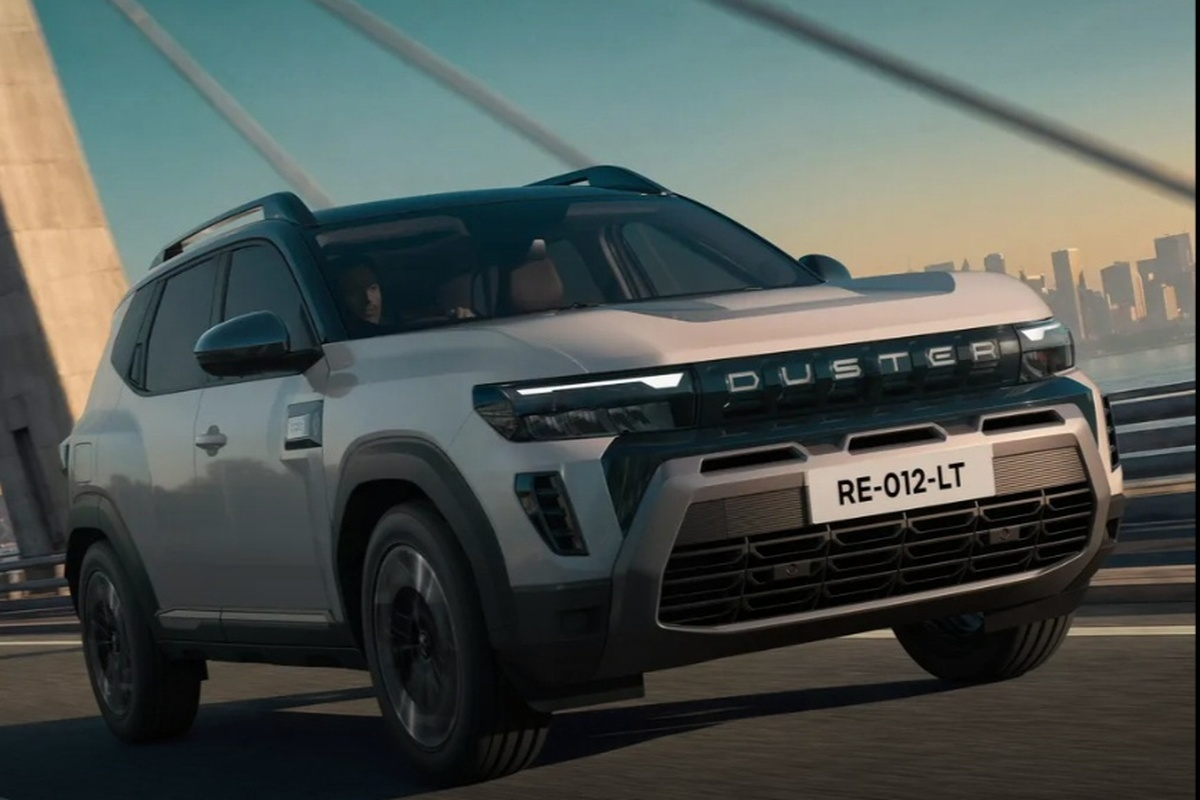
Renault’s Duster Hybrid: Renault’s Quiet War on Diesel
Renault has entered India’s hybrid conversation with a clear intention. The new Duster Strong Hybrid is not merely an added engine option—it is Renault’s attempt to convince diesel buyers that the future can be smoother, cleaner, and just as practical.
The Duster Hybrid is Renault’s way of saying that diesel no longer owns the story of efficiency. It brings electric quietness to city traffic, petrol flexibility to the highway, and a level of refinement that old-school diesel SUVs have never quite managed.
Why Diesel Is in Renault’s Sights
For years, diesel SUVs have been the obvious answer for buyers who wanted strong mileage and effortless highway cruising. Renault now wants to break that habit. Its Duster Hybrid has been pitched directly at people who would otherwise shortlist a diesel Creta, Seltos, or similar SUV.
The logic is simple. A strong hybrid saves the most fuel exactly where diesel struggles most: congested city roads. The Duster can run on electric power for much of urban driving, recover energy while braking, and restart smoothly without the shudder or clatter associated with a diesel engine.
Renault claims up to 29 km/l and says the SUV can spend as much as 80% of city driving time in electric mode. Those numbers may vary in real life, but the direction is clear: the hybrid is designed to make diesel feel dated rather than indispensable.
What Makes the Duster Different
The Duster Strong Hybrid combines a 1.8-litre petrol engine with two electric motors and a 1.4 kWh battery. Together, they produce a claimed 160 PS—noticeably more than the smaller 1.5-litre hybrid setups offered by Toyota and Maruti.
This is where Renault’s approach becomes interesting. Instead of chasing the same formula as its Japanese rivals, it has chosen a bigger petrol engine and a more powerful combined output. The idea is to appeal to buyers who want hybrid efficiency without giving up the sense of performance they associate with a proper SUV.
There is also no need to plug it in. The battery charges itself through driving and braking, which removes one of the biggest mental barriers for buyers considering electrified vehicles. You fill petrol, drive normally, and let the system manage the rest.
The Challenge to Toyota and Maruti
Toyota and Maruti have already taught Indian buyers what a strong hybrid is. The Hyryder and Grand Vitara benefit from familiar branding, wide service networks, and the reassurance of Toyota-linked hybrid technology.
Renault’s answer is to offer more muscle for a similar amount of money. At ₹16.99 lakh, the Duster Hybrid sits close to its Japanese rivals while promising 160 PS and a claimed 29 km/l. It is a value-led pitch: more power, a larger engine, and a stronger performance story.
Whether that translates into sales depends less on the brochure and more on trust. Renault needs buyers to believe that its hybrid system is dependable, its service network is ready, and its ownership experience will remain hassle-free years after purchase.
Taking On the Korean Diesel Twins
The Hyundai Creta and Kia Seltos are perhaps the toughest diesel opponents for the Duster. Both use a 1.5-litre diesel engine with 116 PS and 250 Nm, paired with an automatic gearbox. Their strength lies in low-end torque: they pull cleanly from low revs and feel relaxed during long highway journeys.
The Duster approaches the same buyer differently. It may not match the diesels’ 250 Nm on paper, but its 160 PS gives it a stronger overall performance figure. More importantly, it delivers its efficiency advantage in the exact conditions where most Indian SUVs spend much of their time—traffic, short trips, and stop-start commuting.
For a buyer who drives mostly within the city, the Duster Hybrid makes a very persuasive case. It is quieter, smoother, and potentially far cheaper to run. For someone who regularly covers long highway distances with a full cabin and luggage, the Creta or Seltos diesel may still feel more familiar and more effortless.
Can Buyers Trust the Technology?
Hybrid technology is no longer experimental. Toyota has sold strong hybrids in India for years, and the basic principle—using electric power at low speeds and recovering energy while braking—is well understood. Renault’s E-Tech system follows the same broad idea, even if its internal architecture differs.
The Duster’s system is self-charging, so owners do not need a wall box, public charger, or any change in daily routine. That makes it much easier to accept than a full electric vehicle, especially for first-time buyers who are curious about electrification but not ready to depend on charging infrastructure.
The bigger question is long-term confidence. Indian buyers tend to wait and watch before embracing a new powertrain. They will look at real-world mileage, service costs, battery reassurance, and early owner experiences before making the shift. If the Duster delivers consistently, Renault could win over cautious buyers faster than expected.
How the Market May Respond
The first buyers are likely to be urban commuters who want lower fuel bills without the compromises of an EV. They will appreciate the silent low-speed running, the absence of diesel vibration, and the fact that the car still uses petrol stations.
The next wave could come from diesel owners looking to upgrade. Many of them are emotionally attached to diesel’s highway manners, but rising awareness of emissions rules and the improving refinement of hybrids may make them reconsider. Renault needs to show them that a hybrid is not a compromise—it is an upgrade.
The final challenge is perception. Hyundai and Kia have built enormous trust around their diesel SUVs, while Toyota and Maruti have made hybrids feel familiar. Renault must now prove that the Duster Hybrid is not just clever engineering, but a dependable everyday car.
The Bigger Picture
The Duster Hybrid represents a pragmatic strategy rather than an all-in EV bet. Renault is offering petrol, CNG, hybrid, and electric options, recognising that Indian buyers are moving at different speeds toward electrification.
Its bet is that the middle path—strong hybrid technology—will appeal to the largest group of buyers: those who want better fuel economy and lower emissions without giving up convenience. If the Duster can convert that idea into strong sales, Renault will have done more than launch a new variant. It will have changed the way Indian buyers think about diesel.
The Duster Hybrid is Renault’s way of saying that diesel no longer owns the story of efficiency. It brings electric quietness to city traffic, petrol flexibility to the highway, and a level of refinement that old-school diesel SUVs have never quite managed.

Comments are closed.