
Lufthansa Receives Its 700th Airbus Aircraft, Unveils A350-1000
The new A350-1000, named ‘Deutschland’, marks 50 years of partnership between Lufthansa and Airbus. The aircraft will become Lufthansa's new flagship, featuring its Allegris premium cabin and Starlink-powered Wi-Fi.

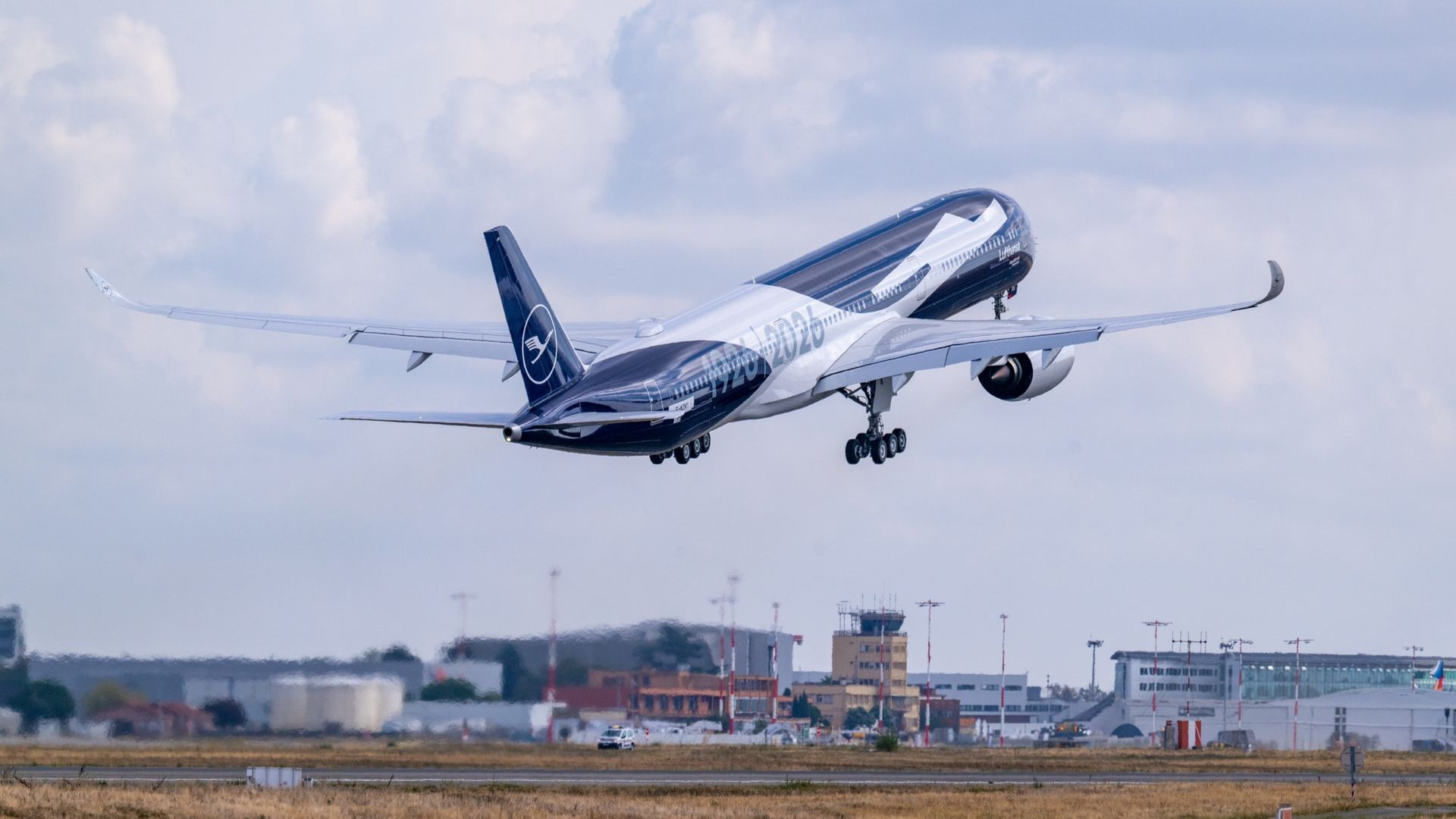
Lufthansa Group has taken delivery of its 700th Airbus aircraft, marking a significant milestone in its 50-year partnership with the European aircraft manufacturer. The newly delivered Airbus A350-1000, named ‘Deutschland’, will serve as Lufthansa’s new flagship for long-haul travel.
The aircraft was officially handed over in the presence of Carsten Spohr, CEO of Lufthansa Group, and Lars Wagner, CEO Commercial Aircraft at Airbus. The delivery also comes during Lufthansa’s 100th anniversary year, making it a particularly significant occasion for the airline.
Registered as D-AIFA, the A350-1000 is the seventh aircraft in Lufthansa’s fleet to feature the special livery celebrating the airline’s centenary.
Lufthansa’s New A350-1000 to Become Its Flagship Aircraft
The arrival of the A350-1000 marks another major step in Lufthansa Group’s fleet modernisation programme, described by the company as the largest in its history.
Lufthansa Group has ordered a total of 15 A350-1000 aircraft, with deliveries scheduled through 2030. The first ten aircraft will operate under the Lufthansa core brand and will be based at its Munich hub.
Measuring 73.80 metres in length, the A350-1000 is approximately seven metres longer than the A350-900. The aircraft will accommodate 300 passengers across four travel classes.
Its cabin configuration includes:
First Class: Three to four seats, including two individual suites and one Suite Plus.
Business Class: 49 seats, including eight seats in suites.
Premium Economy: 35 seats.
Economy Class: 212 seats.
The aircraft will feature Lufthansa’s new Allegris premium cabin concept, offering updated seating and travel experiences across all four classes.
First Lufthansa Long-Haul Aircraft with Starlink Wi-Fi
One of the most notable features of the new A350-1000 is its onboard connectivity.
Starting with its inaugural commercial flight on December 3, 2026, the aircraft will become the first Lufthansa Group long-haul aircraft equipped with the airline group’s new Starlink-powered Wi-Fi service.
Passengers can expect high-speed internet connectivity during flights, with speeds that can, in many cases, exceed those available at home or in the office.
The service is designed to support video streaming, cloud-based work, online applications and other high-bandwidth activities while travelling.
Lufthansa Group will provide the service free of charge to Miles & More members and Travel ID users across all travel classes.
The move reflects the growing demand for reliable internet connectivity during long-haul journeys, particularly among business travellers and passengers who want to remain connected throughout their flights.
Up to 30% Lower Fuel Consumption Per Passenger
Beyond passenger comfort, the A350-1000 is also expected to contribute to Lufthansa Group’s sustainability and operating efficiency goals.
According to the airline, the aircraft uses up to 30% less fuel per passenger compared with previous-generation aircraft. Its improved efficiency is also expected to support lower unit costs.
The introduction of the A350-1000 forms part of the group’s broader fleet renewal strategy, which aims to modernise its long-haul operations while improving environmental performance.
First Commercial Flight to Tokyo Scheduled for December 3
The new aircraft is scheduled to be transferred to Munich on November 11, 2026, where it will undergo preparations before entering commercial service.
Its planned inaugural flight is scheduled for December 3, 2026, on the Munich–Tokyo/Haneda route.
The service will introduce Lufthansa’s new flagship aircraft and its updated onboard experience to passengers travelling between Germany and Japan.
50 Years of Lufthansa and Airbus Partnership
The delivery of the 700th Airbus aircraft also celebrates five decades of cooperation between Lufthansa Group and Airbus.
Over the past 50 years, Lufthansa has operated aircraft from every Airbus aircraft family and has served as a launch customer on several occasions. The two companies have also worked together on aircraft development, aviation research and technology projects.
Commenting on the milestone, Carsten Spohr, CEO of Lufthansa Group, said the A350-1000 represents a major step forward for the airline, combining a modern long-haul aircraft with the new Allegris cabin experience.
He also highlighted the significance of receiving the 700th Airbus aircraft exactly 50 years after Lufthansa’s first Airbus delivery, during the airline’s centenary year.
Spohr described the partnership as an example of European industrial cooperation and its role in shaping the future of global aviation.
A New Chapter for Lufthansa’s Long-Haul Travel
The arrival of the A350-1000 brings together several priorities for Lufthansa Group: fleet modernisation, improved passenger comfort, onboard connectivity and greater operating efficiency.
With its Allegris cabin, Starlink-powered Wi-Fi and expanded long-haul capacity, the aircraft represents an important addition to Lufthansa’s international operations.
As deliveries continue through 2030, the A350-1000 fleet is expected to play an increasingly important role in the airline’s long-haul network.
For passengers, the biggest changes will be experienced inside the cabin, where updated seating, premium travel options and faster internet connectivity aim to make long-distance journeys more comfortable.
Source: Lufthansa Group / Airbus
KEY HIGHLIGHTS
- Lufthansa Group receives its 700th Airbus aircraft.
- The new aircraft is an Airbus A350-1000 named ‘Deutschland’.
- The delivery marks 50 years of partnership between Lufthansa and Airbus.
- Lufthansa has ordered 15 A350-1000 aircraft for delivery by 2030.
- The aircraft accommodates 300 passengers in four travel classes.
- It will feature the Allegris cabin and Starlink-powered Wi-Fi.
- Its first commercial flight is scheduled for December 3, 2026, from Munich to Tokyo/Haneda.

Comments are closed.