

When Performance Meets Design: The Fascinating World of Supercars
Supercars represent the perfect combination of engineering, performance and visual artistry. From sculpted aerodynamic bodies to powerful engines and advanced technology, these machines demonstrate how far automotive innovation can go.
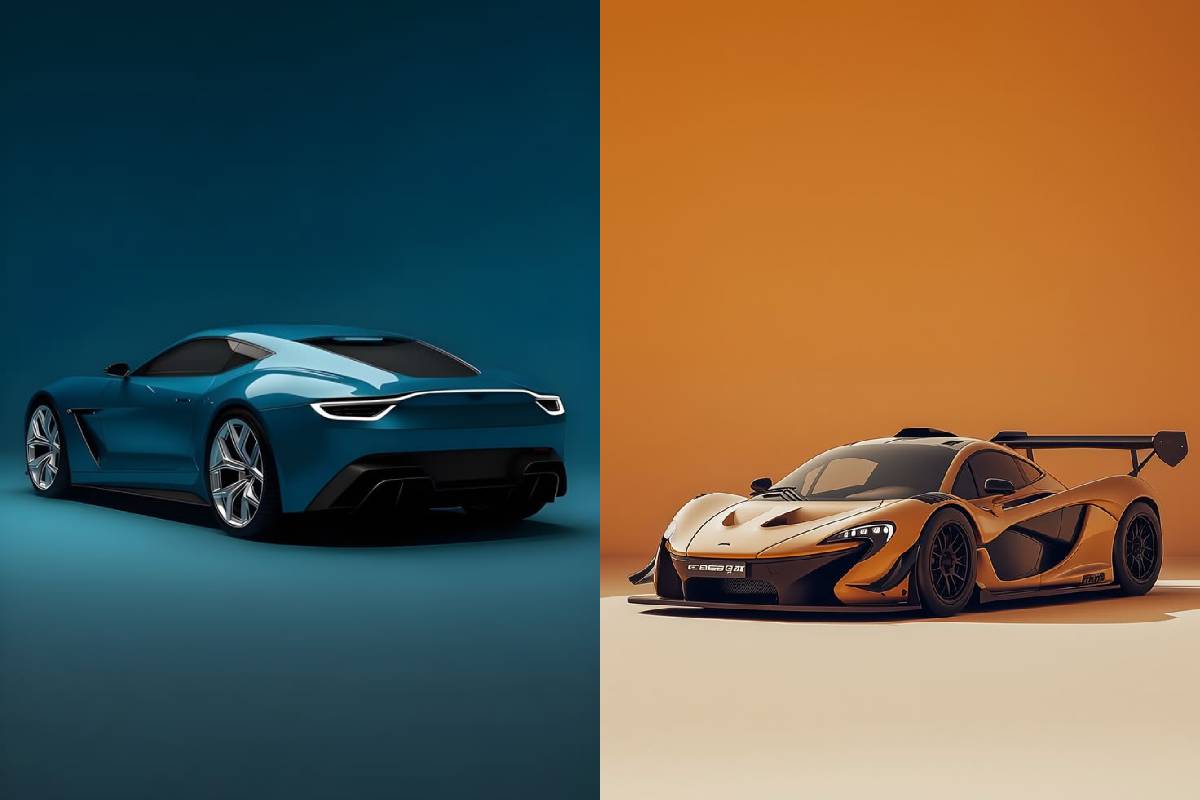
The two cars featured in this editorial showcase contrasting approaches to exotic automotive design. The blue sports car represents futuristic elegance, with its flowing bodywork and sophisticated proportions. Meanwhile, the orange track-inspired machine brings an aggressive racing character through its aerodynamic components, large rear wing and low-slung stance.
Although their styling philosophies are different, both capture the excitement and exclusivity associated with the supercar world.
1. Blue Supercars: The Beauty of Futuristic Automotive Design
Blue has become an appealing colour choice in the world of luxury performance cars.
From deep metallic blue to vibrant electric shades, the colour highlights the curves, body lines and sculpted surfaces of exotic automobiles.
The blue car in this editorial features a sleek silhouette, elongated rear profile, distinctive LED lighting and large multi-spoke alloy wheels.
Its smooth proportions create an impression of speed even when the vehicle is stationary.
Blue finishes also work particularly well with dark glass, black aerodynamic elements and polished metallic detailing.
2. Orange Supercars: Aggression Meets Racing Performance
Orange has a distinctive presence in automotive design.
Associated with motorsport, speed and high-performance engineering, it is frequently used to highlight the dramatic character of exotic sports cars.
The orange machine in the image features an aggressive front splitter, prominent rear wing, sculpted side sections and racing-inspired proportions.
Its low ground clearance and wide stance communicate a track-focused design philosophy.
Unlike the understated elegance of the blue supercar, the orange vehicle embraces visual drama and performance-inspired styling.
3. Aerodynamics: More Than Just an Attractive Shape
Aerodynamics plays a major role in modern supercar development.
Every major surface, opening and aerodynamic component can influence how air moves around the vehicle.
Important design elements include:
- Front splitters: Help manage airflow beneath the front of the vehicle.
- Rear wings: Can generate aerodynamic downforce.
- Diffusers: Help manage airflow underneath the rear section.
- Side air intakes: Direct cooling air towards important components.
- Sculpted bodywork: Helps manufacturers balance aerodynamic efficiency and visual appeal.
Track-focused vehicles often use more prominent aerodynamic components to improve performance under demanding driving conditions.
4. The Importance of Lightweight Construction
Weight plays an important role in supercar performance.
Manufacturers use advanced materials and engineering techniques to improve structural strength while managing overall vehicle weight.
Carbon fibre is particularly important in high-performance automotive construction because of its excellent strength-to-weight characteristics.
Depending on the model, lightweight materials may be used in body panels, aerodynamic components, chassis structures and interior elements.
Reducing unnecessary weight can contribute to acceleration, braking, handling and overall vehicle dynamics.
5. The Role of Colour in Supercar Identity
Automotive colour is more than a finishing choice. It helps establish a vehicle’s personality.
Blue often communicates sophistication, technology and contemporary luxury.
Orange, on the other hand, creates a more energetic and motorsport-inspired identity.
Other popular supercar colours include:
- Racing red.
- British racing green.
- Metallic silver.
- Matte black.
- Pearl white.
- Bright yellow.
The right paint finish can dramatically influence how a vehicle’s design is perceived.
6. Track-Focused Supercars vs Luxury Grand Tourers
Not every exotic car is designed with the same priorities.
Some are developed primarily for track performance, while others aim to combine exceptional performance with long-distance comfort.
Track-focused supercars typically emphasise aerodynamic efficiency, lightweight construction, enhanced cooling and sharper handling.
Luxury grand tourers generally place greater importance on comfort, refined interiors, high-speed stability and everyday usability.
The contrast between the two cars in this editorial reflects these different design philosophies.
7. What Makes Supercars So Desirable?
The appeal of supercars extends beyond their performance figures.
Their exclusivity, craftsmanship, distinctive styling and engineering innovation contribute to their desirability.
For automotive enthusiasts, owning or experiencing an exotic car represents an appreciation for design and technology.
Supercars also play an important role in shaping the future of automotive engineering. Technologies developed for high-performance vehicles can influence developments in aerodynamics, lightweight materials, braking systems and powertrain engineering.
Two Colours, Two Personalities, One Supercar Obsession
The blue and orange supercars demonstrate two fascinating directions in contemporary automotive design.
One celebrates elegant proportions and futuristic styling, while the other embraces aggressive aerodynamics and racing-inspired aesthetics.
Both remind us that supercars are not simply about getting from one destination to another. They represent creativity, innovation and the endless pursuit of automotive excellence.
For enthusiasts, the real question is simple: would you choose the sophisticated blue supercar or the aggressive orange track machine?

Comments are closed.