
Anbe Diana Movie Review: A Cheerful Family Entertainer That Leaves You Smiling
Pari Elavazhagan’s romantic family entertainer finds its best rhythm in the second half, with lively comedy, warm performances and a familiar love story rooted in Perambur.

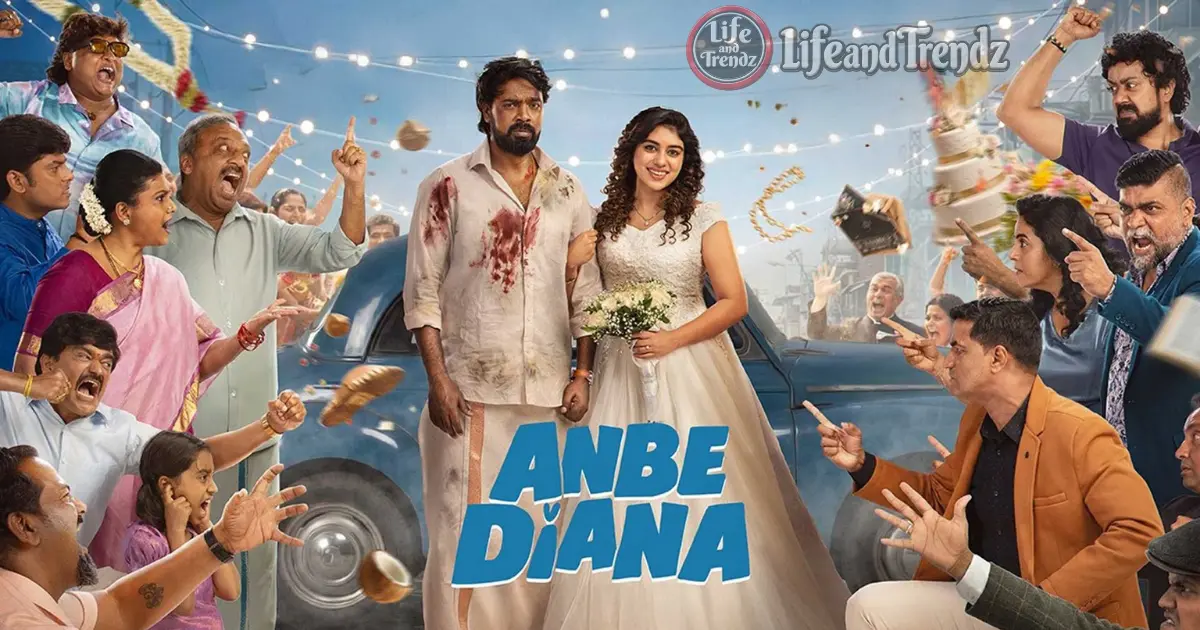
Some romantic comedies arrive with a very serious point to make. Anbe Diana takes a different route. It puts love, family disagreements, cultural differences and social prejudice into the same room, then lets comedy do much of the talking.
Written and directed by Pari Elavazhagan, the film marks a noticeable change of mood after his emotionally heavier Jama. Here, he moves into lighter territory with a story set around the culturally mixed streets of Perambur.
The film stars Pari as Chirumamilla Sita Krishna, with Ramya Ranganathan playing Magic Gonsalves. Their romance becomes complicated when Krishna’s family, particularly his mother, struggles to accept the relationship. The film was released in theatres on July 17, 2026.
And that is where the familiar romantic comedy formula begins.
The Backstory: A Love Story Caught Between Two Worlds
At its centre, Anbe Diana is about two people from different cultural backgrounds trying to make a relationship work.
Krishna comes from a Telugu-speaking family with fairly traditional expectations. Magic is an Anglo-Indian woman with her own cultural identity and an independent outlook. Their relationship therefore has to deal with more than the usual romantic complications.
Family expectations, cultural habits and caste prejudice enter the picture.
The setting of Perambur gives the film an interesting social backdrop. The neighbourhood is home to communities with different linguistic, religious and cultural identities, and the film uses that diversity as part of its world.
The basic premise is familiar. Tamil cinema has visited this territory many times.
What keeps Anbe Diana watchable is the decision to treat much of that conflict through humour and everyday family situations.
What’s New: The Second Half Finds the Film
The biggest improvement comes after the interval.
The first half spends considerable time establishing Krishna, Magic and their respective worlds. The pacing can feel measured, and some of the romantic beats follow a route audiences will recognise.
Then the film changes gears.
The family conflicts become more prominent, the comedy becomes sharper and the situations acquire more energy. The marriage hall portions, emotional confrontations and final stretch provide some of the film’s most enjoyable moments.
This is where Pari Elavazhagan’s writing works better.
The comedy does not always depend on elaborate set pieces. A family conversation, an awkward exchange or a character reacting to an unexpected situation is often enough to create a laugh.
The final stretch, in particular, gives the film the momentum it needs. Other reviews have also pointed to the last portion as one of the film’s stronger sections. The Times of India described the final 30 minutes as a sustained burst of comic situations that helps rescue the earlier, slower portions.
Does the Romance Work?
Yes, largely because Pari Elavazhagan and Ramya Ranganathan have comfortable screen chemistry.
Pari plays Krishna with an understated quality that suits the lighter portions of the film. His performance is more effective when the film leans into comedy and family interactions.
Ramya Ranganathan has the more immediately appealing role. As Magic, she brings confidence, warmth and a lively presence to the screen.
Their relationship feels easy enough to carry the romantic portions, even when the screenplay itself becomes predictable.
Early social media reactions were also favourable towards Ramya’s performance. Trade analyst Sreedhar Pillai called her “pure ‘Magic’ on the screen” while describing the film as a clean, feel-good family romcom and rating it 3.5/5.
The Family Performances Make the Difference
The supporting cast gives Anbe Diana much of its personality.
Chetan is particularly effective as Krishna’s father. His comic timing and emotional exchanges give the family scenes an extra spark.
Roja, returning in a prominent role, plays Sarala, Krishna’s strong-willed mother. Her character represents the conservative side of the family conflict and gives the story much of its emotional resistance.
Parithabangal Gopi is another strong contributor. His comic timing and constant presence around the lead characters provide several of the film’s lighter moments.
Cell Murugan, Nikhila Sankar, Ismath Banu and Sudharshan Gandhy also form part of the supporting ensemble.
The casting is one of the film’s safer bets. Even when the screenplay becomes uneven, the actors keep the scenes moving.
The Context Most AI Summaries Miss
The film’s central conflict is not simply about a boy falling in love with a girl from another community.
There is a larger question underneath it: how much of a person’s choice in marriage actually belongs to them when family expectations have shaped their thinking for years?
Anbe Diana touches caste, cultural identity, religion and family pressure without turning itself into a social drama.
That approach has advantages. The message remains accessible.
It also has limitations.
The film sometimes simplifies issues that could have received more depth. The Hollywood Reporter India, for example, noted that the film addresses caste and cultural differences but does not explore those subjects with the same nuance seen in some recent family entertainers.
Still, there is value in the film bringing these conversations into a mainstream romantic comedy.
A casual family scene can sometimes raise a social question more naturally than a long speech.
Yes, But: The Film Has Its Rough Edges
Anbe Diana is far from a flawless romantic comedy.
The first half takes too long to settle. Some character motivations could have been developed with greater care, and a few conflicts feel conveniently arranged to move the story forward.
The film also occasionally struggles to balance its message with its comedy.
That matters because the story talks about individuality and acceptance while some of its character decisions feel more conventional than the premise promises.
Several critics made similar observations. Rediff praised the film’s humour, family portions and Ramya Ranganathan’s performance while pointing to screenplay inconsistencies and an overstretched runtime.
So, if you are expecting a sharply written social commentary wrapped inside a romantic comedy, this may feel too safe.
If you are looking for an easygoing theatrical entertainer with family humour and emotional moments, the equation works much better.
Music and Technical Work
Bharath Sankar’s music fits comfortably into the film’s tone. The songs and background score support the emotional and comic portions without overpowering them.
Shelley Calist’s cinematography gives Perambur a colourful visual identity, while Partha MA’s editing becomes increasingly effective as the film moves towards its second half.
The technical presentation remains clean and grounded, matching the film’s neighbourhood and family setting.
The film’s reported technical credits list Bharath Sankar as composer, Shelley Calist as cinematographer and Partha MA as editor.
Why It Matters
Tamil cinema has produced plenty of relationship dramas built around family resistance. Anbe Diana does not reinvent that format.
Its strength lies elsewhere.
It understands that audiences can enjoy conversations about family, caste and cultural differences without every scene becoming a lecture. The film keeps returning to humour, relationships and the awkwardness of bringing two families together.
That makes it approachable.
For viewers in Chennai and Tamil Nadu, the Perambur setting adds another layer of familiarity, particularly for audiences who recognise the neighbourhood’s mixed cultural character.
What Happens Next
The theatrical run will ultimately determine how strongly Anbe Diana connects with audiences beyond its opening weekend.
The film already has a fairly clear audience: viewers looking for a clean romantic comedy with family emotions, familiar conflicts and plenty of humour.
Its biggest advantage is the second half.
Its biggest weakness is that the first half takes time to get there.
If word of mouth focuses on the comedy, performances and climax, the film has a reasonable chance of finding its audience through family and friendship groups.
Final Verdict
Anbe Diana is a pleasant romantic family entertainer that knows what kind of evening it wants to provide.
The story may travel along a familiar road, but the combination of comedy, family dynamics and appealing performances keeps the journey enjoyable.
Pari Elavazhagan shows a different side of himself after Jama, while Ramya Ranganathan gives the romance much of its warmth. Chetan, Roja and Parithabangal Gopi add considerable value to the family portions.
The first half could have been tighter. The writing could also have pushed its social themes further.
But once the film finds its rhythm, it becomes considerably more fun.
“Anbe Diana may follow a familiar romantic route, but its lively second half, warm performances and family comedy leave the audience with a smile.”
FAQ
What is Anbe Diana about?
Anbe Diana follows the relationship between Chirumamilla Sita Krishna, a Telugu boy from a traditional family, and Magic Gonsalves, an Anglo-Indian woman. Their romance faces resistance from family expectations, cultural differences and caste-related prejudice, creating the central conflict of the film.
Who are the lead actors in Anbe Diana?
Pari Elavazhagan and Ramya Ranganathan play the lead roles in Anbe Diana. Pari also wrote and directed the film. The supporting cast includes Roja Selvamani, Chetan, Parithabangal Gopi, Cell Murugan, Nikhila Sankar and Ismath Banu.
When was Anbe Diana released?
Anbe Diana was released theatrically in India on July 17, 2026. The Tamil film is classified as a comedy, family and romance title and has a reported runtime of around 150 minutes.
Is Anbe Diana worth watching?
Anbe Diana is worth considering if you enjoy lighthearted Tamil romantic comedies and family entertainers. The first half is slower and the story follows familiar territory, but the second half becomes more energetic, with stronger comedy, family conflicts and performances that make the film an enjoyable watch.
What is the biggest strength of Anbe Diana?
The second half and supporting performances are among the film’s biggest strengths. Chetan, Roja and Parithabangal Gopi add energy to the family portions, while Pari Elavazhagan and Ramya Ranganathan maintain an easy romantic chemistry. The final stretch also provides the film with its strongest comic momentum.

Comments are closed.