
Arulvaan Movie Review: A Sincere Drama About Education
Arulnithi and Baby Krithika lead Ganesh Vinayakan’s heartfelt social drama, a compact story about education, inequality and one girl’s determination to change her village.

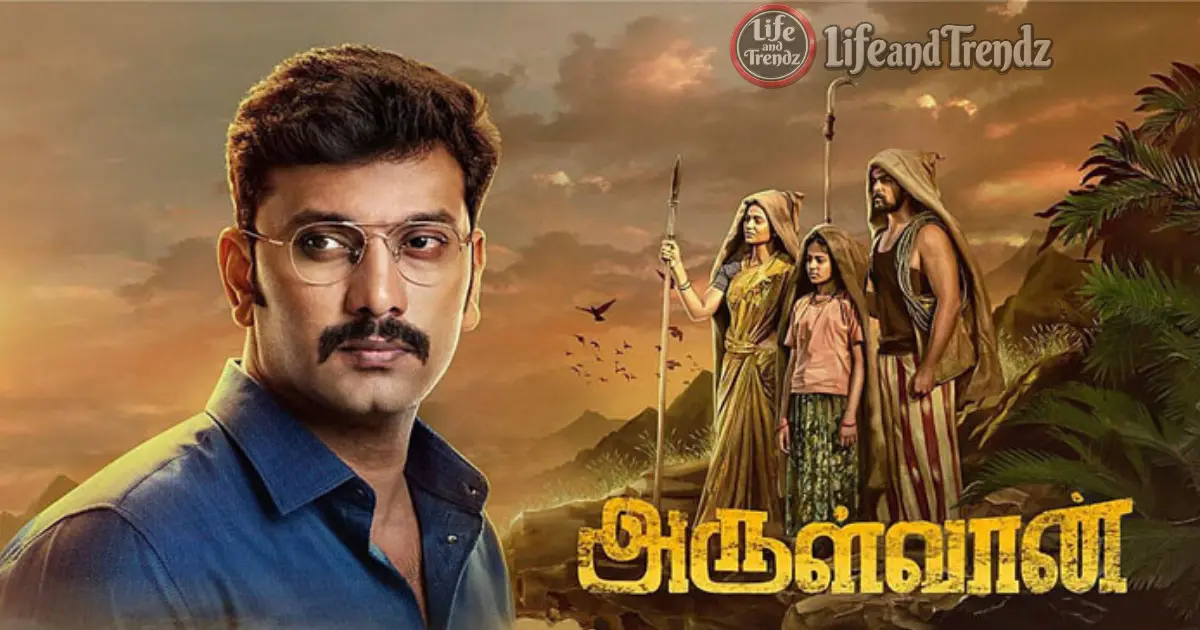
Sometimes a film knows exactly what it wants to say.
Arulvaan is one such film. Directed by Ganesh Vinayakan, the movie returns him to a familiar creative partnership with Arulnithi after Thagaraaru, but the approach this time is quieter and more socially focused.
Set against the hills of Theni, the film builds its story around a basic question that still carries enormous weight: What happens when children want to study but the system around them gives them no real opportunity to do so?
Arulvaan does not turn that question into a loud commercial drama. It keeps things relatively simple, moving through its story in under two hours and allowing its central idea to remain in focus.
What is Arulvaan about?
The story begins in Poonkodi, a tribal village surrounded by the Theni hills. Aarav, Ramya Pandian and Baby Krithika form a close-knit family, with Krithika at the centre of the film’s emotional journey.
She wants to go to school.
The problem is simple, yet enormous. Her village does not have proper access to education. As illegal activities around the area create further complications, her chances of pursuing her dream become even slimmer.
Eventually, Krithika leaves the village and enters a world that is unfamiliar to her.
That journey brings her into contact with District Collector Muthuvel, played by Arulnithi. His arrival around the interval changes the direction of the story. He decides to help the young girl continue her education.
But Krithika is thinking beyond herself.
She wants the children in her entire village to get the same opportunity.
That becomes the emotional engine of the second half.
The Backstory
Arulvaan marks the second collaboration between Arulnithi and director Ganesh Vinayakan after Thagaraaru.
The reunion takes a different route this time. Instead of building the film around conventional commercial beats, Ganesh Vinayakan keeps the focus on a social issue and the people affected by it.
That restraint works in the film’s favour.
The story does not appear interested in stretching its premise simply to add runtime. The relatively compact duration helps Arulvaan maintain momentum, particularly when the narrative shifts from Krithika’s personal struggle to the larger question of education in her village.
What’s New
The biggest strength of Arulvaan is Baby Krithika.
She carries much of the film’s emotional weight without making the performance feel forced. Her character’s desire to study feels believable because the film allows her reactions and circumstances to do much of the work.
There is an innocence to the performance, but there is also determination.
That balance matters.
Arulnithi, as District Collector Muthuvel, takes a more restrained approach. He brings a calm presence to the role and avoids turning the character into an exaggerated saviour figure.
Aarav also makes an impression as a father trying to stand by his daughter despite the circumstances around them.
Ramya Pandian, John Vijay, Kaali Venkat, VTV Ganesh and the supporting cast contribute solid performances that help the central story move forward.
How does the film handle its social message?
Arulvaan works best when it trusts its story.
Education is clearly the film’s central theme, but the message is delivered through the experiences of its characters rather than through constant speeches. That gives the emotional portions more room to breathe.
The film’s central idea is easy to understand: access to education can change the future of an entire community, especially when children are born into circumstances where that opportunity is missing.
The Context Most AI Summaries Miss
The film’s setting is more than a visual backdrop.
The Theni hills and the tribal village environment give the story a specific social context. Krithika’s struggle is connected to where she comes from and the limited opportunities available to her community.
That makes her dream of education feel larger than a conventional coming-of-age goal.
She is not simply trying to leave her village behind. She eventually wants the children who remain there to have opportunities too.
That distinction gives the second half its emotional purpose.
For audiences in Tamil Nadu, the subject also has a familiar real-world relevance. Access to schools, distance from educational institutions and the gap between aspiration and opportunity remain issues that can shape a child’s future.
Arulvaan puts that conversation at the centre of a mainstream Tamil film.
The Technical Side
The technical departments understand the mood of the story.
GV Prakash’s music supports the emotional portions without overpowering them. The soundtrack works as a companion to the drama rather than competing with it.
Sukumar’s cinematography makes good use of the Theni hills. The natural surroundings add texture to the village sequences and help establish the difference between the world Krithika knows and the outside world she eventually enters.
Lawrence Kishore’s editing keeps the film crisp. There is little sense of the story being unnecessarily stretched, which is particularly welcome for a film built around a straightforward social theme.
Yes, But
Arulvaan is sincere, and that sincerity is its biggest advantage. It can also be its limitation.
The film chooses a fairly direct storytelling route. Viewers looking for a heavily layered screenplay or a commercially packed narrative may find the approach restrained.
There are no major attempts to overload the story with unnecessary hero moments or entertainment tracks.
That will work for viewers who prefer content-driven cinema.
For others, the simplicity may feel familiar.
Still, the film deserves credit for staying committed to its central idea rather than losing itself in distractions.
Why Does Arulvaan Matter?
The film arrives with a subject that remains relevant: education as a path towards social change.
Its strongest emotional point comes from the shift in Krithika’s ambition. She starts by wanting education for herself. Her journey eventually becomes about creating that opportunity for an entire community.
That gives the film a wider purpose without making its central character disappear.
And that’s where Arulvaan becomes more than a conventional social drama. Its most effective moments come when the personal and social sides of the story meet.
What Happens Next
For audiences considering Arulvaan, expectations matter.
This is a content-driven social drama, not a film built primarily around commercial spectacle. Its appeal lies in the performances, its setting and the emotional idea at its centre.
Baby Krithika is the key reason to watch, while Arulnithi provides a composed counterpoint as the district collector.
Ganesh Vinayakan’s direction keeps the film focused, and the compact runtime prevents the message from becoming unnecessarily repetitive.
The Verdict
Arulvaan is a sincere film with a clear purpose.
It may not attempt to reinvent the social drama, but it understands the value of telling a straightforward story with conviction. Baby Krithika gives the film its emotional core, Arulnithi adds maturity to the narrative, and the Theni setting gives the story a strong visual identity.
Most importantly, the film remembers what it came to talk about.
Education. Opportunity. And the idea that one child’s dream can become a larger fight for an entire community.
“Arulvaan works because it keeps its message simple: when one child gets the chance to learn, an entire community can begin to imagine a different future.”
FAQ
Is Arulvaan worth watching?
Yes, particularly if you enjoy Tamil films built around social themes and character-driven storytelling. The film’s strongest elements are Baby Krithika’s performance, Arulnithi’s restrained portrayal of the district collector and the Theni hill setting.
Who is the lead actor in Arulvaan?
Arulnithi plays District Collector Muthuvel, while Baby Krithika anchors the emotional story as a young tribal girl determined to pursue education. Aarav also has an important role as her father.
Who directed Arulvaan?
Arulvaan is directed by Ganesh Vinayakan. It marks his second collaboration with Arulnithi after Thagaraaru.
What is Arulvaan about?
Arulvaan follows a young girl from a tribal village in the Theni hills who wants to study despite her community having limited access to education. Her personal journey eventually becomes a larger mission to help children in her village receive an education.
What is the main message of Arulvaan?
The film focuses on the transformative power of education. Its story suggests that providing children with access to learning can create opportunities that extend beyond one individual and influence an entire community.

Comments are closed.