

Luxury doesn’t always have to be loud. Sometimes, it is defined by presence, proportion and colour.
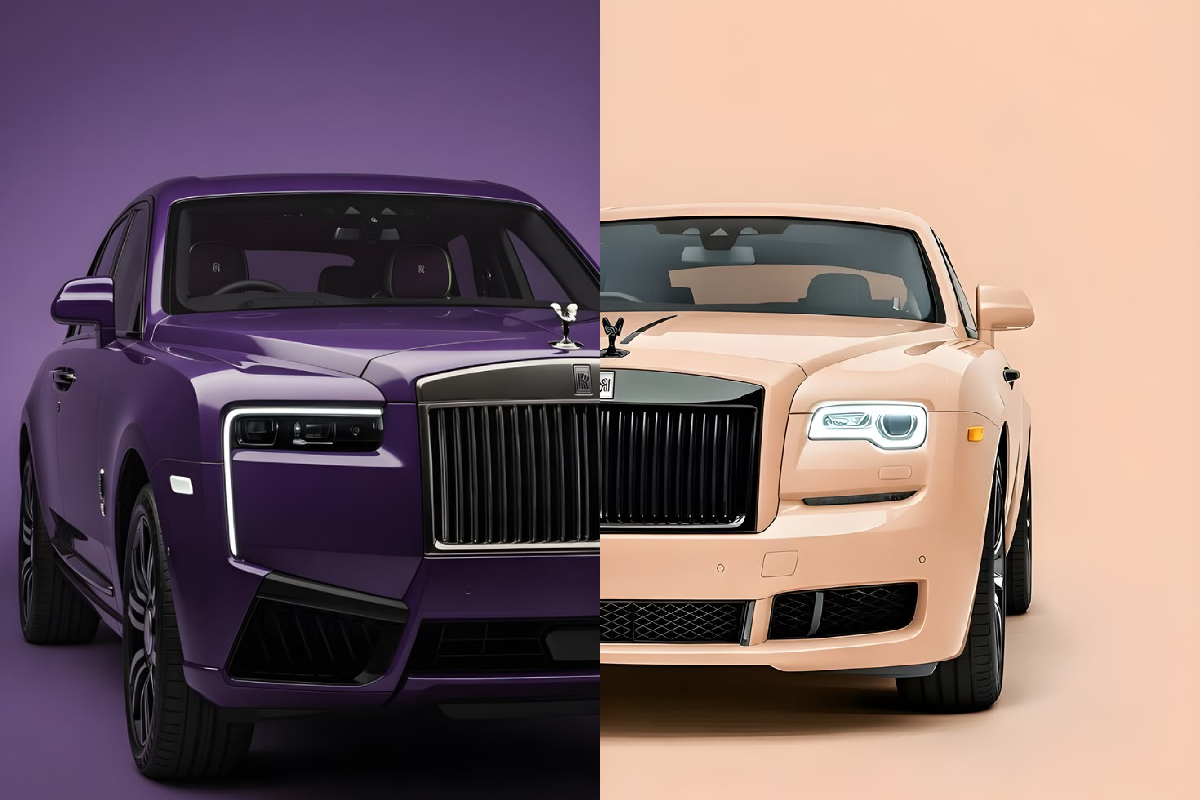
The image featured here presents two striking interpretations of Rolls-Royce-inspired luxury: a deep royal purple finish on one side and a sophisticated champagne tone on the other. Both versions retain the unmistakable visual language of an ultra-luxury automobile while expressing completely different personalities.
The result is a fascinating study in colour, craftsmanship and modern automotive elegance.
When Colour Becomes Luxury
Luxury cars are often associated with traditional shades such as black, white, silver and deep blue. But contemporary automotive design has increasingly embraced more expressive colours.
The purple finish shown here immediately creates a sense of exclusivity. It feels dramatic without relying on aggressive styling.
The champagne-coloured version takes the opposite approach. Its soft, warm tone creates a quieter and more refined impression, almost resembling the colour palette of a luxury interior or haute couture collection.
Two colours. One language of luxury. Two completely different moods.
The Signature Grille Takes Centre Stage
The defining feature of both cars is the imposing vertical grille.
Its tall, structured design creates an unmistakable sense of authority. Rather than blending into the bodywork, the grille becomes the central architectural element of the front end.
The contrast between the dark grille and the surrounding body colour is particularly effective.
On the purple version, the grille creates a strong, almost theatrical contrast.
On the champagne version, it becomes a darker focal point against the softer exterior.
Purple: Dramatic and Individual
The deep purple exterior gives the car a distinctly fashion-forward character.
Purple has long been associated with creativity, exclusivity and luxury, making it an intriguing choice for an ultra-premium automobile.
Under studio lighting, the colour shifts between darker violet tones and brighter reflections, revealing the sculpted surfaces of the bonnet and front fenders.
It feels designed for someone who doesn’t simply want a luxury car—but wants their luxury car to have an identity of its own.
Champagne: Understated Sophistication
The champagne finish communicates luxury differently.
Rather than demanding attention, it creates a softer visual presence. The warm colour complements the clean body lines and gives the vehicle an almost jewellery-like appearance.
It is a colour that works particularly well with the polished metal details around the grille, headlights and emblem.
The overall effect is elegant, restrained and timeless.
The Spirit of Ecstasy Completes the Design
At the top of the grille sits the unmistakable Spirit of Ecstasy ornament, one of the most recognizable symbols in luxury automotive design.
Its presence changes the perception of the entire front end. The hood ornament isn’t simply a decorative element—it acts almost like a signature, reinforcing the car’s premium identity.
Placed against the purple and champagne body colours, the emblem becomes a subtle but powerful finishing detail.
Headlights With a Modern Edge
The headlights provide a contemporary contrast to the traditional grille.
Their rectangular, precisely defined shapes give the front end a modern character while maintaining the formal proportions associated with the brand’s design language.
This mixture of traditional and modern design is one of the most interesting aspects of contemporary luxury automobiles.
The grille references heritage.
The lighting references the future.
Luxury as a Visual Experience
The image demonstrates that luxury isn’t created by one feature alone.
It comes from the interaction between:
- Colour
- Proportion
- Materials
- Lighting
- Surface detailing
- Branding
- Craftsmanship
Even the studio backgrounds contribute to the experience.
The purple vehicle sits against a matching violet environment, creating a monochromatic presentation. The champagne car is surrounded by warm beige tones, producing a softer, almost editorial atmosphere.
The cars therefore become part of their environments rather than simply being placed inside them.
Automotive Design Meets Fashion
There is something particularly fashion-like about this visual presentation.
The two cars could almost be interpreted as luxury fashion pieces: one dramatic and expressive, the other understated and refined.
This is increasingly relevant in modern automotive culture, where colour customisation and bespoke finishes allow luxury vehicles to become extensions of personal style.
A car is no longer simply transportation.
For the luxury market, it can become a statement of taste and identity.
The Beauty of Contrast
Perhaps the strongest feature of the image is the contrast between the two colour stories.
Royal Purple
- Dramatic
- Bold
- Contemporary
- Artistic
- Distinctive
Champagne
- Soft
- Refined
- Warm
- Elegant
- Timeless
Neither approach needs excessive decoration.
The colours themselves create the personality.
Final Thoughts
This visual captures an important evolution in luxury automotive design: personalisation is becoming part of the luxury experience.
The same sophisticated silhouette can communicate completely different emotions depending on its colour, lighting and environment.
The purple version feels expressive and fashion-forward. The champagne version feels refined and understated.
Both demonstrate the enduring power of luxury design.
True automotive elegance isn’t simply about how much a car costs. It’s about how confidently it expresses its identity.

Comments are closed.