

Movies, sports broadcasts, music videos and live events often look effortless on screen. But behind every smooth tracking shot, dramatic close-up and perfectly timed frame is a skilled camera operator working under intense physical and creative pressure.
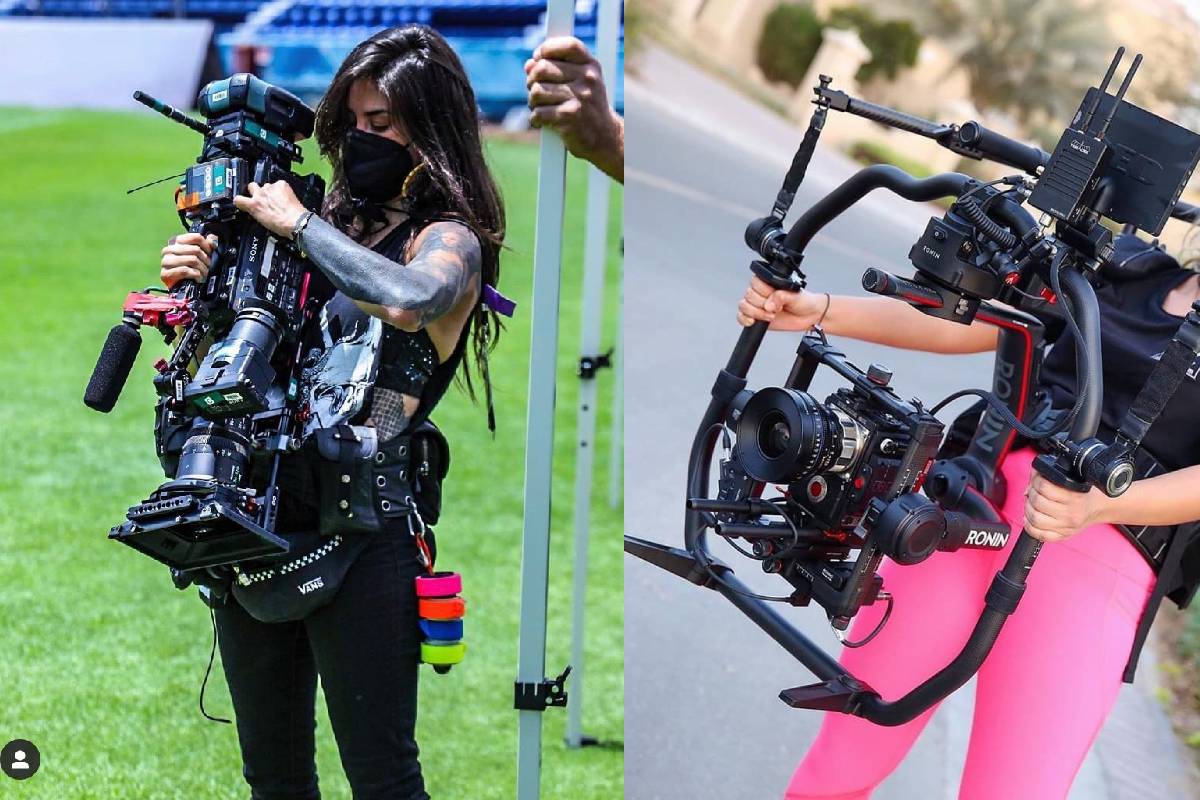
The images here offer a fascinating glimpse into that world, showcasing professionals operating large cinema cameras, stabilizers and sophisticated camera rigs in demanding environments.
The People Who Make the Shot
A camera operator’s job is much more than simply pointing a camera at a subject.
They need to understand composition, movement, focus, exposure and timing while constantly reacting to what is happening in front of the lens.
During live productions, there may be no opportunity for a second take.
A single missed moment can mean losing the shot completely.
Carrying Serious Camera Hardware
The equipment shown in the photographs is far removed from a typical handheld camera.
Large cinema cameras can become extremely heavy once lenses, monitors, batteries, microphones, transmitters and other accessories are attached.
That is why professional operators often use specialized support systems.
The first image shows a substantial camera rig designed to distribute the equipment’s weight across the operator’s body. The setup allows the camera to remain mobile while providing greater stability during movement.
The Art of Stabilized Movement
The second photograph highlights a camera mounted on a professional stabilization system.
Modern gimbal systems are widely used when filmmakers need smooth movement while walking, running or following subjects.
Instead of the camera bouncing with every step, the stabilization system helps maintain a controlled frame.
This opens up creative possibilities such as:
- Tracking shots
- Dynamic walk-and-talk sequences
- Sports coverage
- Action scenes
- Music-video cinematography
- Event filmmaking
- Moving establishing shots
Technology Meets Physical Skill
It is easy to assume that advanced equipment does all the work.
It doesn’t.
A stabilization system can reduce unwanted movement, but the operator still needs excellent coordination, spatial awareness and timing.
They have to anticipate where the subject is going, maintain framing and react instantly to changes.
The equipment is a tool.
The operator creates the shot.
Sports and Live Events Demand Precision
The first photograph appears to show a professional camera setup being used in a sports environment.
Sports cinematography presents its own unique challenges.
The action can change direction within seconds. Players move unpredictably, and the camera operator needs to anticipate the play rather than simply react to it.
The difference between capturing an ordinary moment and an unforgettable one can come down to fractions of a second.
More Than Just a Camera
A professional camera setup can include an entire ecosystem of equipment:
Camera body → Lens → Monitor → Focus system → Microphone → Battery → Wireless equipment → Stabilization/support system
Every component has a purpose.
The final image that audiences see is the result of all these pieces working together.
The Physical Side of Cinematography
There is also an athletic element to professional camera work.
Operators may spend hours standing, walking, crouching or moving while carrying equipment. Stabilized camera systems can make shots smoother, but they can still be physically demanding.
This is one reason professional camera operators develop specialized techniques for posture, movement and equipment handling.
The Invisible Craft Behind Great Visuals
Audiences rarely think about the person behind the camera.
They see the actor.
They see the stadium.
They see the action.
They see the finished frame.
But behind that frame is often someone carefully balancing technology, movement, composition and timing.
That’s what makes professional camera operation such an interesting craft.
Final Thoughts
These photographs provide a glimpse into the technical and physical world behind professional visual storytelling.
From heavy cinema rigs to advanced stabilization systems, modern cinematography combines technology, creativity and human skill.
The next time a film sequence feels incredibly smooth or a sports moment is captured at exactly the right instant, remember that someone had to be there—camera in hand, moving with the action and making sure the perfect frame didn’t slip away.
Great visuals may look effortless. The work behind them rarely is.

Comments are closed.