

American Muscle Cars: Where Power Meets Timeless Automotive Design
Few automobiles capture the spirit of performance and automotive culture quite like American muscle cars. Known for their aggressive styling, powerful engines and unmistakable road presence, these machines have maintained a special place in automotive history.
From modern performance coupes to beautifully restored classics, muscle cars represent a combination of engineering, design and driving excitement.
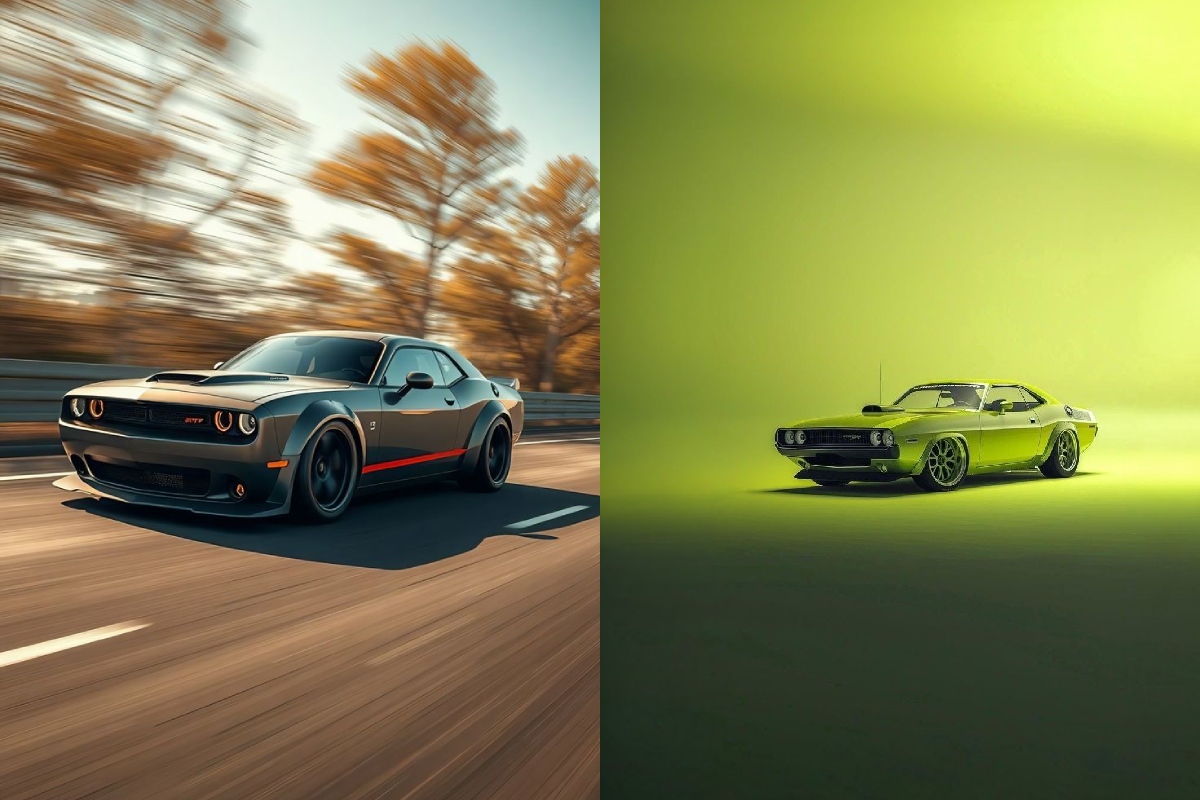
The two automotive visuals showcase different interpretations of this iconic segment. One highlights a contemporary dark-coloured performance coupe on an open road, while the other presents a classic lime-green muscle car against a vibrant studio background.
Together, they celebrate the enduring appeal of American automotive design.
1. Dodge Challenger: A Modern Muscle Car Icon
The Dodge Challenger is one of the most recognisable names in modern American muscle car culture.
Its wide stance, bold front grille, muscular bodywork and distinctive headlight design create an unmistakable appearance.
The modern Challenger combines retro-inspired styling with contemporary performance engineering.
Its long bonnet, sculpted sides and aggressive proportions pay tribute to the golden era of American muscle cars while maintaining a modern identity.
2. Classic Muscle Cars: A Legacy That Never Fades
Classic muscle cars have a unique place in automotive history.
Their long bonnets, powerful proportions, bold grilles and distinctive body shapes continue to attract collectors and enthusiasts.
The lime-green classic coupe in the editorial reflects the colourful design language associated with vintage American performance automobiles.
Classic muscle car styling is often recognised through:
- Long and sculpted bonnets.
- Wide front grilles.
- Distinctive round headlights.
- Bold body proportions.
- Chrome detailing.
- Rear-wheel-drive performance heritage.
These design elements continue to influence modern automotive styling.
3. The Evolution of Muscle Car Design
Muscle car design has evolved significantly over the decades.
Earlier models were celebrated for their straightforward proportions, bold colours and powerful visual presence.
Modern performance cars incorporate aerodynamic improvements, advanced lighting systems, contemporary interiors and sophisticated technology.
Despite these developments, manufacturers continue to draw inspiration from traditional muscle car styling.
The result is a fascinating combination of heritage and modern engineering.
4. Bold Colours and Automotive Personality
Colour plays an important role in automotive design.
The dark grey performance coupe creates a sporty and understated appearance, while the lime-green classic car makes a much more expressive statement.
Traditional muscle car culture has always embraced distinctive exterior colours.
Popular shades include:
- Racing green.
- Bright yellow.
- Classic red.
- Metallic grey.
- Midnight black.
- Electric blue.
These colours help highlight the sculpted bodywork and distinctive proportions of performance vehicles.
5. The Appeal of Performance Cars on the Open Road
The modern muscle car photograph captures the vehicle travelling along a road surrounded by autumn-coloured trees.
The motion blur creates a sense of speed and movement, highlighting the dynamic character of the automobile.
Unlike a traditional studio photograph, this approach places the car within an active driving environment.
The combination of road photography, natural lighting and powerful vehicle design creates a cinematic automotive aesthetic.
6. Why Muscle Cars Continue to Attract Enthusiasts
Muscle cars remain popular because they represent more than transportation.
For many enthusiasts, they are connected to automotive heritage, mechanical engineering, customisation and individual expression.
Their distinctive designs make them instantly recognisable, while their cultural influence extends into films, music, fashion and motorsport.
The continuing interest in classic restorations and modern performance vehicles demonstrates that the muscle car legacy remains relevant.
7. Modern Performance Meets Classic Heritage
The relationship between modern and classic muscle cars is one of the most interesting aspects of automotive culture.
Modern vehicles benefit from advances in technology, safety and engineering, while classic models preserve the distinctive design characteristics that established the segment.
Both approaches offer something different.
The modern performance coupe represents contemporary road presence, while the classic lime-green automobile celebrates the heritage and visual identity of traditional American muscle cars.
American Muscle Cars: A Legacy Built on Power and Style
From the aggressive styling of the Dodge Challenger to the timeless proportions of classic muscle cars, American performance automobiles continue to inspire enthusiasts across generations.
Their distinctive designs, bold colours and strong automotive heritage make them more than just vehicles.
They are symbols of an automotive culture built around individuality, performance and timeless design.

Comments are closed.