
Pradhama Drishtya Kuttakkar Review: Parvathy, Vijayaraghavan Elevate a Crowded Genre
Director Shahad's police procedural turns the cop-vs-cop cover-up into a tense, well-acted duel — even if it plays it safer than it should.

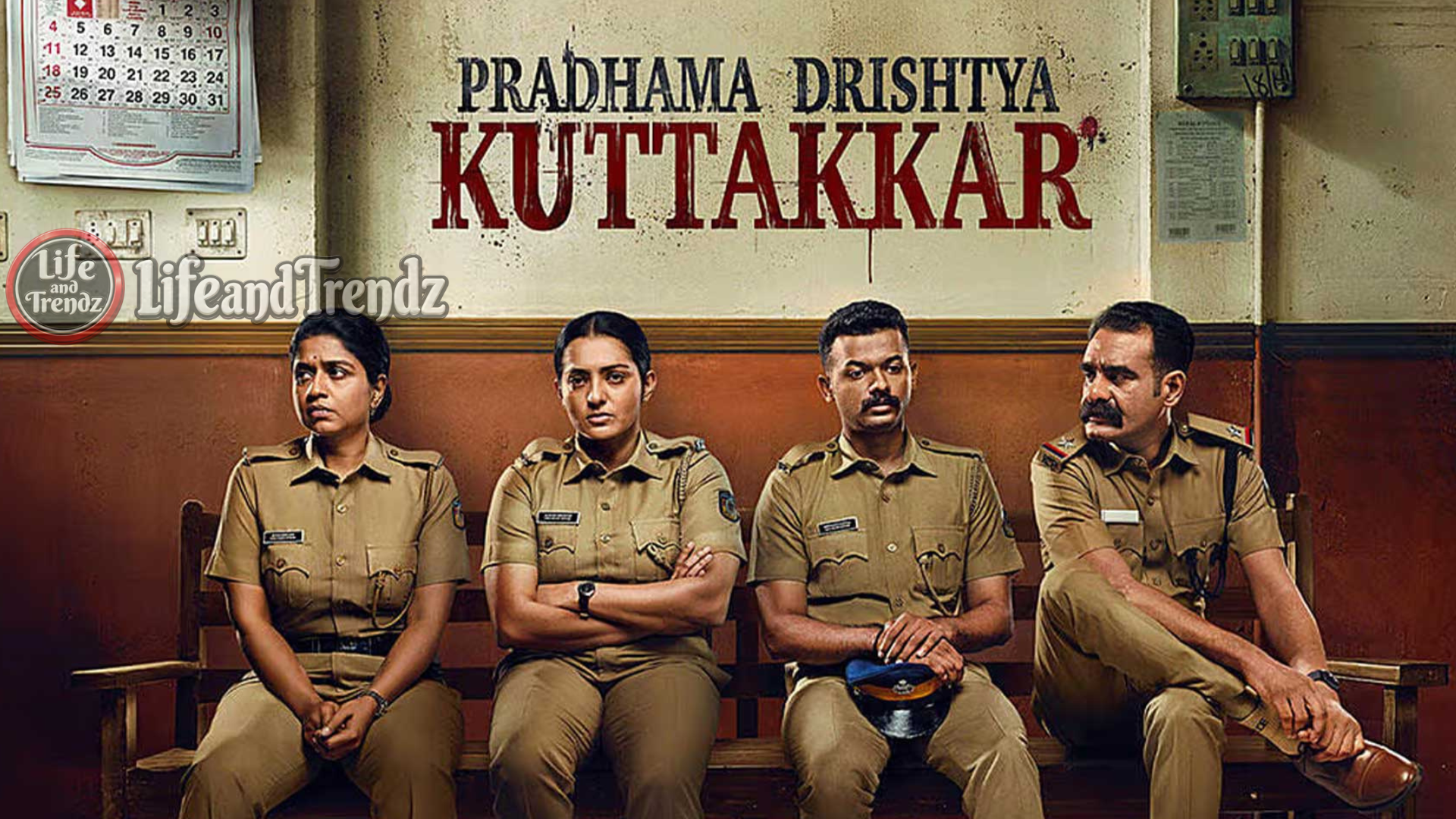
The cover-up thriller has quietly become Malayalam cinema’s favourite genre export. Since Drishyam rewrote the rules for how an ordinary family could outsmart the law, filmmakers across languages have chased that same high — a body to hide, evidence to erase, investigators to outwit. Hindi got Maa Behen. Tamil got Kuttram Purindhavan and Blast. Malayalam itself just made Mohiniyattam.
Pradhama Drishtya Kuttakkar (PDK) walks into this crowded room with a twist that actually justifies its existence: this time, both sides of the cover-up wear the uniform.
A Cop-vs-Cop Premise That Earns Its Tension
Director Shahad’s setup is deceptively simple. An accidental death occurs. Four low-ranked, ordinary police officers panic — and decide to bury it, literally and figuratively. Investigating them is a veteran officer with an unblemished record. What could have been a straightforward chase becomes something more interesting: a duel between people who understand exactly how the system works, because they built their careers inside it.
That premise alone separates PDK from its genre cousins. The four cops at the centre of the cover-up — Aleena (Parvathy Thiruvothu), Sreenath (Mathew Thomas), Dasan (Sidharth Bharathan) and Divya (Unnimaya Prasad) — aren’t civilians hoping the police won’t notice. They know precisely what the police will notice, and precisely how thin their cover is.
Parvathy’s Aleena Is the Film’s Quiet Anchor
We meet Aleena as a widow offered a compassionate-grounds job in the department after her husband dies on duty. Offered a clerical desk, she chooses station duty instead — a decision the film lets speak for itself rather than announcing it with fanfare.
That restraint defines Parvathy’s performance throughout. Aleena emerges as the most composed of the four despite being the newest recruit, and the film resists the temptation to explain this with a dramatic backstory or a spelled-out “high IQ” reveal. Instead, it’s built from small, accumulated details — her eagerness for the uniform, her training, and specifically her fixation on a police memoir written by a veteran investigator named Haris Meeran.
That detail becomes the film’s cleverest structural choice.
When the Book’s Author Becomes the Investigator
Haris Meeran, played by Vijayaraghavan, ends up assigned to investigate the very case Aleena and her colleagues are trying to bury. What follows is the film’s real engine: Aleena working from theory absorbed through Haris’s writing, and Haris working from decades of lived, unglamorous experience.
Vijayaraghavan, whose recent run of roles has shown a notable range, plays Haris as an investigator who reads the room before he reads the evidence — a brilliant early scene involving a decoded voice clip signals just how fast he smells the cover-up. What sharpens the character further is his willingness to bend ethics himself when it serves the truth, making him neither a clean hero nor a villain, just someone who has learned the system’s blind spots the hard way.
Among the supporting cast, Sidharth Bharathan’s Dasan stands out as the most grounded and practical of the group under pressure, while Mathew Thomas convincingly carries the anxious energy of a young cop in over his head. Unnimaya Prasad’s character, by contrast, remains largely one-note — one of the film’s few underdeveloped threads.
Craft That Holds the Tension Together
PDK’s technical work does a lot of quiet heavy lifting. Chaman Chakko’s editing sustains tension across the film’s several extended, nerve-wracking sequences — particularly a Drishyam-reminiscent stretch involving the search for a corpse, which still manages a genuine surprise despite the familiar territory. Mujeeb Majeed’s score amplifies that tension without overplaying it, and Roby Varghese Raj’s unflashy, grim visual language matches the film’s mood without ever calling attention to itself.
Writers PS Subramanian and Vijesh Thottingal reportedly built the script on detailed procedural research, including ballistics — and it shows in how confidently the film moves through police-station bureaucracy and investigative logic, the kind of detail that keeps procedurals from feeling generic.
Where the Film Plays It Safe
For all its craft, PDK stops short of the moral complexity it sets up. The victim at the centre of the cover-up is written as an outright villain, which makes his death easy to justify and drains the story of the ambiguity that could have made it genuinely uncomfortable. A film this confident about its procedural mechanics could have taken the harder route — asking whether its cops deserve the audience’s sympathy rather than assuming it. That restraint, whether a directorial choice or a safer commercial instinct, keeps PDK from becoming something more than a very good genre exercise.
The Verdict
Pradhama Drishtya Kuttakkar doesn’t reinvent the cover-up thriller, but it finds a genuinely fresh angle inside it, and it’s carried by two performances — Parvathy’s quiet resolve and Vijayaraghavan’s ethically slippery brilliance — that make the genre feel alive again. It’s tense, well-made, and confidently acted, even if it never quite risks the moral discomfort that could have made it exceptional.
KEY HIGHLIGHTS:
- PDK reworks the Drishyam-style cover-up thriller with a cop-vs-cop premise
- Parvathy Thiruvothu and Vijayaraghavan share a compelling “battle of wits” dynamic
- Chaman Chakko’s editing and Mujeeb Majeed’s score sustain the film’s tension
- The film avoids moral ambiguity by making its victim an easy-to-justify villain
“This time, both sides of the cover-up wear the uniform.”
FAQ:
What is Pradhama Drishtya Kuttakkar about?
It’s a Malayalam police procedural thriller about four junior cops who cover up an accidental death, only to be investigated by a veteran officer whose police memoir one of them has studied closely.
Who stars in Pradhama Drishtya Kuttakkar?
The film stars Parvathy Thiruvothu, Vijayaraghavan, Mathew Thomas, Sidharth Bharathan, Unnimaya Prasad and Azees Nedumangad, directed by Shahad.
Is Pradhama Drishtya Kuttakkar worth watching?
Rated it 3.5/5, praising the performances, tension and craft, while noting it avoids the moral complexity its premise could have explored.
How is PDK different from other cover-up thrillers like Drishyam?
Unlike typical cover-up thrillers involving civilians, PDK pits cops against cops — both the ones hiding the truth and the one investigating are trained to know the system’s loopholes.

Comments are closed.