

There is something instantly captivating about samurai-inspired imagery. The combination of black silhouettes, polished steel, Japanese architecture and dramatic lighting creates a visual language that feels both ancient and futuristic.
This creative brings those elements together through two contrasting portraits: one intimate and character-focused, the other mysterious and warrior-driven.
A Visual Story Built Around the Samurai
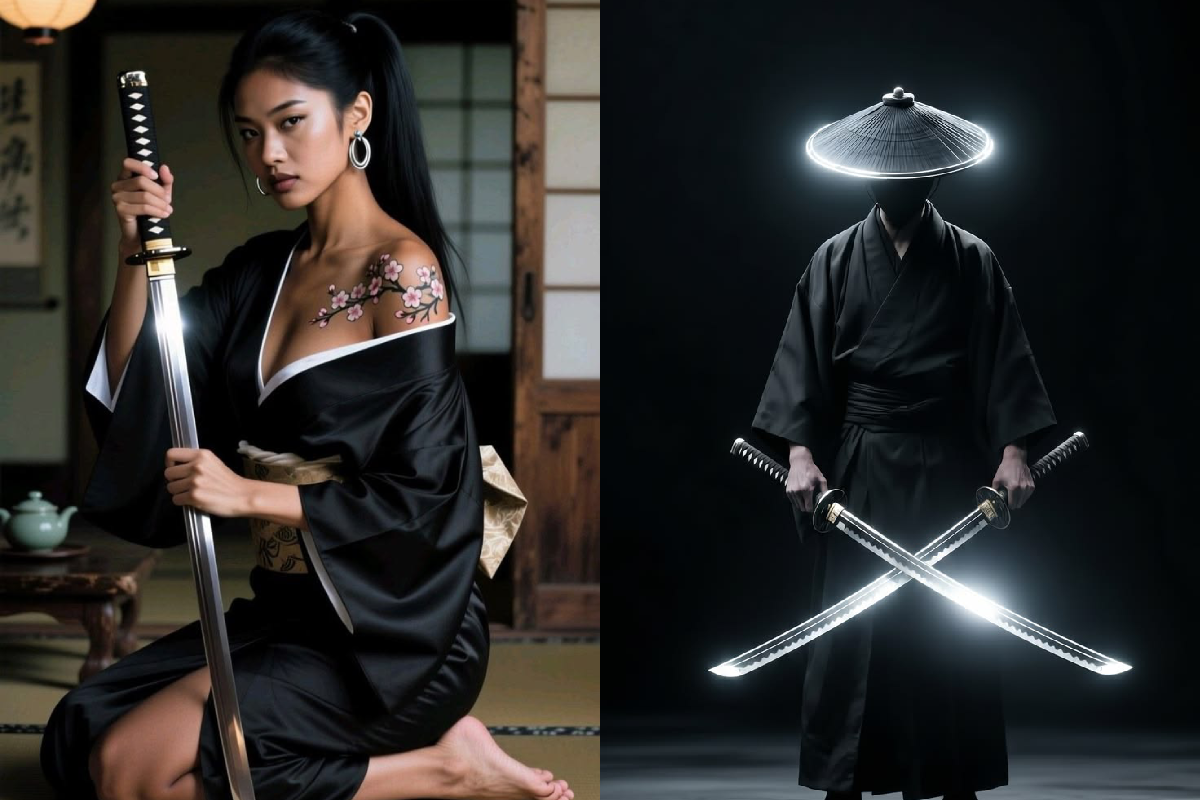
The first image presents a warrior-inspired character in a traditional Japanese interior, holding a katana with a calm but powerful presence.
The second takes the concept into a much darker direction. A mysterious figure stands almost completely in silhouette, wearing a traditional wide-brimmed hat while holding two crossed swords.
Together, the images create a simple narrative:
The warrior in the light.
The warrior in the shadows.
The Power of Black
Black dominates the creative, from the clothing to the background and polished sword handles.
Rather than making the images feel flat, the darkness allows the metallic elements to become dramatically visible.
The contrast between black fabric and illuminated steel becomes one of the strongest visual features of the composition.
The Katana as the Hero Element
The swords immediately attract attention.
In the first image, the katana is held vertically, creating a strong line through the composition. In the second, two swords cross dramatically in front of the character.
This difference is visually effective:
- Single sword: control, discipline and focus
- Crossed swords: confrontation, mystery and action
The reflective blades also provide sharp highlights against the darker environment.
Traditional Japanese Inspiration
The first scene incorporates elements associated with traditional Japanese interiors, including wooden architecture and sliding-panel styling.
That setting gives the image a more grounded feeling.
Instead of placing the character in a generic fantasy environment, the traditional surroundings establish a stronger cultural visual context.
The second image strips away almost everything except the warrior, swords and glowing hat. This creates a more minimalist, almost graphic composition.
Light Becomes Part of the Character
Lighting is arguably the most striking aspect of the second image.
The glowing outline around the hat creates an almost supernatural effect, while the illuminated swords act as visual lines cutting through the darkness.
It transforms an otherwise hidden face into a mystery.
The viewer isn’t given every detail—which makes the character more intriguing.
From Warrior Portrait to Poster Art
The composition could easily work as the visual foundation for a:
- Samurai film poster
- Video-game character campaign
- Fashion editorial
- Anime-inspired campaign
- Martial-arts promotional visual
- Japanese-inspired streetwear campaign
The strong silhouettes and limited colour palette make the imagery particularly suitable for poster design.
Fashion Meets Warrior Culture
The first look also demonstrates how traditional warrior aesthetics can be interpreted through contemporary fashion photography.
The flowing black outfit, metallic accessories and visible floral tattoo create a contrast between softness and strength.
That juxtaposition is important.
The character doesn’t need heavy armour to communicate power. The pose, styling and katana establish the warrior identity.
Why the Two Images Work Together
The two sides have completely different moods, yet they share the same visual vocabulary.
| Element | Left Image | Right Image |
|---|---|---|
| Mood | Elegant & mysterious | Dark & intimidating |
| Setting | Traditional interior | Minimal dark space |
| Main focus | Character + katana | Silhouette + crossed swords |
| Lighting | Natural and cinematic | High-contrast glow |
| Style | Samurai fashion | Samurai fantasy |
| Visual effect | Realistic | Supernatural |
The result is a creative that feels like two chapters of the same story.
The Appeal of Samurai-Inspired Visuals
Samurai imagery continues to influence fashion, cinema, gaming and photography because it combines several powerful visual themes: discipline, mystery, craftsmanship, tradition and combat.
When those themes are translated into modern photography, the result can feel both historical and contemporary.
This creative captures exactly that balance.
Final Thoughts
The strongest aspect of this visual isn’t simply the swords or the Japanese-inspired styling. It’s the contrast between elegance and danger.
One frame invites the viewer closer through a character-focused portrait. The other hides the character almost completely and relies on silhouette, glowing edges and crossed blades.
Together, they show how a simple warrior concept can become a cinematic visual story through lighting, composition, styling and symbolism.

Comments are closed.