

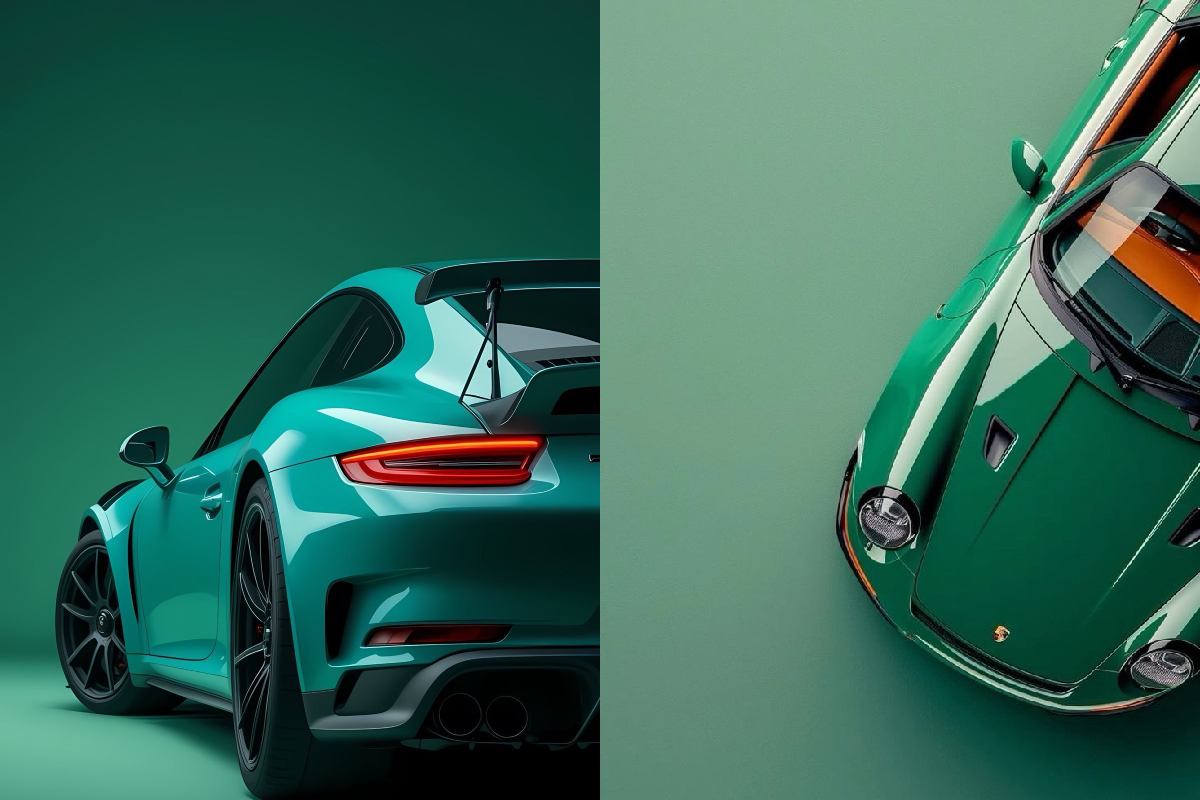
There is something undeniably captivating about a sports car finished in a deep, vibrant green. When that colour is combined with the unmistakable shape of a Porsche-inspired performance coupe, the result is a visual statement that feels both sophisticated and aggressive.
The image featured here presents the car from two dramatic perspectives: a powerful rear three-quarter view and an overhead composition that highlights its compact proportions, aerodynamic surfaces and distinctive front-end design.
Together, the photographs tell a story about performance, precision and automotive design.
The Allure of Green in Sports Car Design
Green isn’t always the first colour people associate with high-performance cars, which is precisely what makes it so interesting.
The rich green finish gives the car an exclusive and sophisticated personality. Under studio lighting, the paint reflects the surrounding environment, revealing the curves of the bodywork while maintaining a deep, luxurious appearance.
Unlike brighter colours that immediately demand attention, green creates a more understated form of drama.
It feels confident rather than loud.
A Silhouette Built for Performance
The rear three-quarter view reveals one of the most important characteristics of a modern performance car: its proportions.
The low roofline, wide rear section and muscular stance immediately communicate speed. Large performance wheels sit tightly beneath the bodywork, while the prominent rear wing adds an unmistakable motorsport influence.
Every element appears designed around the idea of aerodynamic efficiency.
The result is a silhouette that looks fast even while standing still.
The Rear Wing Makes a Statement
One of the most striking features in the image is the large rear spoiler.
A substantial aerodynamic wing isn’t simply a visual accessory on a performance-focused sports car. It immediately communicates the car’s connection to track-inspired engineering.
Visually, it also changes the entire personality of the vehicle.
Without the wing, the car could appear more like a traditional luxury sports coupe. With it, the design becomes much more aggressive and purposeful.
Sculpted Bodywork and Reflections
The green bodywork creates beautiful highlights across the rear fenders and engine cover.
These reflections reveal how carefully shaped the exterior surfaces are. Instead of relying on complicated decorative elements, the car uses curves, creases and changing light to create visual interest.
This is one of the hallmarks of high-end automotive design.
The body doesn’t simply surround the mechanical components—it becomes part of the visual experience.
The Beauty of the Overhead Perspective
The second photograph offers a completely different interpretation of the same design.
Viewed from above, the car’s compact proportions become much more apparent. The rounded front section, headlights and sculpted hood create a distinctive graphic composition.
This perspective also highlights how designers use symmetry and curves to make a sports car recognizable from almost any angle.
The image feels less like a conventional automotive photograph and more like a piece of automotive art.
Black Details Create Contrast
The green exterior is complemented by darker elements throughout the design.
The wheels, windows, aerodynamic components and rear sections provide contrast against the brighter bodywork. This combination prevents the green from becoming overwhelming and gives the car a more performance-oriented character.
Black and green are particularly effective together because the darker elements visually anchor the lighter body colour.
A Blend of Luxury and Motorsport
The appeal of a high-performance Porsche-style sports car comes from the balance between two worlds.
There is the luxury side: polished bodywork, refined proportions and carefully designed details.
Then there is the motorsport influence: aerodynamic wings, low ground clearance, wide tyres and aggressive bodywork.
The visual featured here brings those two identities together.
It looks sophisticated enough for a premium automotive showroom, yet aggressive enough to suggest a car designed with the racetrack in mind.
Why the Green Finish Works So Well
A bold colour can completely change how a performance car is perceived.
The same silhouette in black might appear stealthy. In silver, it could feel technical. In red, it might emphasize traditional performance-car drama.
Green creates something different.
It gives the car an almost exclusive, collector-inspired character, making the design feel distinctive without sacrificing its sporting identity.
The Art of Automotive Photography
The photography itself contributes significantly to the visual impact.
Both images use minimal backgrounds, allowing the vehicle to remain the sole focus. The green environment creates a monochromatic atmosphere, while the contrasting reflections highlight the car’s sculpted surfaces.
This approach demonstrates an important principle in automotive photography:
Sometimes the best background is the one that allows the car’s design to speak for itself.
Final Thoughts
The green Porsche-style sports car featured in this visual demonstrates how colour, proportion and aerodynamics can transform a vehicle into a genuine visual statement.
From the imposing rear wing to the wide rear stance and beautifully sculpted bodywork, every detail contributes to its performance-inspired personality.
The green finish adds another layer of character, creating a sports car that feels luxurious, distinctive and unapologetically bold.
It doesn’t need to be moving to look fast.

Comments are closed.