

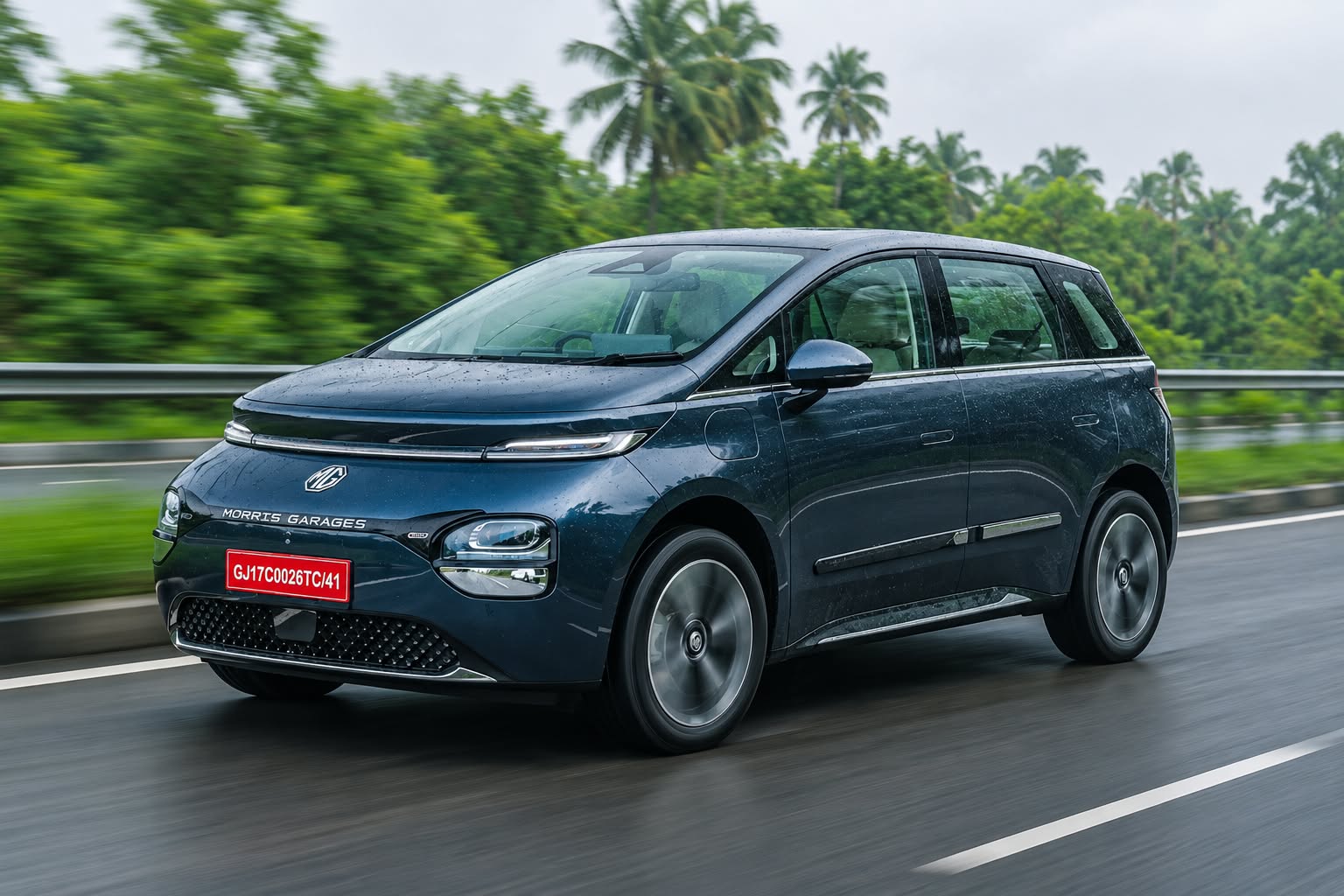
For years, India’s electric vehicle market was almost synonymous with Tata Motors. The Nexon EV dominated sales charts, while most manufacturers watched from the sidelines. Today, that landscape is changing rapidly. Among the brands leading this shift is JSW MG Motor India, which has quietly transformed itself from a niche player into one of the country’s biggest EV success stories.
MG’s rise has not been driven by one breakthrough technology or an aggressive pricing strategy alone. Instead, it is the result of understanding exactly what Indian customers expect from an electric car.
The biggest catalyst has undoubtedly been the MG Windsor EV. At a time when buyers were looking for an electric vehicle that felt practical rather than experimental, the Windsor arrived with generous cabin space, premium interiors, comfortable seating and a long list of technology features. Instead of marketing itself as just another EV, it positioned itself as a family car that happened to be electric. That strategy worked. The Windsor soon became India’s best-selling electric car and emerged as the backbone of MG’s EV business.
However, the Windsor’s success wasn’t built on the product alone.
Perhaps MG’s smartest decision was introducing the Battery-as-a-Service (BaaS) model. Battery costs account for a significant portion of an EV’s price, making electric cars seem expensive to many first-time buyers. By separating the battery cost from the vehicle purchase price, MG significantly lowered the entry barrier. Customers could purchase the car at a lower upfront price and pay for battery usage based on kilometres driven. For many buyers who were interested in EVs but hesitant about the initial investment, this became the deciding factor.
MG also avoided relying on a single model. The Comet EV appealed to city commuters looking for an affordable urban runabout, while the ZS EV catered to buyers wanting a premium electric SUV. The Windsor perfectly bridged the gap between these two, giving MG a strong presence across multiple price segments and customer profiles.
Technology has become another defining strength. Large infotainment screens, connected-car technology, over-the-air software updates, ADAS features and premium cabin quality have helped MG position its cars as smart mobility solutions rather than merely eco-friendly alternatives. In many ways, buyers are choosing MG not just because it is electric, but because it feels modern.
One of the most interesting trends has been the brand’s growing popularity beyond metro cities. Around 70% of Windsor EV sales now come from non-metro markets, indicating that EV adoption is no longer confined to Bengaluru, Delhi or Mumbai. Improved charging infrastructure, increasing fuel prices and greater awareness about lower running costs are encouraging buyers in Tier-2 and Tier-3 cities to embrace electric mobility.
The numbers reflect this momentum. MG recorded 66% year-on-year growth in EV sales during FY26, while EVs now contribute well over 70% of the company’s overall sales. In June 2026, the company registered its highest-ever monthly sales, with electric vehicles accounting for more than three-quarters of total volumes.
MG’s ambitions extend well beyond today’s portfolio. The company has unveiled the MG ADAPT platform, capable of supporting battery-electric vehicles, hybrids, plug-in hybrids and range-extender EVs. This flexible architecture ensures MG can quickly respond to changing market demands while strengthening its long-term commitment to India’s new-energy vehicle ecosystem.
Its rapid growth has also changed the competitive landscape. Tata Motors remains a major force, but its early dominance is now under pressure. Mahindra has entered aggressively with born-electric SUVs, Hyundai continues expanding its EV lineup, and BYD is strengthening its premium presence. For consumers, this competition is a win, leading to better products, improved technology and more competitive pricing. Even Tata has acknowledged increasing competition from players like MG in the EV segment.
MG’s journey demonstrates that winning the EV race isn’t simply about launching electric cars. It is about solving customer concerns, making ownership easier, delivering technology that adds real value and offering products tailored to different lifestyles. By doing exactly that, MG has evolved from a challenger brand into one of the key drivers of India’s electric mobility revolution.
[2:48 pm, 03/11/2026] Adithiya (Pak): MG’s biggest strength in India’s EV market is making electric cars practical and affordable for everyday buyers. Through the Windsor EV, its Battery-as-a-Service model, and a diverse EV lineup, MG is successfully expanding electric mobility beyond metro cities and challenging Tata Motors’ dominance.

Comments are closed.